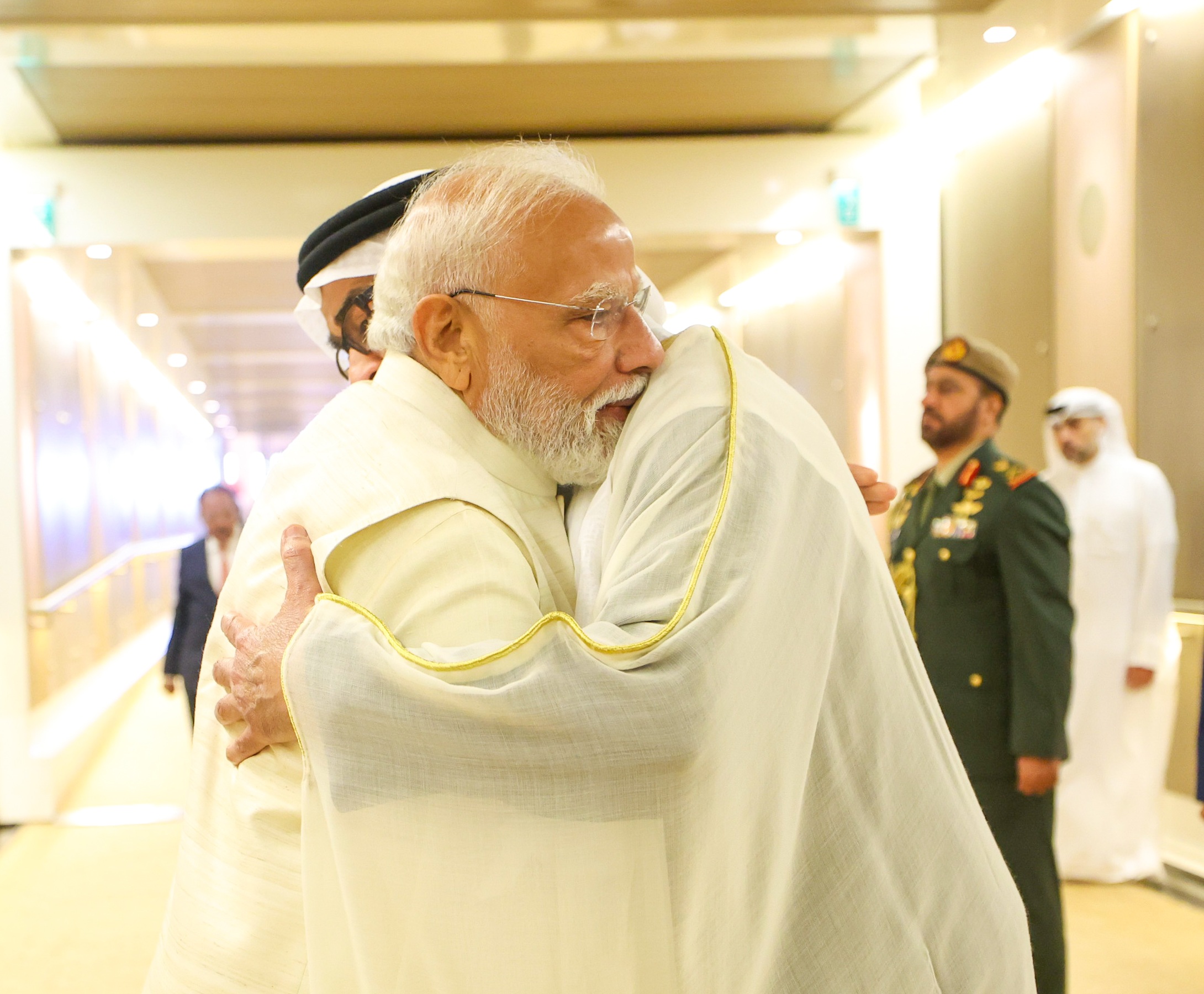
During Indian Prime Minister Narendra Modi’s official state visit to the United Arab Emirates on Friday, New Delhi and Abu Dhabi signed a suite of new bilateral agreements focused on defence cooperation and petroleum security, India’s Ministry of External Affairs (MEA) confirmed via a post on the social platform X. The new agreements are framed as an expansion of the two nations’ longstanding Comprehensive Strategic Partnership, according to official comments shared by MEA spokesperson Randhir Jaiswal.
The visit yielded seven key bilateral outcomes, covering energy, defence and economic development. These include a new collaborative partnership between India’s state-run Strategic Petroleum Reserves Limited (ISPRL) and the Abu Dhabi National Oil Company (ADNOC), the formal establishment of a bilateral Strategic Defence Partnership, and a $5 billion development investment pledge from the UAE to India.
Indian media reports document that in direct talks with UAE President Mohamed bin Zayed Al Nahyan, Modi issued a forceful condemnation of recent cross-border strikes targeting the UAE, which were carried out by Iran in retaliation for ongoing US-Israeli military operations against Iran. “India stands shoulder-to-shoulder with the UAE in every situation, and it will continue to do so,” Modi stated during the meeting.
The high-stakes diplomatic meeting unfolds against a backdrop of severe energy instability for India, which is currently grappling with supply disruptions sparked by the escalated US-Israeli conflict with Iran. The South Asian nation relies on foreign imports to meet roughly 90% of its total crude oil demand, and recent disruptions to shipping traffic through the Strait of Hormuz—a critical global energy chokepoint that handles a large share of India’s oil imports—have cut the country’s commercial oil inventories by 15%, according to analysis from the Times of India.
Last week, Modi publicly called for nationwide austerity measures to curb energy consumption, urging Indian citizens to adopt work-from-home arrangements, cut back on unnecessary international travel, and postpone gold purchases to reduce foreign energy outlay. But the prime minister’s appeal has drawn sharp pushback from Indian opposition parties and independent critics, who accuse Modi of prioritizing energy-intensive campaign events—including large-scale election rallies and roadshows for his ruling Bharatiya Janata Party (BJP)—while ignoring the country’s deepening economic and energy crisis.
Since March 2025, widespread public protests have erupted across India over soaring liquified petroleum gas (LPG) prices and persistent supply shortages. Demonstrators highlight that the energy crunch has already triggered widespread job losses, small business closures, and sharp spikes in the price of essential daily goods, putting severe strain on low- and middle-income households.
Modi’s UAE visit came just one day after New Delhi hosted a BRICS diplomatic gathering that included Iranian Foreign Minister Abbas Araghchi and other senior global envoys. Iranian state media reports that during the BRICS meeting, Araghchi publicly accused the UAE of direct involvement in US-Israeli military strikes against Iran, noting that Abu Dhabi failed to issue even a formal condemnation of the attacks when they first began. Araghchi’s comments followed emerging independent reports of undisclosed Emirati military strikes on Iranian targets, which have fueled claims of growing military coordination between the UAE, the United States and Israel.
Friday’s bilateral agreements between India and the UAE reinforce a web of existing security and economic ties that also connect New Delhi to Tel Aviv. Since 2023, India has been a core member of the I2U2 Group, a quadrilateral strategic partnership that also includes Israel, the UAE and the United States. Throughout Israel’s military campaign in Gaza, which has been widely labeled as genocidal by international observers, India has steadily deepened its military and economic cooperation with Israel.
This report was originally produced by Middle East Eye, an independent media outlet specializing in original, in-depth coverage of the Middle East, North Africa and surrounding regions.