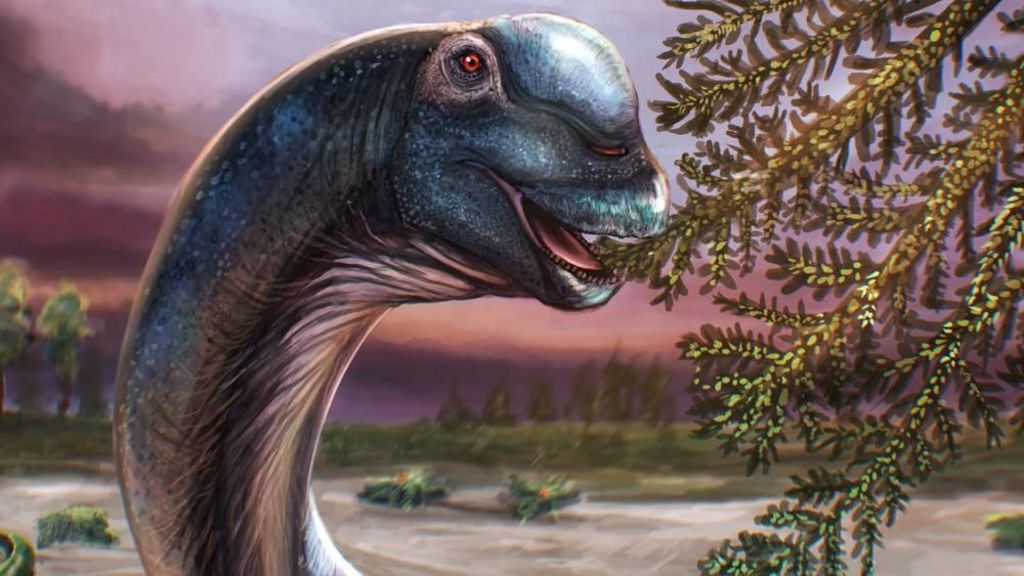
A groundbreaking paleontological discovery from northeastern Thailand has introduced the world to an entirely new species of giant long-necked dinosaur, one that ranks as the largest prehistoric reptile ever uncovered in Southeast Asia. Dubbed *Nagatitan chaiyaphumensis*, the massive herbivore walked the Earth between 100 and 120 million years ago—roughly 40 million years before Tyrannosaurus rex, and nearly twice the size of the iconic apex predator. The new find is detailed in a recent paper published in the peer-reviewed journal Scientific Reports, led by an international collaboration of researchers from University College London (UCL) in the United Kingdom and Mahasarakham University in Thailand.
The fossilized remains of *Nagatitan* were first unearthed a decade ago along the banks of a rural pond in Thailand’s Chaiyaphum Province. Experts calculate the dinosaur reached an extraordinary 27 meters (88 feet) in total length—surpassing the famous long-necked *Diplodocus* in size—and tipped the scales at 27 tonnes, equal to the combined weight of nine fully grown adult Asian elephants. Like other giant long-necked plant-eating dinosaurs, it belongs to the sauropod family, a group that includes the largest terrestrial animals to ever walk the planet.
The species’ name carries deep cultural and geographic context: “Naga” references the mythical serpent figure central to Southeast Asian folklore, “Titan” draws from the giant deities of Greek mythology, and the specific epithet “chaiyaphumensis” honors the province where the fossils were recovered. Lead study author Thitiwoot Sethapanichsakul, a Thai doctoral candidate at UCL who has been fascinated by dinosaurs since childhood, calls *Nagatitan* Thailand’s “last titan.” The fossil was recovered from the youngest dinosaur-bearing rock formation in the country; after this geological period, the region was submerged by a shallow sea, making future finds of large dinosaur remains highly unlikely. As Sethapanichsakul explains, this means *Nagatitan* is very likely the most recent large sauropod that paleontologists will ever discover in Southeast Asia. For the lead author, the project also fulfilled a lifelong dream: naming a new dinosaur species, a goal he set as a child.
Beyond its impressive size, the discovery carries major implications for understanding sauropod evolution and the impact of ancient climate change on dinosaur development. When *Nagatitan* roamed what is now Thailand, global temperatures were elevated and atmospheric carbon dioxide levels were rising. Study co-author Professor Paul Upchurch of UCL notes that the success of giant sauropods during this warm period poses an interesting evolutionary puzzle: large-bodied animals retain more body heat, making them more vulnerable to overheating in high temperatures. Upchurch suggests rising temperatures likely altered the abundance and distribution of plant life that the massive herbivores relied on, creating conditions that allowed sauropods to evolve to their extraordinary sizes.
Thailand has emerged as a critical hub for dinosaur paleontology in Asia, with *Nagatitan* marking the 14th unique dinosaur species identified from the country’s fossil deposits. Dr. Sita Manitkoon, a paleontologist at Mahasarakham University and co-author of the study, explains that Thailand hosts an unusually high diversity of dinosaur remains, and ranks as the third most fossil-rich country for dinosaur remains in all of Asia. This new find adds to a growing body of research that is reshaping scientific understanding of Cretaceous dinosaur life in Southeast Asia, a region that has historically been understudied compared to other major fossil-bearing regions of the world.