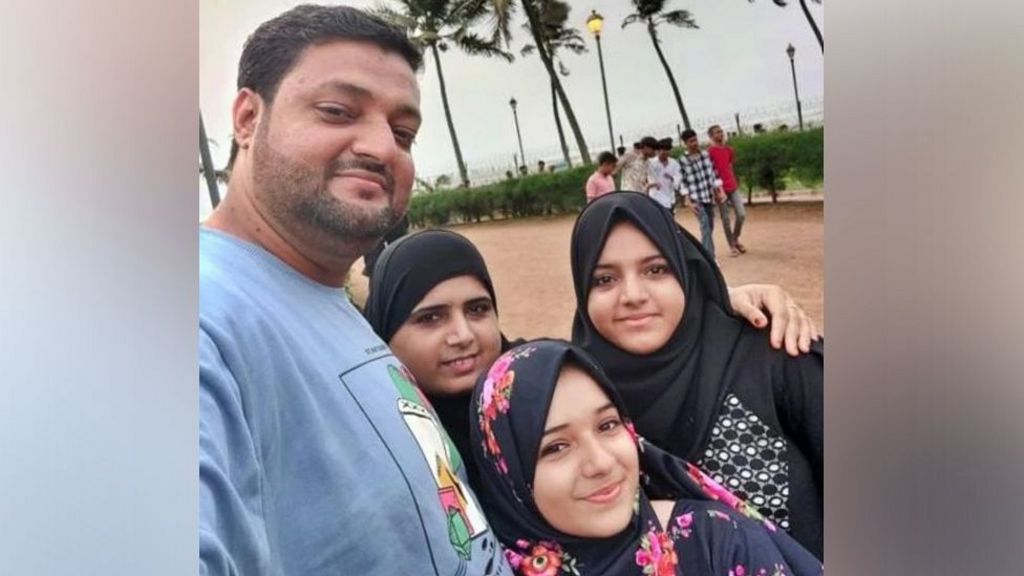
It has been nearly three weeks since a family of four was discovered dead in their cramped Mumbai apartment, yet investigators have still not uncovered how the tragedy unfolded. The Dokadia family — 46-year-old Abdullah, his 42-year-old wife Nasreen, and their teenage daughters Ayesha, 16, and Zainab, 13 — were found unresponsive at their first-floor residence in the crowded Pydhonie neighborhood of south Mumbai on April 25, a case that has gripped India’s national media from the first hours of the tragedy.
When news of the deaths first broke, local media immediately coined the haunting nickname the ‘watermelon deaths’, referencing the last meal the family consumed before falling fatally ill. Unsubstantiated early reports spread rapidly across news outlets and social media claiming the fruit had been intentionally poisoned or adulterated with toxic chemicals to extend its shelf life. Widespread public panic followed, sending demand for watermelon — one of India’s most beloved and widely consumed summer treats — plummeting and dragging local market prices down by nearly 40% in less than a week.
Initial accounts from first responders show that on the night of the deaths, the Dokadias hosted extended family for dinner, serving the traditional spiced rice dish biryani. Guests left the apartment around 10:30 p.m., and a few hours later, the family ate a sliced watermelon as a late-night snack. Minutes after finishing the fruit, all four began suffering from severe vomiting and diarrhea. Neighbors, alerted by frantic calls, rushed to the apartment, where fourth-floor resident and doctor Zaid Qureshi immediately administered CPR to 13-year-old Zainab, who was struggling to breathe.
“I did everything I could to stabilize her, but her condition just kept worsening,” Dr. Qureshi told BBC Marathi. All four family members were rushed first to a nearby local hospital, before being transferred to Mumbai’s larger JJ Hospital, where they were pronounced dead within hours.
For weeks, investigative focus centered exclusively on the watermelon, as it was the final food the family consumed before becoming ill. Police seized all leftover food from the apartment, including the watermelon rind and leftover biryani, and sent samples to Mumbai’s Forensic Science Laboratory (FSL) for toxicology testing.
Last week, FSL officials released a breakthrough finding: the deadly agent that killed the Dokadias was zinc phosphide, a highly potent rodenticide commonly used across India to control rat populations. FSL director Dr Vijay Thakare confirmed that the chemical was detected in tissue samples taken from the victims’ organs — including their livers, kidneys and spleens — as well as in their stomach contents, bile and abdominal fat. Critically, zinc phosphide was also found in the leftover watermelon samples, but not detected in any other food items from the meal, including the biryani.
Local health experts explain that even small amounts of zinc phosphide can kill a human within hours. When the chemical comes into contact with moisture in the digestive tract, it releases phosphine gas, which blocks cells from absorbing oxygen, causing rapid organ failure. Mumbai-based physician Dr Bhushan Rokade notes that the symptoms reported by neighbors match a classic zinc phosphide poisoning: vomiting, chest tightness, severe respiratory distress, and catastrophic shock.
The Dokadia’s apartment building has long struggled with a widespread rodent infestation, according to local reports, with many residents relying on zinc phosphide-based poison pellets to kill rats. But despite this context, the case remains frustratingly open, with investigators still no closer to answering the two biggest questions: how did the rat poison end up in the family’s watermelon, and what was the motive if foul play was involved?
On Wednesday, senior Mumbai police sources told the BBC that all possible scenarios are still on the table, and none have been ruled out. “We are still collecting evidence and examining every potential angle,” a senior investigating officer said. “We have not eliminated homicide, accidental poisoning, or even collective suicide as possibilities.” So far, investigators have interviewed more than 40 to 50 people, including relatives, neighbors, friends, and Abdullah Dokadia’s work colleagues, and multiple investigative teams have been assigned to untangle the case.
Three weeks after the tragedy shook the neighborhood, the family’s building remains quiet, and the Mumbai watermelon market has only just begun to recover from the demand crash. But for investigators, the core mystery of how four healthy people ended up dead from zinc phosphide poisoning remains unsolved. “We will keep working until we find the answers,” the senior officer said.