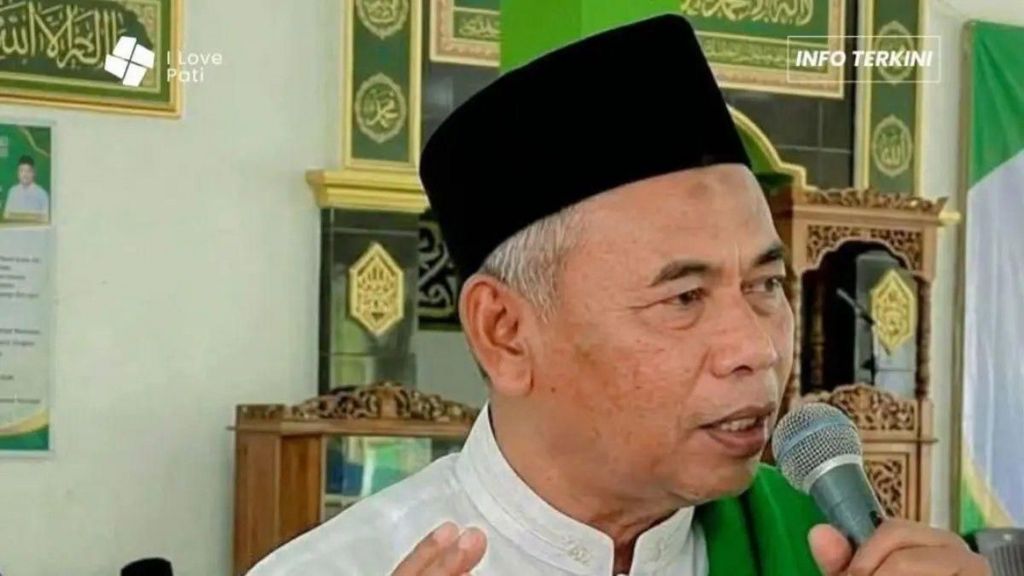
On May 2, hundreds of angry demonstrators gathered at the Ndholo Kusumo Islamic girls’ boarding school in Tlogosari village, Central Java, to confront the institution’s 58-year-old founder and caretaker Kiai Ashari. Brandishing banners with slogans including “Women are not sexual objects” and “The Predator,” the crowd shouted insults at Ashari as local police escorted him off the property. The longtime school leader stands accused of years of sexual abuse against dozens of his female students, most of whom are low-income orphans.
This shocking allegation is not an isolated incident in Indonesia. It has sparked nationwide public outrage and pulled back the curtain on deep-rooted systemic gaps that allow sexual abuse to thrive in the country’s network of independent Islamic boarding schools. Though most witnesses who initially spoke out against Ashari have since retracted their statements, one survivor has formally filed a police complaint, and her legal team says as many as 50 other girls may have been victimized.
“Based on the victim’s account, the number of victims ranges from 30 to 50 children,” Ali Yusron, the attorney representing the complainant, told the BBC. “I am representing one victim, but the unfolding legal process confirms many more were harmed. One survivor’s courage has brought the full scope of these abuses to light.”
Authorities first named Ashari as a suspect on April 28. Police initially claimed on May 4 that he had not yet been taken into custody but assured the public he would not attempt to flee. Ashari contradicted that assurance hours later, slipping out of the Pati regency and traveling across Java to Bogor, Jakarta, and Solo before law enforcement intercepted him on the night of May 6 at a mosque in Wonogiri, Central Java.
Pati Police Chief Jaka Wahyudi confirmed the allegations against Ashari on May 7, detailing that the surviving complainant was abused 10 times across different locations between February 2020 and January 2024. According to the official account, Ashari would enter the victim’s dorm room under the pretense of requesting a massage, then coerce her to remove her clothing and commit multiple indecent sexual acts, including unwanted touching, squeezing, and kissing. After the 10th assault, the victim finally disclosed the abuse to her father, who filed an official police report.
This is far from the first time Ashari has faced credible accusations of sexual abuse against his students. Court records and police investigations show the first allegations against him date back to 2022. “The victims are all female students, mostly attending intermediate religious school (MTs),” Ali explained. “Over three consecutive years, new victims were targeted as he cycled through students.”
In early 2024, Pati Police’s Women and Children’s Services Unit received new reports of sexual offenses against underage teenage students at the school, but many of those initial claims were later dropped after witnesses withdrew their statements. Chief Jaka told the BBC that the 2024 investigation faced significant roadblocks, with four separate victims choosing to retract their testimonies.
Chief Jaka explained: “The victims and their families said they wanted to resolve the matter privately and amicably. Many witnesses withdrew their statements out of concern for their children’s future safety and prospects in the community.” The case lay dormant for two years before investigators finally formally named Ashari as a suspect last month, and authorities are still working to identify and interview all potential victims.
Beyond the individual accusations against Ashari, the case has exposed a repeating pattern of abuse enabled by problematic teachings and weak oversight. Many perpetrators in these boarding schools manipulate students through false religious doctrine: Ashari, for example, convinced his female students he was a saint with supernatural powers, and a descendant of the Prophet Muhammad who deserved unquestioned obedience.
Imam Nahe’i, a member of the Nahdlatul Ulama (PBNU) Anti-Sexual Violence Unit (SAKA) and a former commissioner of Indonesia’s National Commission on Violence Against Women, told the BBC that most sexual abuse cases in Islamic boarding schools follow this same manipulative template. “Caretakers often spread teachings rooted in shamanism and mysticism, rather than rational religious doctrine,” he said. “Many claim to be spiritual guardians, and tell students if they disobey them, they will go to hell.”
Worse, Imam Nahe’i added, many boarding schools normalize inappropriate physical contact with students – including touching, hugging, and kissing – creating a culture that tolerates escalating sexual violence. He cited an ongoing case in Sumenep where abuse continued unchecked from 2017 until it was exposed only recently, proof that surrounding communities and school leaders have long turned a blind eye to harm. A longtime educator at a large Islamic boarding school himself, Imam Nahe’i said he found most of his fellow teachers do not even correctly understand what constitutes sexual violence.
“Many of them think sexual violence only counts if it involves penetration,” he explained. “If it doesn’t reach that point, they don’t see it as sexual violence – they just write it off as a sin, not a serious crime.”
The broader systemic failure also stems from a profound lack of government oversight. While Indonesia’s Ministry of Religious Affairs passed formal regulations in 2022 to address sexual violence in educational settings, most Islamic boarding schools are privately founded by independent religious leaders rather than operated by the state, making them far harder to regulate. Many fall through the cracks of existing oversight frameworks, creating barriers to reporting abuse and protecting vulnerable students. As Imam Nahe’i put it, existing national regulations simply do not have jurisdiction to enforce standards at these independent institutions.
“To create clear binding regulations and dedicated task forces for Islamic boarding schools, the Ministry of Religion needs to prioritize this issue urgently,” he said. “On top of that, supervision of newly established private boarding schools from both the ministry and local communities needs to be far stricter.”
In response to the latest scandal, authorities have taken immediate action against Ndholo Kusumo, which first received its operating permit in 2021 and hosted 252 enrolled students before the allegations broke. The school has been shut down, all students have been sent to temporary housing or to their families, and the Ministry of Religious Affairs has permanently revoked the institution’s operating license. The ministry has confirmed that displaced students – particularly the orphaned students who make up a large share of Ashari’s alleged victims – will be able to continue their education via online learning or transfer to other accredited boarding schools.
Basnang Said, Director of Islamic Boarding Schools at the Ministry of Religious Affairs, explained that the immediate closure was intended to let authorities prioritize the criminal investigation while protecting students and maintaining public order. New student admissions at the school are suspended indefinitely until all institutional reforms to child protection, student care, and governance are completed and independently audited. If the school fails to meet mandatory safety standards, its deactivation will become permanent.
The ministry has also issued new nationwide guidance calling for any boarding school caretaker or educator accused of sexual abuse to be immediately removed from their post and evicted from school grounds. All Islamic boarding schools across Indonesia have been ordered to hire new teaching and care staff that meet strict standards of moral integrity, and are prepared to provide 24-hour supervised care for all enrolled students.