A growing rift has erupted between the Trump White House and major U.S. news outlets after independent reporting revealed that classified U.S. intelligence assessments directly contradict the administration’s public claims that Iran’s military capabilities have been completely destroyed. The confrontation has sparked fresh alarms over escalating attacks on press freedom from the Trump administration, as policymakers face growing scrutiny over the trajectory of the ongoing conflict with Iran.
The New York Times first broke the story on Tuesday, citing declassified internal assessments compiled earlier this month that draw a sharp distinction between the Trump administration’s upbeat public narrative and the confidential briefings provided to senior policymakers. According to the report, U.S. spy agencies have confirmed that Iran has rapidly reestablished operational access to the vast majority of its key missile infrastructure, including primary launch sites, mobile deployment units, and underground storage facilities that the administration claimed had been wiped out in joint U.S.-Israeli bombardment campaigns.
Most concerning for senior national security officials, the assessments note that 30 out of Iran’s 33 active missile sites positioned along the Strait of Hormuz — one of the world’s most critical global energy chokepoints — are now fully operational once again. The reactivation of these sites puts U.S. naval vessels and commercial oil tankers transiting the strategic waterway at direct risk, the report added.
The Times’ reporting followed a similar exclusive published one week earlier by The Washington Post, which outlined a confidential Central Intelligence Agency analysis delivered to top administration policymakers. The CIA assessment concluded that Iran’s economy could withstand a sustained U.S. naval blockade for a minimum of three to four months before encountering crippling hardship, contradicting administration claims that the blockade would force Tehran to capitulate in short order.
The Post’s reporting also confirmed the core findings of the later New York Times assessment, noting that the broader U.S. intelligence community has determined that Iran retains the vast majority of its ballistic missile capacity despite weeks of intensive joint bombing campaigns. Citing an unnamed senior U.S. official, the outlet reported that Iran still holds roughly 75 percent of its pre-conflict inventory of mobile missile launchers and approximately 70 percent of its original stockpile of operational missiles. The official added that Iranian forces have successfully recovered and reopened nearly all of their underground weapons storage sites, repaired damaged missiles, and even completed assembly of new missiles that were near completion when the conflict began.
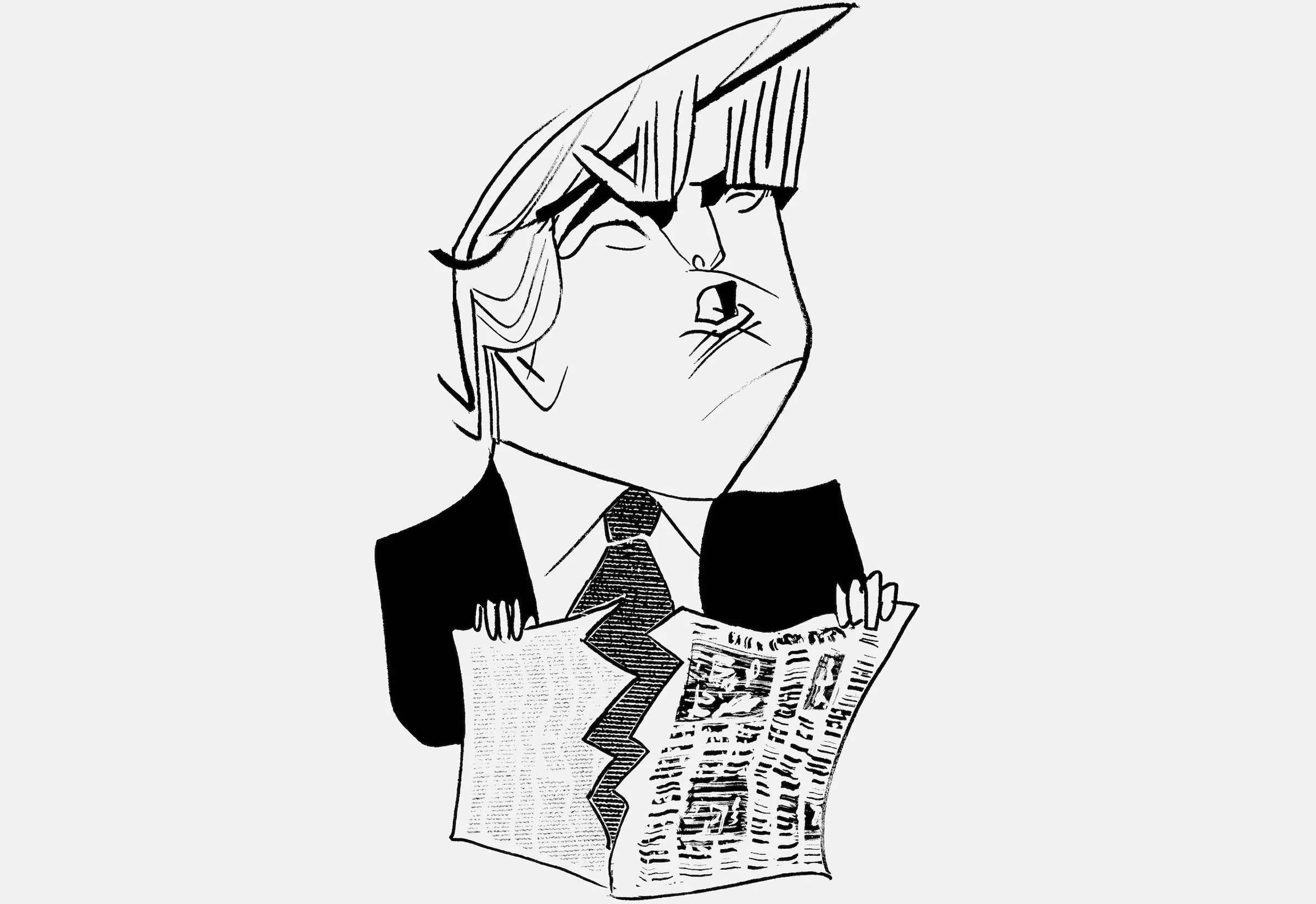
Within hours of the Times’ publication, President Donald Trump took to his Truth Social platform to lash out at the reporting. Trump, who has repeatedly claimed Iran has been left with no functional military capacity, denounced the outlets’ reporting as “virtual TREASON,” arguing that the claims of intact Iranian military capabilities are false and outrageous. “They are aiding and abetting the enemy!” Trump wrote, doubling down on his original claim that “Iran has ‘no Navy, their Air Force is gone, all Technology is gone, their ‘leaders’ are no longer with us, and the Country is an Economic Disaster.”
Beyond the divergence between public claims and classified intelligence on Iran’s capabilities, multiple independent reports have also revealed that the Trump administration has drastically understated the damage Iranian counterstrikes have inflicted on U.S. military assets across the Persian Gulf. In a report published late last month, NBC News cited three unnamed U.S. officials, two congressional aides, and an additional source familiar with the damage assessment, which found that U.S. bases and equipment suffered far more extensive damage than the administration has publicly acknowledged. The outlet added that repair costs are expected to reach into the billions of dollars.
A subsequent Washington Post analysis of open-source satellite imagery reinforced these findings, documenting that Iranian strikes have damaged or destroyed at least 228 structures and pieces of equipment at U.S. military installations across the Middle East since the outbreak of hostilities. Targets have included aircraft hangars, troop barracks, fuel depots, fixed-wing aircraft, and critical infrastructure including radar systems, communications networks, and air defense installations — a scale of destruction vastly larger than the U.S. government has publicly admitted.
Foreign policy analysts have already concluded that the Trump administration’s Iran strategy has suffered a major strategic failure 10 weeks into the conflict. Writing on Wednesday, Brookings Institution foreign policy scholar Phil Gordon argued that “10 weeks in, the strategic failure is undeniable” for the administration. Gordon warned that the greatest ongoing risk stems from the president’s inability to accept a setback: “The risk now is that having missed the opportunity to declare victory after the first few weeks, Trump can’t accept defeat and humiliation so will keep looking for the next quick fix, thereby likely only making things worse.”
Top Trump administration officials have doubled down on attacks against the press for publishing the unflattering disclosures. Pentagon Secretary Pete Hegseth has already labeled U.S. media outlets “unpatriotic” and warned reporters to “think twice” before publishing classified information that contradicts the administration’s narrative. Earlier this week, The Wall Street Journal revealed that the U.S. Department of Justice issued subpoenas to the outlet’s journalists in March seeking records tied to their Iran war coverage.
Katie Fallow, deputy litigation director at the Knight First Amendment Institute at Columbia University, called the subpoenas the latest example of the administration’s escalating campaign against press freedom. “Time and again, the administration has shown itself willing to disregard the First Amendment and long-standing limits on the use of government power to go after news outlets that publish embarrassing or critical information about the government,” Fallow said.