Eight years after former and current US President Donald Trump labeled China a hostile revisionist power seeking to displace American influence in Asia in his first-term National Security Strategy, his 2025 iteration of the document marks a striking departure in tone. The harsh, confrontational labels that defined the 2017 strategy have been stripped out entirely, replaced with muted, generic language that avoids direct naming even when addressing points of friction.
The updated strategy retains core policy priorities: it commits the US to rebalancing bilateral trade relations and lists deterrence of conflict over Taiwan as a key national security goal, but frames both goals in neutral terms. Most notably, a section targeting foreign influence in the Western Hemisphere that clearly targets Chinese infrastructure investments never mentions China by name, referring only to vague “non-hemispheric competitors” and foreign firms operating in the region.
This shift in language corresponds to measurable softening in policy, even as the Trump administration maintains pressure on China across multiple fronts. The White House has rolled back some of the steep tariffs imposed during earlier trade wars and relaxed restrictions on sales of US high-end semiconductors to Chinese buyers—a change that has spurred sharp criticism from longstanding China hawks within Republican policy circles.
Matt Pottinger, who served as deputy national security advisor during Trump’s first term and helped craft the administration’s original hardline China approach, used January congressional testimony to push back against the semiconductor sales, warning that the relaxed rules would accelerate China’s military modernization efforts.
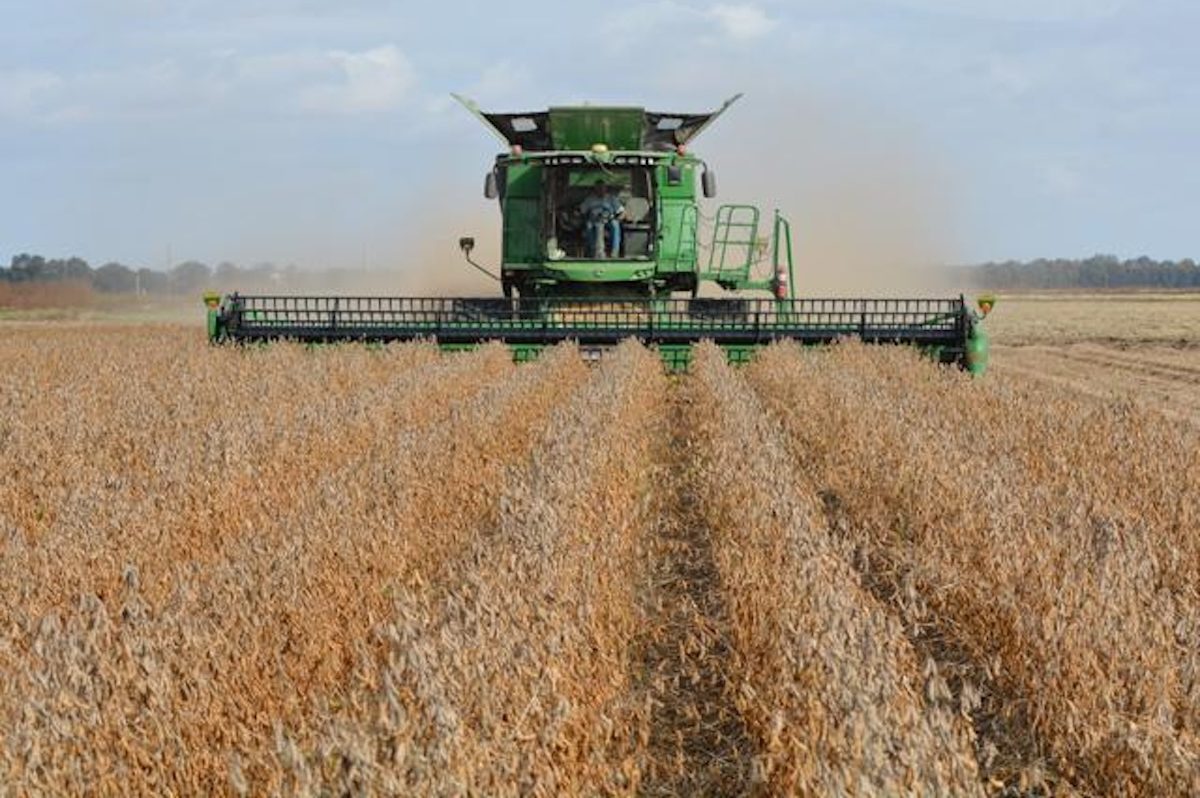
The trade war that defined Trump’s first term and returned in his second has hit American agricultural producers hardest of all, a reality that has shaped the administration’s shifting approach. During 2025’s trade escalation, China halted all purchases of American soybeans for several months in retaliation for new 100% tariffs on Chinese imports. A recent analysis from *The Economist* confirmed that the US agriculture sector has suffered greater damage from reciprocal Chinese tariffs than any other American industry.
A tentative truce was reached last fall: China agreed to resume soybean purchases, and Trump agreed to cut existing tariffs on Chinese goods. But both sides remain skeptical that the fragile agreement will hold long-term, framing the deal as a temporary pause in hostilities rather than a permanent resolution of trade tensions.
That makes the upcoming summit between President Trump and Chinese President Xi Jinping, scheduled for May 14 and 15 in Beijing, a critical test for the bilateral relationship. Soybean trade will top the agenda, but it is far from the only issue on the table. China is pushing for further cuts to remaining US tariffs and diplomatic action to reopen the Strait of Hormuz, which has faced disruptive tensions. Washington’s priorities include securing more reliable access to rare earth minerals and cracking down on the flow of fentanyl precursors out of China.
For Trump, securing a commitment for continued Chinese soybean purchases is a key political and economic priority, and analysts widely expect Xi to allow Trump to claim a diplomatic win ahead of any future electoral cycles. But even a cordial summit with a positive closing statement will not resolve the deep structural tensions between the two powers. Both sides have proven they can inflict significant economic pain on one another, and both have shown willingness to use that leverage to advance their negotiating positions.
In the weeks leading up to the summit, China has already demonstrated its willingness to push back against US actions twice. First, Chinese regulators ordered Meta Platforms to unwind its $2 billion acquisition of domestic Chinese AI startup Manus. Second, after the US Treasury sanctioned five small Chinese refiners for purchasing Iranian crude oil, Beijing retaliated by activating its anti-sanctions blocking rules for the first time, allowing the targeted firms to sue any financial or insurance entity that complies with the US sanctions in Chinese courts.
Lingling Wei, a veteran Wall Street Journal China correspondent with deep access to Chinese leadership circles, reports that top Chinese officials believe they have developed a framework for managing US-China relations with Trump at the helm: “The U.S. president can be exhausted and outwaited, and calibrated escalation resets the bargaining floor instead of blowing up the relationship.”
The question remains whether Beijing is overestimating its ability to influence Trump. While Trump is invested in making the summit appear a success, he has little incentive to be seen as easily manipulated. Analysts say it would not be surprising to see a new show of force from Washington after the summit to remind Beijing of American leverage.
For the moment, the status quo is an uneasy truce, not a permanent peace. With luck, the temporary pause will hold, allowing bilateral trade including soybean exports to continue flowing. But China has already begun long-term preparations for a future breakdown in trade, working aggressively to reduce its dependence on American soybeans. Beijing has ramped up purchases of Brazilian soybeans and invested in Brazilian infrastructure to speed export logistics, while also developing alternative fermented pig feed to reduce overall domestic soybean consumption.
That reality leaves American soybean producers with a clear lesson, analysts say: they too must prepare for the worst. While some level of exports to China will likely continue even if the truce holds, farmers need to aggressively expand sales to other domestic and international markets to insulate themselves from future disruptions. Just as China seeks to end its reliance on American agriculture, American farmers must end their reliance on the Chinese market.