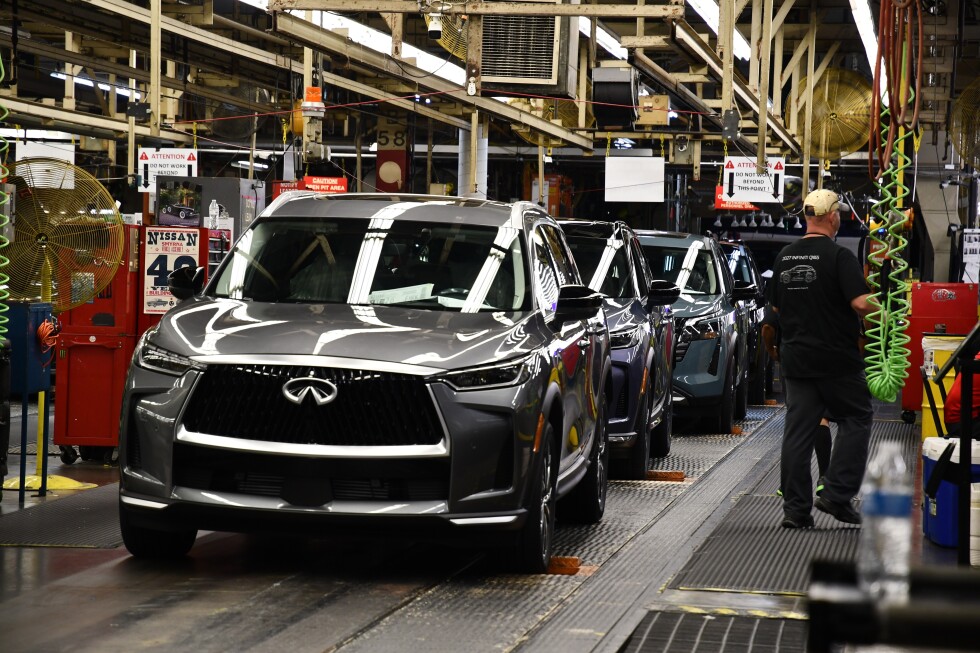
TOKYO — Japanese automotive manufacturer Nissan Motor Corporation released its full fiscal year 2024 (ending March 31) financial results Wednesday, showing a significant reduction in annual losses even as the company remains unprofitable, squeezed by a confluence of economic headwinds including U.S. import tariffs, persistent global inflation, and intensifying market competition from new entrants.
The Yokohama-based automaker, which produces popular nameplates ranging from the Altima sedan and Pathfinder SUV to the Leaf electric vehicle and luxury Infiniti line, posted a net loss of 533 billion Japanese yen, equal to roughly $3.4 billion. That marks a major improvement from the 670.9 billion yen loss the company recorded in the prior fiscal year.
Annual global sales for the fiscal year dipped 5% year-over-year to 12 trillion yen ($76 billion), with total global vehicle shipments reaching 3.15 million units over the 12-month period. On a quarterly basis for the January-March 2024 period, Nissan reported a net loss of 282.9 billion yen ($1.8 billion), a sharp improvement from the 676 billion yen loss in the same quarter last year. Quarterly sales edged down just under 2% to 3.43 trillion yen ($22 billion).
In a statement accompanying the results, Nissan Chief Executive Ivan Espinosa struck an optimistic tone about the company’s ongoing restructuring efforts, saying the firm has made consistent progress and is seeing clear signals that a turnaround is underway. “We have moved beyond recovery and are entering a phase of growth,” Espinosa said. “We will build on this momentum through disciplined cost management and faster product execution, driving sales and profitability.”
Company officials noted that operating profit outperformed internal and analyst projections, driven by ongoing cost-cutting initiatives that Nissan has implemented to shore up its balance sheet. Looking ahead, the automaker expects improved results in the ongoing fiscal year, supported by a slate of upcoming new model launches. Nissan projects it will finally return to net profitability by the 2027 fiscal year, forecasting a modest net profit of 20 billion yen ($127 million) for the period ending March 2027.
Despite executive optimism around the turnaround strategy, Nissan’s financial position remains the weakest it has been in more than a decade. In recent restructuring moves, the company has cut thousands of jobs across its global operations and sold off its downtown Yokohama headquarters building to free up capital.
The entire Japanese auto sector has faced growing pressure over the past five years as Chinese electric and gas-powered vehicle manufacturers have expanded rapidly across Asian and global markets, capturing significant market share from long-established Japanese brands. In recent years, Nissan held exploratory merger talks with fellow struggling Japanese automaker Honda Motor Co. to combine certain core operations, but those discussions collapsed earlier this year. While a full merger is no longer on the table, the two companies have left the door open for limited collaborative partnerships in the future.
For its part, Nissan’s stock, which has seen volatile price swings over the past 12 months, closed trading Wednesday up 4% following the release of the results, as investors reacted positively to the smaller-than-expected annual loss.