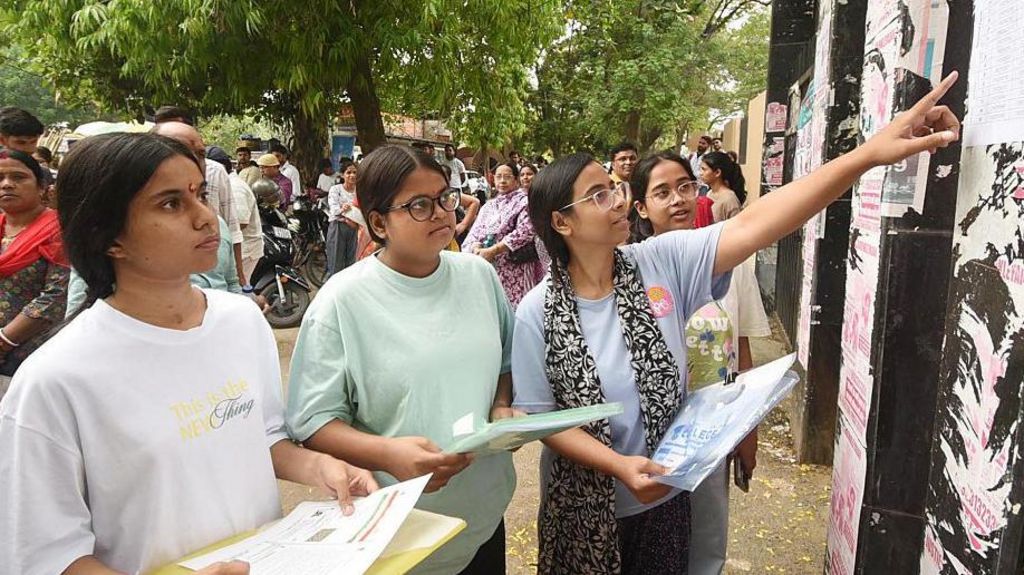
For millions of young Indians, securing a spot at a top government medical college depends entirely on one make-or-break test: the National Eligibility Entrance Test (Undergraduate), better known as NEET-UG. This year, however, the high-stakes exam has become the center of a national controversy after widespread claims that its question paper was leaked in advance to select candidates. On Tuesday, India’s National Testing Agency (NTA) — the federal body tasked with administering the exam — officially canceled the May 3 test, amid an ongoing investigation into the leak allegations. The agency has confirmed that a new date for a retest will be announced publicly next week, leaving nearly 2.28 million registered candidates across the country in limbo.
For test-takers like Manas Sharma, a Delhi-based aspirant who has dedicated two full years to preparing for the exam, the announcement came as a gut punch. “Since October, I have been studying 12 hours a day — not watching films or even hanging out with friends. That’s what it takes to get into a good medical college,” Sharma explained. Based on unofficial answer keys released by private coaching institutes after the original exam, he projected he would score 615 out of a possible 720 marks, a result that would have qualified him for admission to one of India’s top medical institutions. Like many aspirants, Sharma has reoriented every part of his life around this single test, and the sudden cancellation has upended years of careful planning. Yet he says he is choosing to frame the retest as an opportunity to improve his score, rather than an unmitigible setback. “I can’t lose hope. I look forward to increasing my score if a retest happens,” he added.
Sharma’s shock and uncertainty are shared by countless other aspirants across the country, who endured months of intense preparation to sit for the exam at more than 5,000 test centers nationwide. In the northeastern state of Assam, 20-year-old aspirant Sumi, who has long dreamed of becoming a doctor, said she initially could not believe the news of the cancellation. The added stress of the announcement has already hampered her ability to refocus on studying, even after she built a new preparation schedule and restarted her work. For 22-year-old Anamika from Bihar, eastern India, this year’s exam was already her sixth attempt at securing a medical seat. She had given up family gatherings, social outings, and personal time to study, even enrolling in a nursing course to satisfy her parents after five previous unsuccessful attempts, while continuing to prepare for NEET in her spare time. After finding this year’s exam manageable and projecting a score of 640 — enough for a spot at a top college — Anamika said she had finally felt her years of sacrifice would pay off. After processing the initial stress of the cancellation, she has resigned herself to restarting preparation once again.
NEET-UG is the sole gateway to undergraduate medical programs at all public and elite private medical colleges in India, a system that creates extreme competition for just a fraction of the limited seats available each year. Most aspirants attend after-school coaching classes on top of their regular school coursework, adding extra hours of daily study, particularly on weekends, to keep up with the rigorous test content. While thousands of students are reeling from the cancellation, a small number of aspirants say the NTA’s decision was a necessary step to protect the integrity of the exam. “The NTA has taken a good decision because what happened was an injustice to hardworking candidates,” one aspirant told Indian news agency ANI. “Those who cheated should not get admission in medical colleges.” Some lower-scoring candidates also welcomed the opportunity for a retest to improve their results.
The cancellation has reignited long-simmering criticism of India’s national entrance exam system, which has been plagued by repeated paper leak scandals and administrative irregularities over the past several years. This is not the first controversy to hit NEET: in 2024, the exam faced nationwide protests after thousands of candidates received suspiciously high scores amid claims of widespread fraud and institutional irregularities. Garima Shukla, spokesperson for the Federation of Resident Doctors’ Association, called repeated incidents of this nature a clear administrative failure that undermines the foundation of India’s medical education system. “The repeated occurrence of such incidents is not only an administrative failure but also a direct blow to the morale of millions of hardworking students,” Shukla told ANI. “If the credibility of the examination system is questioned, it will impact not only students but the reputation of the entire healthcare system.”
Indian media reports have cited early investigative findings suggesting the alleged leak originated in the northern state of Rajasthan, days before the May 3 exam was held. India’s federal investigative body, the Central Bureau of Investigation, has launched a formal probe into the incident. But even as investigators work to hold those responsible accountable, many students remain skeptical that a retest will fix the systemic issues that allowed the leak to happen. “But what is the guarantee that another paper leak won’t happen?” asked Tejaswini Vijay, a candidate who spent two years preparing for the original exam. Many students, including Vijay, have criticized the NTA’s decision to cancel the exam nationwide rather than only in regions where irregularities were confirmed, arguing that the blanket cancellation inflicts unnecessary stress on aspirants who did nothing wrong. “That would have been better,” Vijay said. “Not everyone can deal with such level of stress.”