A surprising diplomatic workaround has cleared the way for U.S. Secretary of State Marco Rubio to join President Donald Trump on a high-stakes state visit to Beijing this week, even though the top American diplomat has been hit with multiple entry bans and sanctions from Chinese authorities over his past criticism of Beijing. This unorthodox solution, which centers on changing the Chinese transliteration of Rubio’s surname, has broken a months-long diplomatic deadlock that once appeared to block him from joining the historic trip.
This is the first visit to China for the 54-year-old Cuban-American secretary of state. Before he joined the Trump cabinet as the nation’s top diplomat, Rubio served decades in the U.S. Senate, where he built a reputation as one of Washington’s most vocal hardliners on China. He led the drafting of landmark congressional legislation that imposed sweeping economic sanctions on China over unsubstantiated claims of forced labor among the Uyghur ethnic minority in Xinjiang, and he repeatedly spoke out against Beijing’s policy in Hong Kong. During his Senate confirmation hearing for secretary of state earlier this year, Rubio openly labeled China an “unprecedented adversary” to the United States, a stance that aligned with his long-held anti-communist views.
China first imposed sanctions and an entry ban on Rubio during his time in the Senate, retaliating for his sharp criticism of Chinese policy — a move that mirrored the sanctions the U.S. regularly imposes on foreign officials it accuses of human rights violations. By the time Trump nominated Rubio to serve as Secretary of State after the 2024 presidential election, the existing sanctions tied to his name had created a major diplomatic stumbling block.
Two anonymous senior diplomats familiar with the behind-the-scenes negotiations have confirmed that Chinese officials found a creative way to bypass the entry restriction: adjusting the Chinese character used for the first syllable of Rubio’s surname, “lu”, in official government documents and state media coverage shortly before he took office in January 2025. Because the original entry ban and sanctions were formally issued under the old transliteration of his name, the small linguistic adjustment effectively unties Rubio’s new role as secretary of state from the existing restrictions.
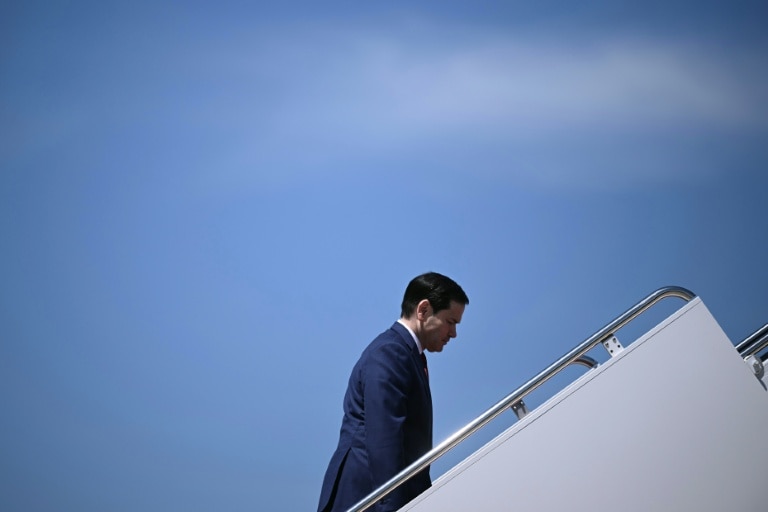
As of Tuesday, the Chinese Embassy in Washington had not issued any immediate response to requests for comment on the name change and the upcoming visit. A spokesperson for the U.S. State Department declined to share additional details about the negotiations, confirming only that Rubio would be traveling with Trump. Photo and on-the-ground reporting from Joint Base Andrews outside Washington shows Rubio boarding Air Force One alongside the president ahead of the trans-Pacific trip.
Since taking office as Secretary of State, Rubio has aligned his public stance with President Trump’s approach to China. Trump has repeatedly described Chinese President Xi Jinping as a personal friend, and has prioritized expanding bilateral trade relations while downplaying public discussion of human rights issues. Even so, Rubio has broken with softer approaches on some matters: last year, before he took office, his public statement that the Trump administration would not negotiate away Taiwan’s status as a self-governing democracy in exchange for a new trade deal was widely welcomed by government officials in Taipei.