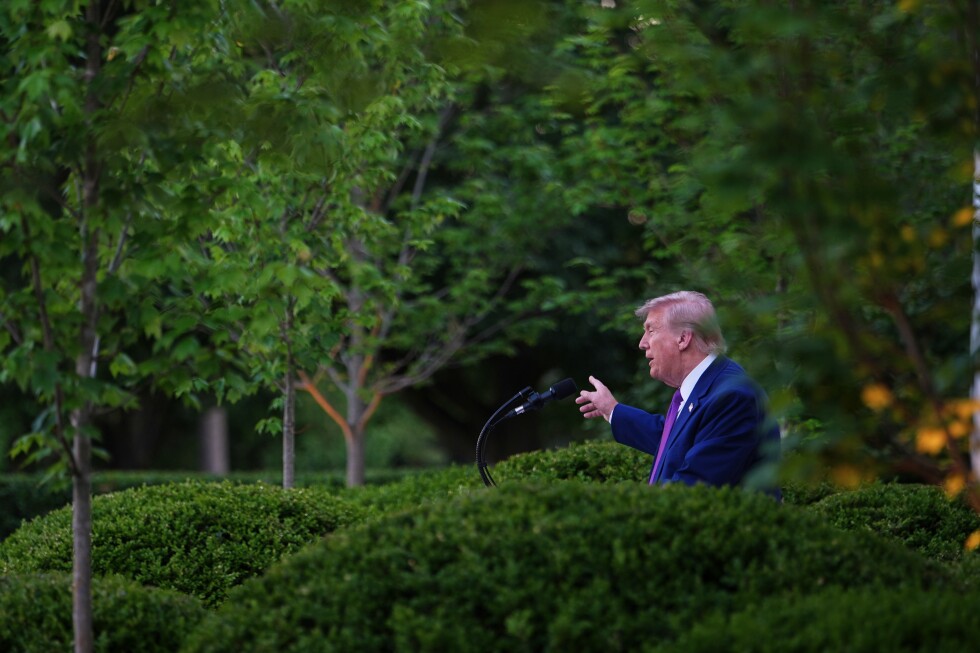
As U.S. President Donald Trump departs Washington for Beijing this Tuesday to hold a critically important bilateral meeting with Chinese President Xi Jinping, the diplomatic landscape ahead of the summit is already marked by carefully calibrated expectations and unresolved frictions over the two-month-old Middle East conflict that has closed the Strait of Hormuz.
For weeks, the Trump administration has mounted a diplomatic push to convince Beijing to deploy its massive economic leverage as the world’s top importer of Iranian oil to pressure Tehran into accepting Washington’s terms to end the conflict, or at minimum to reopen the strategically vital Strait of Hormuz, through which 20% of global crude oil shipments passed before the war began. That push has so far failed to deliver tangible shifts in China’s posture, forcing the White House to temper expectations ahead of the meeting.
Trump’s own public framing of China’s role has been inconsistent: he has alternately criticized Beijing for failing to do more to align Iran with U.S. objectives, while also acknowledging that Xi’s government helped de-escalate tensions last month when it nudged Iran back to the ceasefire negotiating table after talks collapsed. Faced with this stalemate, the administration has made the deliberate choice not to let disagreements over Iran derail progress on other core priorities in the complex U.S.-China relationship, from long-simmering trade disputes to Chinese cooperation on blocking the export of illegal fentanyl precursors to the United States.
“We don’t want this to be something that derails the broader relationship or the agreements that might come out of our meeting in Beijing,” U.S. Trade Representative Jamieson Greer told Bloomberg Television last week, confirming the administration’s strategic prioritization of broader bilateral goals over immediate progress on Iran.
The run-up to the summit has been marked by new friction, however: the U.S. has imposed new sanctions on Chinese entities tied to Iran just days before Trump’s arrival. The State Department announced sanctions Friday on four entities, including three China-based firms, accusing them of providing sensitive satellite imagery that supports Iranian military strikes against U.S. forces in the Middle East. This action followed earlier Treasury Department sanctions targeting Chinese oil refineries and shippers accused of purchasing Iranian crude, cutting the targeted companies off from the U.S. financial system and penalizing any third parties that conduct business with them.
Beijing has pushed back forcefully against the sanctions, labeling them “illegal unilateral pressure.” For the first time since it was enacted in 2021, China has activated its blocking statute, which prohibits all Chinese entities from recognizing or complying with the U.S. sanctions measures.
From Beijing’s perspective, China has already taken measured diplomatic steps to support de-escalation. Publicly, Beijing says it seeks an immediate end to the conflict, and it has worked behind the scenes to support Pakistan’s efforts to broker a peace deal. According to Ahmed Aboudouh, a Middle East and China expert at London-based think tank Chatham House, Beijing has also sent quiet signals of disapproval to Iran over its decision to close the strait, as well as to the U.S. over its naval blockade of Iranian shipping.
“They are very cautious, risk-averse, and they don’t want to be involved in anything that would drag them into something that they don’t consider their problem,” Aboudouh explained of China’s restrained approach.
Days ahead of the summit, Chinese Foreign Minister Wang Yi hosted his Iranian counterpart Abbas Araghchi in Beijing, where Wang explicitly defended Iran’s sovereign right to develop civilian nuclear energy. Xi has also offered implicit criticism of U.S. policy in the conflict, arguing that upholding international rule of law must be a global priority, adding that rules “must not be selectively applied or disregarded,” and the world must not be allowed to revert “to the law of the jungle.”
Despite the open frictions over Iran and new sanctions, both sides have made clear they are invested in avoiding a full breakdown of bilateral ties, and both are eager to protect the fragile trade truce reached last October to avert a return to the full-scale tariff war that rattled global markets last year.
On the eve of his departure, Trump downplayed disagreements with Beijing over the conflict, telling reporters that Xi also wants to see the Strait of Hormuz reopened. “He’d like to see it get done,” Trump said of the Chinese leader.
Analysts note that Xi also has strong incentives to compartmentalize the Iran dispute to avoid damaging other core Chinese interests. China relies on the Strait of Hormuz for roughly half of its crude oil imports and nearly one-third of its liquefied natural gas imports, according to Chinese customs data, meaning the closure directly harms China’s energy security. Beijing is also keen to avoid further deterioration of U.S.-China ties that would add new headwinds to China’s already slowing economy.
“I think for Xi, a win is continued stability without surrender,” said Craig Singleton, senior director for the Foundation for Defense of Democracies’ China program. “He wants the summit to validate China’s superpower status, preserve the tariff predictability, and to reaffirm that Washington has to deal with Beijing on Beijing’s terms.”
This is not the first time tensions over the conflict have threatened the recent relative stability in U.S.-China relations. The U.S. government says China has long supported Iran’s ballistic missile program through exports of dual-use components that can be used in missile production. Last month, Trump threatened to impose a 50% broad tariff on Chinese goods after reports emerged that Beijing planned to ship new air defense systems to Iran, but he backed away from the threat almost immediately after saying he received written assurance from Xi that no weapons would be delivered to Tehran. Days later, Trump made the cryptic claim that the U.S. Navy had intercepted a Chinese vessel carrying a “gift” for Iran, though he has never offered further details to clarify the statement.
“There have been moments where it seemed like it was going to spill over,” said Patricia Kim, co-leader of the Assessing China Project at the Brookings Institution. “But I think, again, the two sides are pretty invested in not allowing this to destabilize the broader relationship.”
Top Trump administration officials have argued that the conflict and strait closure actually damage China and its regional neighbors far more than the United States, which is far less dependent on Middle Eastern energy exports than it once was. “China is an export-driven economy. That means they depend on other countries to buy from them,” Secretary of State Marco Rubio told reporters last week, arguing that reopening the waterway is clearly in Beijing’s own interest. “You can’t buy from them if you can’t ship it there, and you can’t buy from them if your economy is being destroyed by what Iran is doing.”
Even so, China has shown no willingness to wade deeper into the conflict or openly align with U.S. policy, a dynamic that suggests little progress on the issue is likely to emerge from this week’s summit. “It will be difficult to get the Chinese deeply involved under any circumstances,” said Kurt Campbell, a former deputy Secretary of State during the Biden administration and chairman of The Asia Group. “They will want to be careful because they can see political quicksand as well as the next guy.”
Reporting for this article was contributed by Associated Press writers Didi Tang in Washington, Adam Schreck in Dubai, United Arab Emirates, and David Rising in Bangkok.