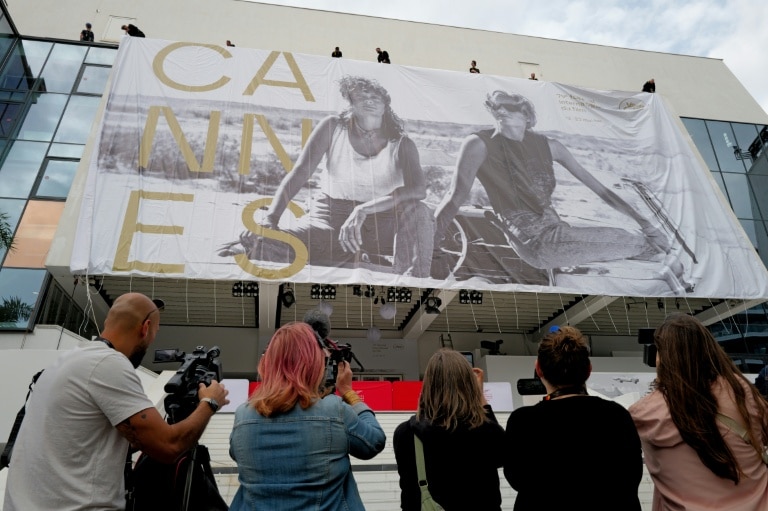
As the 79th Cannes Film Festival prepares to kick off its 12-day run on Tuesday, the event’s top leadership is facing sharp criticism over the continued gender imbalance in its flagship Palme d’Or competition, forcing a public defense of the festival’s selection process. This year’s controversy carries a sharp layer of irony: the festival’s official 2025 poster spotlights the iconic 1991 feminist road classic *Thelma & Louise*, a film celebrated as a landmark of female-centered storytelling.
Of the 22 feature films competing for the festival’s most prestigious honor, the Palme d’Or, only five are helmed by female directors. That marks a drop from 2024, when seven of 22 competing films came from women filmmakers. Feminist industry advocacy group 50/50, which has pushed for gender parity across global film, has slammed festival organizers for what it calls “feminism washing”: leveraging the legacy of *Thelma & Louise* and its stars Geena Davis and Susan Sarandon, two enduring symbols of female empowerment, for promotional clout while failing to deliver on meaningful gender representation in the official selection.
Cannes’ long-serving general delegate Thierry Fremaux pushed back against those accusations during a press conference Monday, rejecting any claim that the poster choice was a cynical performative gesture. “There is absolutely no point at which we’re choosing Geena Davis or Susan Sarandon or Ridley Scott’s film for the poster in order to supposedly give ourselves a feminist image,” Fremaux told reporters. He also noted that the 2018 parity charter 50/50 signed with the festival never mandated immediate equal representation in competition, and argued that mandatory gender quotas for selection have no place at the event. Fremaux emphasized that both the festival’s governing body and its competition juries already maintain full gender parity, and added that when selection committees are split between two equally strong films from a male and female director, the female-directed project gets priority.
Organizers highlight that across all official selection categories outside of the main competition, women directors account for 34 percent of all feature film filmmakers this year, a figure that climbs to 38 percent when short film entries are included. Fremaux framed the current numbers as evidence of slow but steady progress, arguing that greater representation will come as more women break into the upper tiers of professional filmmaking. “Today we’re seeing more and more women directors in upcoming cinema, so they are gradually making their way into the competition,” Fremaux, who has led the festival for more than two decades, explained. “The figures show that things are moving forward, that it’s slow, that it’s not enough. We need a more feminine cinema so that, as in literature and in music, the issue of seeing the world from a female perspective, a woman’s sensibility, is more present in the world of film.”
Critics remain unconvinced, however. Leading French newspaper Le Monde published a scathing analysis of Cannes’ gender record Monday, running the headline “Women on the poster, but still on the sidelines.” The criticism underscores a long-running gap in the festival’s 79-year history: only three women have ever won the Palme d’Or for best film, the most recent being French director Justine Triet for *Anatomy of a Fall* in 2023. The 2025 festival will run through May 23, with the Palme d’Or winner set to be announced on the closing night.