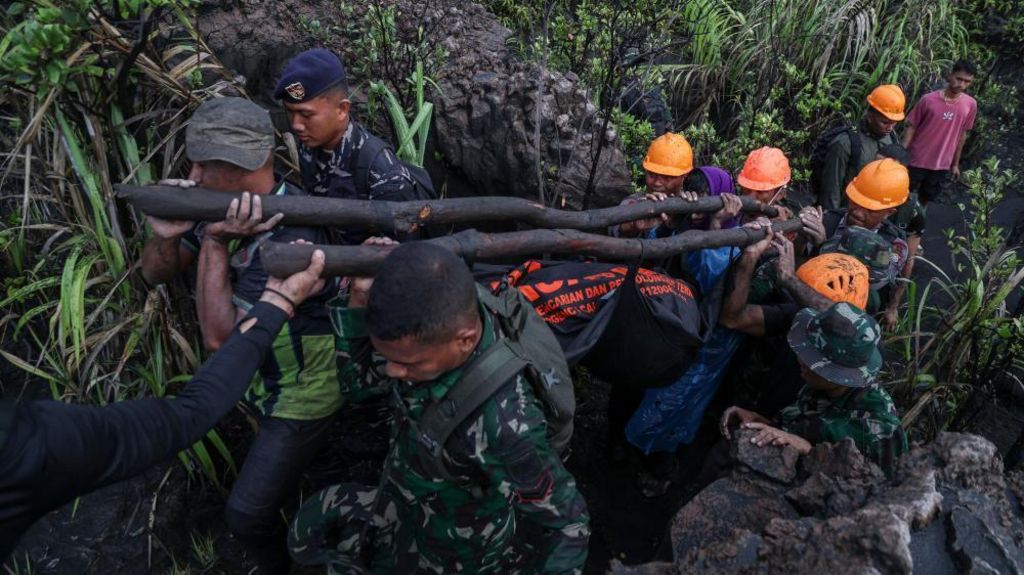
Nestled on Indonesia’s Halmahera Island in North Maluku, the chronically active Mount Dukono turned deadly on a Friday morning in May, when a sudden volcanic eruption claimed three lives in a group of hikers who had accessed the restricted mountain despite official climbing bans. For Reza Selang, the local Indonesian guide who led the 20-person expedition, the harrowing moments of the blast remain seared into his memory, leaving him grappling with overwhelming grief, guilt, and ongoing legal scrutiny.
Reza, who operates a small tour company in North Maluku, was contracted in 2025 by Singaporean adventure expedition organizer Timothy Heng to guide the mixed group of Singaporean and Indonesian hikers on a multi-mountain trek that included Dukono. The group began their ascent on Thursday afternoon, and Reza told the BBC that there were no visible signs of impending volcanic activity at that point, nor when the party reached the summit early Friday morning. Even a pre-ascent drone sweep of the crater captured no smoke or unusual activity. Reza allowed 14 hikers, including Heng, to approach the crater with a promise of a quick descent, while he and the remaining six hikers waited at a lower elevation.
At 7:40 a.m. local time, just one minute after Reza launched his drone to monitor the group near the crater, the mountain erupted. The first blast only released plumes of smoke, but a far more violent second eruption followed 15 to 20 seconds later, hurling massive volcanic rock fragments and ash across the summit. Panicked, the group scattered and fled down the slope, but Reza spotted Singaporean hiker Shahin Muhrez bin Abdul Hamid injured and stranded near the crater via his drone feed. Reza rushed upward to rescue Shahin, and Heng, who had already escaped, turned back to help.
As the two men dragged the injured hiker down the mountain, with flying rocks falling on all sides, a 2-meter-wide boulder dislodged from the crater and bounced toward them. In a split second, Reza recalled, Heng pushed Shahin behind him and absorbed the full impact of the rock. The boulder crushed both men instantly, killing them on the spot. Shocked frozen for nearly a minute, Reza fled down the mountain to alert emergency authorities.
Indonesian officials launched an immediate search and rescue operation for the two dead Singaporeans and a third missing hiker, Indonesian national Angel Krishela Pradita. Angel’s body was recovered near the summit on Saturday, while the remains of Heng and Shahin were extracted from beneath ash and rock on Sunday. All surviving hikers were evacuated to a nearby local hospital for treatment of minor injuries, and the remaining Singaporean citizens have since returned to their home country.
The tragedy has shone a light on longstanding lax enforcement of volcanic hazard restrictions in Indonesia, a nation positioned along the Pacific Ring of Fire that sees frequent seismic and volcanic activity. Authorities confirmed that Mount Dukono has erupted more than 200 times since late March 2026, and that a full suspension of climbing permits and a ban on entry within 4 kilometers of the crater had been in place since April 17. Officials added that warnings had been posted to social media and displayed on physical banners at all trail entrances to the mountain. The area is now permanently closed to all visitors, and officials have pledged to sanction anyone who violates the entry ban.
Reza maintains that he had no knowledge of the full prohibition, noting that local villagers he regularly hires to assist with guiding expeditions also did not alert him to the new restrictions. He acknowledged that he was aware Dukono was rated at Level 2 on Indonesia’s four-tier volcanic alert system, a classification that marks increased observable activity and restricts access to high-risk zones, but added that other popular Level 2 volcanoes in Indonesia, such as Mount Rinjani, still allow hiking outside restricted crater zones. He told reporters he leads climbs up Dukono almost monthly without incident, a common practice among local tour operators despite the mountain’s active status.
Indonesian police have launched a formal investigation into the incident, focusing on allegations of negligence by tour operators and individual organizers. Reza has already been questioned by investigators, and has turned over his drone footage of the eruption as evidence. Police confirmed two people associated with Reza’s tour company have been questioned as witnesses, but are still examining the role each party played in organizing the unauthorized climb. Officials have stated they will not show leniency to any parties found responsible for negligence that led to the deaths. Reza says he accepts whatever legal consequences result from the investigation, and only hopes the process concludes quickly.
In the days following the eruption, Reza has been open about his crippling guilt and regret over the tragedy. He told the BBC he is haunted by endless ‘what-ifs’ – what if the group had never climbed, what if he had never accepted the expedition contract. ‘I feel very guilty toward the victims and their families,’ he said. ‘I feel like I want to go [to Singapore] and kneel at the victims’ parents’ feet. I want to apologise.’