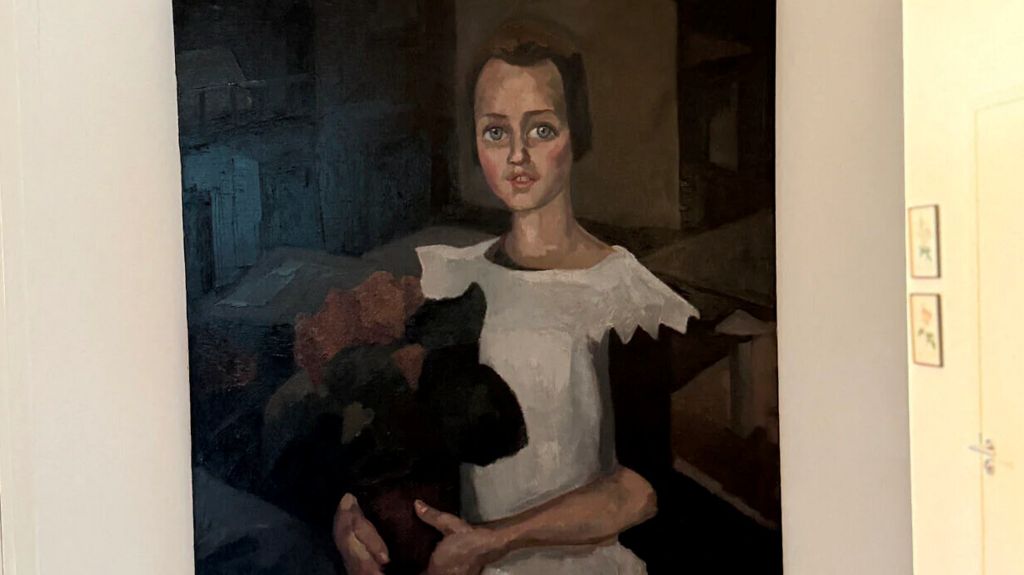
Eighty years after it was stolen from a prominent Jewish art collector by Nazi occupiers, a long-missing looted painting has been recovered in the Netherlands, after a descendant of the family that held it for generations chose to come forward in an act of accountability. Renowned Dutch art detective Arthur Brand, who has built his career tracking down stolen Nazi-era art, has revealed the details of this extraordinary case: *Portrait of a Young Girl*, a work by early 20th century Dutch artist Toon Kelder, was discovered in the residence of descendants of Hendrik Seyffardt, a notorious Dutch Nazi collaborator.
The painting was originally part of the vast, celebrated collection of Jacques Goudstikker, a leading Jewish art dealer based in the Netherlands. When Nazi Germany invaded the Netherlands in 1940, Goudstikker fled the country for his life, but died mid-escape, leaving behind more than 1,000 works of art that were quickly seized by Nazi plunderers. Most of Goudstikker’s collection was dispersed, sold off at auction after being looted.
The case came to Brand’s attention when a man, who discovered he was a direct descendant of Seyffardt, reached out through an intermediary. Seyffardt was a high-ranking Dutch military officer who commanded a volunteer Waffen-SS unit fighting for Nazi Germany on the Eastern Front, before being assassinated by Dutch resistance fighters in 1943. The descendant told Brand he was disgusted upon learning his family had held the looted artwork for decades, and decided to act to return it to its rightful owners. When he confronted his grandmother about the painting, she acknowledged its provenance openly: she told him it had been acquired during the war, that it was looted Jewish property stolen from Goudstikker, and that it was unsellable, instructing him to keep the secret, Brand confirmed.
In statements to Dutch media, the family, who changed their surname after World War Two ended, has confirmed they held the painting for generations, but maintain they had no knowledge of its true origins until recently. The descendant told De Telegraaf, a major Dutch newspaper, that he feels deep shame and believes the work belongs with Goudstikker’s surviving heirs. His grandmother echoed that position in her own statement, saying she inherited the painting from her mother and now understands why Goudstikker’s family wants it returned.
After being contacted, Brand launched a thorough investigation to verify the painting’s provenance. He found an old label on the back of the canvas and the number 92 etched into the work’s frame. Cross-referencing this mark with archival records from a 1940 auction where hundreds of pieces from Goudstikker’s looted collection were sold, Brand found a matching entry: lot number 92 was listed as *Portrait of a Young Girl* by Toon Kelder. Brand’s investigation suggests the painting was originally seized by Hermann Goering, one of the most powerful Nazi leaders and an avid art plunderer, after Goudstikker fled the Netherlands. It was then sold at the 1940 auction to Seyffardt, and passed down through the family ever since.
Brand confirmed he reached out to legal representatives for Goudstikker’s heirs, who verified that Goudstikker once owned six works by Toon Kelder, all of which were included in that 1940 auction of looted art. For Brand, a seasoned investigator who has recovered dozens of Nazi-looted works from major institutions including the Louvre and the Dutch Royal Collection, this case stands out as one of the most remarkable of his career. “This is stunning, the most bizarre case of my entire career,” he told the BBC. “But discovering a painting from the famous Goudstikker collection, in the possession of the heirs of a notorious and famous Dutch Waffen-SS general, truly tops everything.” He noted that while the current generation of the family bears no personal responsibility for Seyffardt’s wartime crimes, they kept the painting for decades when they could have done the right thing and returned it voluntarily.
This recovery draws parallels to another high-profile case involving Goudstikker’s looted collection, when an Italian Renaissance masterpiece by Giuseppe Ghislandi, also stolen by the Nazis from Goudstikker, was spotted on an Argentine real estate website, hanging in a home once owned by a senior Nazi official who fled to South America after the war. Authorities launched a raid to recover the work, but it had been removed before police arrived, and remains missing to this day.
This new recovery marks another small step toward correcting the widespread art theft carried out by the Nazi regime during World War Two, and highlights how even 80 years later, looted works are still being traced and returned to the families of their original owners.