The 72-hour ceasefire between Russia and Ukraine negotiated by the United States expired on Monday amid mutual accusations of breaches, leaving Western powers scrambling to map out a path toward new diplomatic negotiations to end the more than four-year-old conflict. This truce, announced by former U.S. President Donald Trump late last week, was framed as a gesture to mark Russia’s Victory Day holiday commemorating the defeat of Nazi Germany in World War II, and was also paired with a proposed prisoner swap of 1,000 detainees from each side. Trump had even hailed the temporary pause in fighting as the potential “beginning of the end” of the full-scale invasion that began in 2022.
Even before the truce reached its expiration deadline, both warring parties had already levied widespread claims of violations against one another. Ukrainian officials confirmed on Monday that Russian strikes using drones, aerial bombs and heavy artillery hit populated civilian areas in northeastern Kharkiv and southern Kherson, leaving at least two civilians dead and seven more injured. For its part, Russia’s Defense Ministry released a claim Sunday that Kyiv had violated the truce more than 1,000 times, according to Russian state media reports.
Independent analysis from the Washington-based Institute for the Study of War (ISW), which draws on NASA satellite observation data, found that while large-scale military activity dropped slightly after the ceasefire took effect, fighting never fully halted across the front line. In an assessment published late Sunday, the think tank cautioned that ceasefires lack durability without three core components: clear enforcement rules, independent credible monitoring systems, and formal structured processes to resolve disputes. This collapse follows a pattern of similar temporary truces that have failed to end sustained fighting since Russia’s full-scale invasion, as well as a year of U.S.-led diplomatic efforts that have yielded no tangible progress toward a lasting peace.
Despite the tentative prisoner swap plans announced alongside the ceasefire, neither side has shown any willingness to compromise on their core negotiating demands. Russian President Vladimir Putin continues to insist on full Russian control of Ukraine’s Donbas region, the country’s major industrial heartland that Russian forces have yet to fully capture, a non-negotiable demand that Ukrainian President Volodymyr Zelenskyy has repeatedly rejected outright. While Zelenskyy has offered to hold direct face-to-face peace talks with Putin, the Russian leader has refused to meet until a final negotiated settlement is nearly complete, creating a stalemate that has persisted for months.
Over the weekend, Putin floated the idea of former German Chancellor Gerhard Schröder—who has long-standing close business ties to Russia—serving as an independent mediator, but the proposal was immediately dismissed by German and European officials. The move comes as European Union officials acknowledge that their own peace efforts have been largely sidelined by U.S. leadership over the past year, but the bloc is now moving to take a more prominent role in diplomatic processes. EU foreign policy chief Kaja Kallas emphasized that the bloc must first align on its core objectives before entering any formal discussions with the Kremlin, telling reporters in Brussels that “Before we discuss with Russia, we should discuss amongst ourselves what we want to talk to them about.”
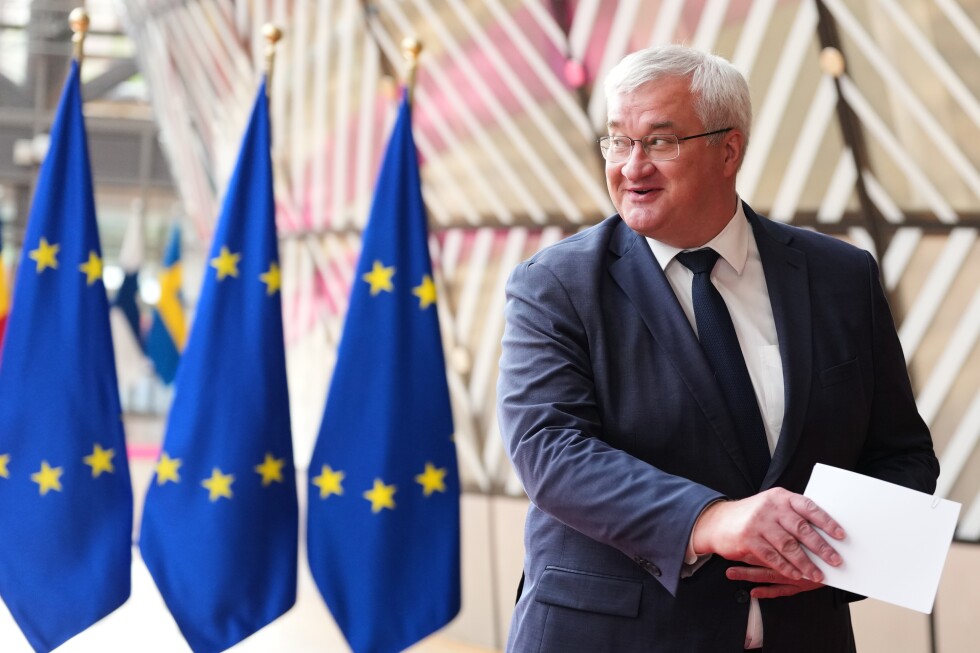
Ukrainian Foreign Minister Andrii Sybiha joined EU foreign ministers for their Brussels meeting, and backed a continued dual-track approach to diplomacy. “We have mainstream peace talks under the leadership of the U.S., and we need this track and we need U.S. leadership. But Europe could play also its role,” he said. Sybiha also highlighted shifting battlefield dynamics, noting that Ukraine has strengthened its position in recent months, slowing Russia’s gradual advance into Ukrainian territory to a costly, slow-moving campaign across the 1,250-kilometer front line. Ukraine has also leveraged domestically produced long-range drones and missiles to strike military targets deep inside Russian territory, he added, saying “We have a new reality on the battlefield … Ukraine became stronger after the most difficult winter.”
On the sidelines of diplomatic talks, a separate incident linked to the war has sparked political upheaval in the Baltic state of Latvia. Investigations into recent stray drone incidents on Latvian territory concluded that Russian electronic warfare systems deliberately diverted Ukrainian drones that had been targeting sites inside Russia, pulling them off course into Latvian airspace. On Sunday, Latvian Prime Minister Evika Silina ordered Defense Minister Andris Sprūds to resign over the incident, saying he had lost her trust after the incident “clearly demonstrated that the political leadership of the defense sector has failed to fulfill its promise of safe skies over our country.” Sprūds complied with the order, framing the ouster as an internal domestic political dispute.
Sybiha confirmed he had spoken with Latvian Foreign Minister Baiba Braže about the incident, and reaffirmed Ukraine’s commitment to collaborating with Baltic states and Finland to prevent similar stray drone incursions in the future. He offered to deploy Ukrainian technical specialists directly to assist with prevention efforts. Latvia is not the only European country to report such incidents in recent weeks; Estonia, Poland and Romania have all also documented stray drones landing on their territory in recent months.
German Defense Minister Boris Pistorius became the latest senior European official to visit Kyiv on Monday, arriving for an unannounced trip focused on expanding bilateral defense cooperation between Germany and Ukraine. Western leaders have continued to reiterate their commitment to supporting Ukraine’s military capabilities amid the ongoing stalemate on the front lines.