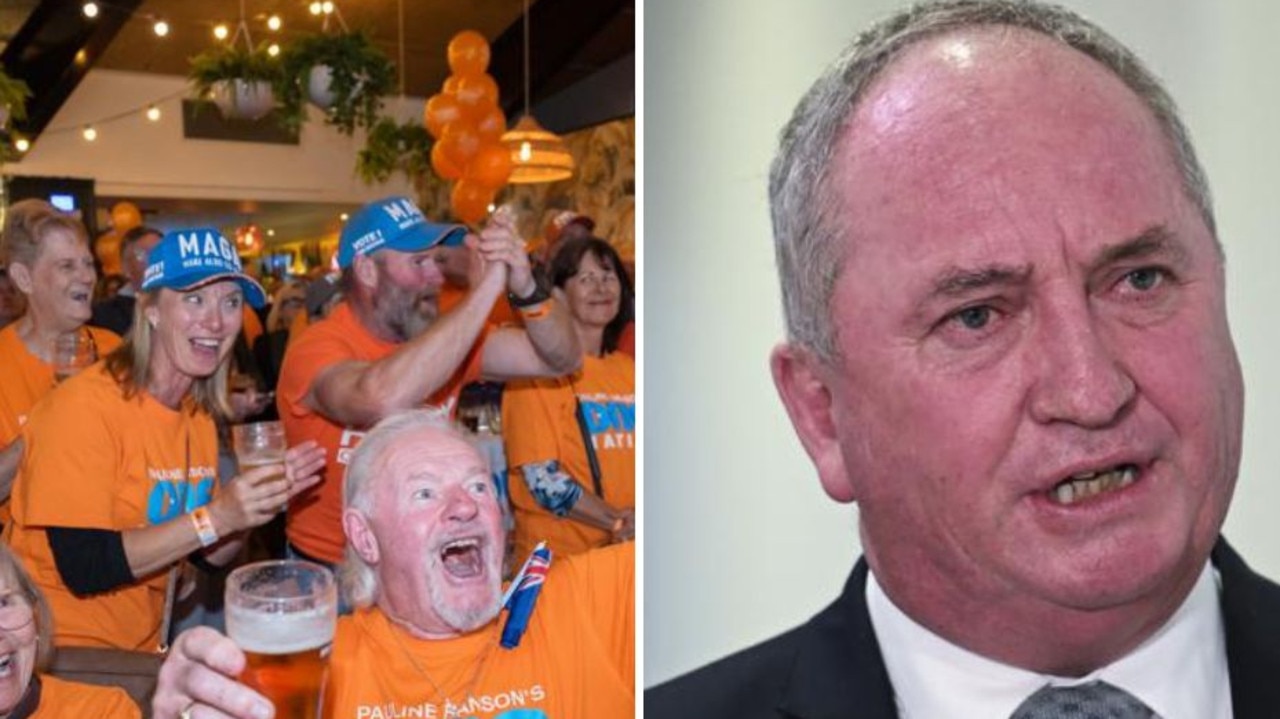
Australia’s right-wing populist party One Nation has made an unprecedented breakthrough in national politics, securing its first ever lower house parliamentary seat in a landslide by-election upset that has immediately paved the way for an aggressive expansion into key Sydney battlegrounds ahead of the 2028 federal election.
On Saturday, One Nation candidate David Farley claimed victory in the rural New South Wales seat of Farrer, ending 77 consecutive years of unbroken control over the electorate by the conservative Liberal-National Coalition. The win marks a historic milestone for the party, which was founded by Pauline Hanson in 1997 and had never before won a seat in Australia’s lower house.
The expansion plan was revealed by Barnaby Joyce, the former Nationals leader who defected to One Nation last November. Speaking on Seven Network’s *Sunrise* program on Monday, Joyce doubled down on remarks he made on election night, confirming that the party is actively scouting potential candidates to contest Labor-held seats across Western Sydney, a densely populated urban region that has long been a progressive stronghold. When pressed, Joyce did not rule out targeting the seat of McMahon, currently held by federal Energy Minister Chris Bowen, which covers the major working-class suburbs of Blacktown, Penrith, Cumberland and Fairfield.
“We are very much focused on the western suburbs of Sydney. I was talking to people on the ground from the region just last night,” Joyce told reporters. “To be quite frank, I think we’re talking to potential candidates. People are very enthusiastic. They know we have huge potential as a movement, and they want to be part of that, not part of this empty, performative butterfly chasing exercise that passes for politics today.” Joyce declined to share specific details about the candidates under consideration, but noted they are mostly first- and second-generation Australian residents, reflecting the demographic makeup of the region.
The stunning by-election result has sparked finger-pointing across the political spectrum, with Prime Minister Anthony Albanese blaming the Coalition’s own strategic missteps for One Nation’s victory. Albanese argued that the fractured conservative bloc had effectively legitimized One Nation over recent years, first by adopting watered-down versions of the party’s populist policy platform, then by directing candidate preferences to One Nation during the by-election.
“I think the Liberal Party and National Party made a big mistake legitimising One Nation … and then following that up by giving them preferences, they were saying effectively that it was OK to vote for One Nation rather than the traditional conservative party,” Albanese told ABC Radio National.
The Prime Minister also cited multiple internal rifts within the Coalition as key factors in the upset. The conservative alliance split twice in 2025: first in May, then again the following January, leaving deep divisions among long-time conservative voters. Albanese added that the unceremonious ousting of former Liberal leader Sussan Ley, who had held the Farrer seat for 25 years, also fueled voter anger. Ley was removed from the leadership without even being given the opportunity to deliver a single budget reply, and the leadership challenge was controversially held on the same day as the funeral of a former Liberal colleague, a move Albanese said left a “legacy of betrayal” among Farrer voters.
Beyond internal conservative chaos, Albanese acknowledged that deep-seated economic anxiety also drove the result. “Quite clearly, there’s a lot of people under financial pressure who feel like the system isn’t working for them,” he said. “And that’s a message for all political parties in the system.”