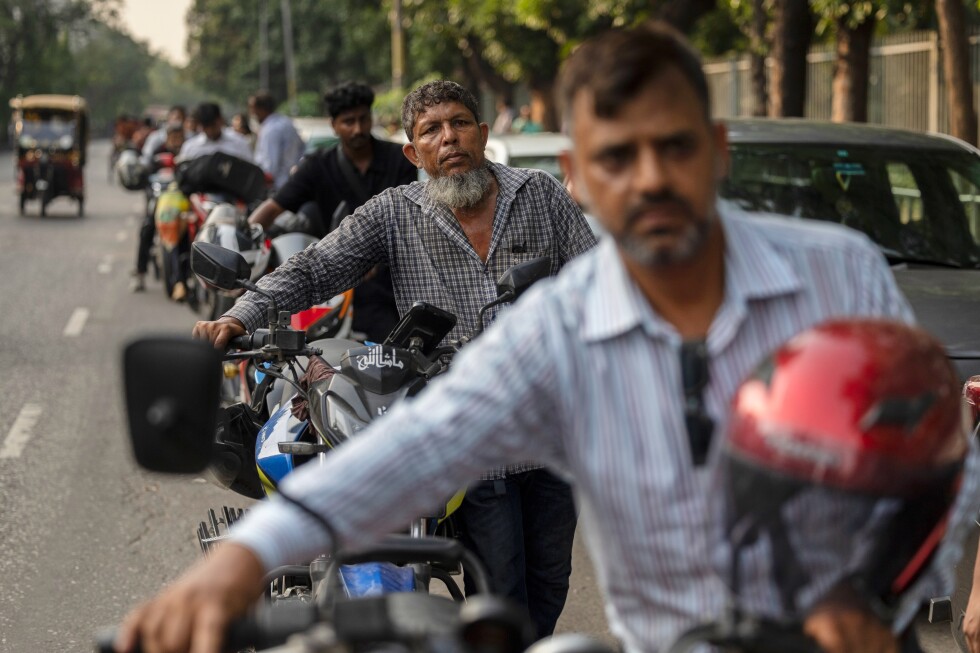
For 53-year-old Tariqul Islam, the economic damage of escalating Middle East conflict arrived not on distant battlefields, but at the fuel pumps of Dhaka, Bangladesh’s crowded capital. A year and a half ago, Islam lost all his savings when his small clothing business collapsed, forcing him to turn to motorbike ride-sharing to support his four children, two of whom are pursuing higher education. Until just weeks ago, he spent the majority of his working days queued for fuel, caught in supply chain disruptions that have rippled thousands of miles from the war in Iran to the streets of South Asia.
Islam’s struggle is far from an isolated hardship. Bangladesh, a nation of 170 million people that relies almost entirely on imported fuel to power its economy, is facing a broad-based energy crunch that has upended daily life, slowed industrial production, and cast a shadow over long-term growth prospects. While temporary government measures have slightly eased supply in recent days, shortening queues at fuel stations, lingering uncertainty continues to weigh on households and businesses across every sector.
Bangladesh is far from alone in facing this crisis. Across the entire Asian continent, nations dependent on imported oil and gas are grappling with war-driven energy price spikes that have strained national budgets and household finances alike. Much of global energy trade passes through the Strait of Hormuz, a narrow waterway that accounts for roughly one-fifth of the world’s total oil and natural gas shipments, making the entire region acutely vulnerable to disruptions sparked by conflict in Iran. For importing nations, the result has been soaring inflation, eroded purchasing power for working families, and spiking operating costs that have disrupted supply chains across every industry from manufacturing to transportation.
In late April, the Asian Development Bank responded to the turmoil by downgrading its growth forecast for developing Asia and the Pacific, projecting regional expansion of just 4.7% in 2026, while inflation is expected to climb to 5.2% amid rising oil prices and tightening global financial conditions.
For ordinary Bangladeshis like Islam, the situation has become untenable. “My family was managing fairly well through ride-sharing,” he explained. “But after the fuel shortage began, I would buy enough fuel one day to run the bike for two days. As a result, I had to sit idle for one day, which reduced my income.” If the conflict drags on and conditions do not improve, Islam says he has no choice but to abandon life in the capital and relocate his family back to his rural home village, where he hopes to find an alternative source of income. “It is not possible to survive in Dhaka by doing ride-sharing under these conditions,” he said.
The crisis is also putting unprecedented strain on Bangladesh’s public finances. If global energy prices remain at their current elevated levels, the government will be forced to spend an additional $1.07 billion on liquefied natural gas (LNG) subsidies in the second quarter of 2026 alone. To offset the gap, authorities have already implemented a series of austerity measures, including shutting state-owned fertilizer factories to redirect limited gas supplies to power plants, imposing mandatory restrictions on evening operating hours for shopping malls, and rolling out fuel rationing systems. Bangladesh has also reached out to neighboring India for additional fuel supplies, a request India has met positively thanks to its own diversified fuel import network that includes shipments from Russia.
The World Bank projects Bangladesh’s economic growth will slow to just 3.9% in the fiscal year ending June 2026, with a prolonged conflict in the Middle East expected to further fuel inflation, widen the country’s current account deficit, and increase pressure on public finances through higher energy subsidy obligations. Jean Pesme, the World Bank’s division director for Bangladesh and Bhutan, noted that the economy was already grappling with pre-existing vulnerabilities on the growth and employment fronts before the energy crisis hit. “The rising costs now are obviously making the fiscal situation more difficult,” Pesme explained, adding that authorities must proceed with caution when considering fuel price hikes, as higher costs would disproportionately harm small-scale farmers and the agricultural sector that supports much of Bangladesh’s rural population.
The most severe damage is hitting Bangladesh’s economic backbone: the $39 billion garment export industry, which employs roughly 4 million workers, the vast majority of whom are women from low-income rural backgrounds. As the world’s second-largest garment exporter behind China, any major disruption to the sector has cascading consequences for the entire national economy.
Industry leaders report that the energy crisis has driven a sharp jump in operating costs while export demand has weakened. Anwar-Ul Alam Chowdhury, president of the Bangladesh Chamber of Industries, says shipments to key markets in Europe and the United States have already fallen between 5% and 13% in recent months. Since the outbreak of the latest conflict in Iran, overall factory output has dropped by 30% to 40%, while overall business costs have surged 35% to 40%. Chowdhury warns that persistent instability could erode international buyer confidence, allowing competitor nations including India, Vietnam and Cambodia to capture critical market share from Bangladesh.
For individual manufacturers, the crisis plays out on factory floors every day. Alvi Islam, director of Arrival Fashion Limited, a garment exporter that ships $40 million in products annually, says the company now must run diesel generators for at least four hours per working day to offset frequent power cuts. Energy-driven cost increases are also hitting input materials: petroleum-based products including sewing thread, plastic poly bags for packaging, and shipping cartons have all grown far more expensive. “For that reason, the cost of doing business for exporting garments has increased quite significantly in past one month,” he said.
For the millions of low-wage workers who depend on the garment industry for their livelihoods, the uncertainty has sparked deep fear for the future. Mosammet Runa, a 35-year-old garment worker who earns roughly $200 per month alongside her husband to support their family of six, says a prolonged conflict could put millions out of work. “Millions of people like us depend on this industry. It is how we survive,” she said. “We are innocent people. The world should not make us victims.” Many across the country share her hope: that the conflict in Iran will end quickly, allowing supply chains to stabilize and life to return to normal.