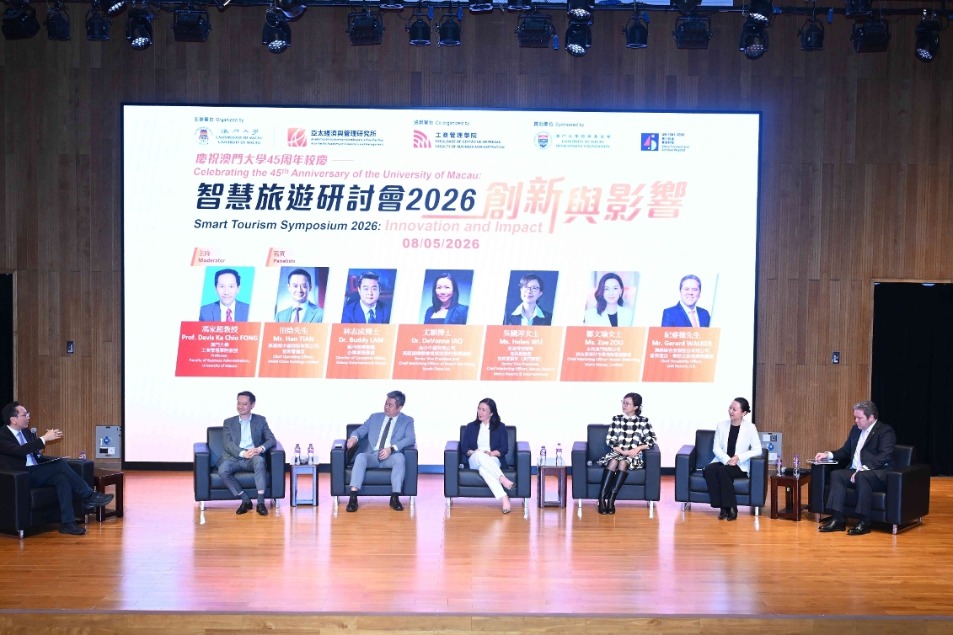
On Friday, the University of Macau (UM) launched the 2026 Smart Tourism Symposium, a high-profile gathering that united leading academic scholars and C-suite industry executives from the global tourism and hospitality sectors to explore cutting-edge advancements in the field.
Titled “Smart Tourism Symposium 2026: Innovation and Impact”, the event centered its discussions on three core pillars: technological breakthroughs reshaping visitor experiences, large-scale transformation and upgrading of traditional tourism frameworks, and expanded collaboration between academic institutions and private industry players. Attendees delivered targeted insights designed to strengthen Macao’s ongoing push to establish itself as a leading international tourism and leisure hub, according to official statements from the organizing university.
In his opening address at the symposium, UM Vice-Rector Ge Wei emphasized the unique value of cross-sector dialogue hosted by the institution. He shared his expectation that the connections and ideas forged at the event would inject fresh, transformative energy into the development and innovation of smart tourism across Macao, while also providing critical support for the long-term sustainable upgrading of the city’s core tourism economy.
Rob Law, deputy director of UM’s Asia-Pacific Academy of Economics and Management, expanded on Macao’s strategic positioning for future tourism growth. He noted that the special administrative region benefits from substantial developmental advantages, rooted in its integration within the Guangdong-Hong Kong-Macao Greater Bay Area, its unbroken connectivity to the broader Chinese mainland, and its open access to global tourism markets.