As former U.S. President Donald Trump prepares for a high-stakes upcoming summit with Chinese President Xi Jinping in Beijing, a pressing humanitarian and geopolitical plea has taken center stage: the family of imprisoned Hong Kong pro-democracy activist Jimmy Lai is urgently calling on Trump to leverage the meeting to secure Lai’s release, warning that the 78-year-old’s declining health leaves little time for delayed action.
Lai, once a prominent media tycoon and vocal critic of Beijing’s governance in Hong Kong, founded the now-shuttered pro-democracy newspaper Apple Daily. The outlet was forced to close during the sweeping crackdown that followed Hong Kong’s 2019 large-scale anti-government protests. Last year, Lai was sentenced to a total of 20 years in prison under the controversial national security law that Beijing imposed on Hong Kong in 2020 — a law that Lai had once hoped a U.S. president would intervene to stop.
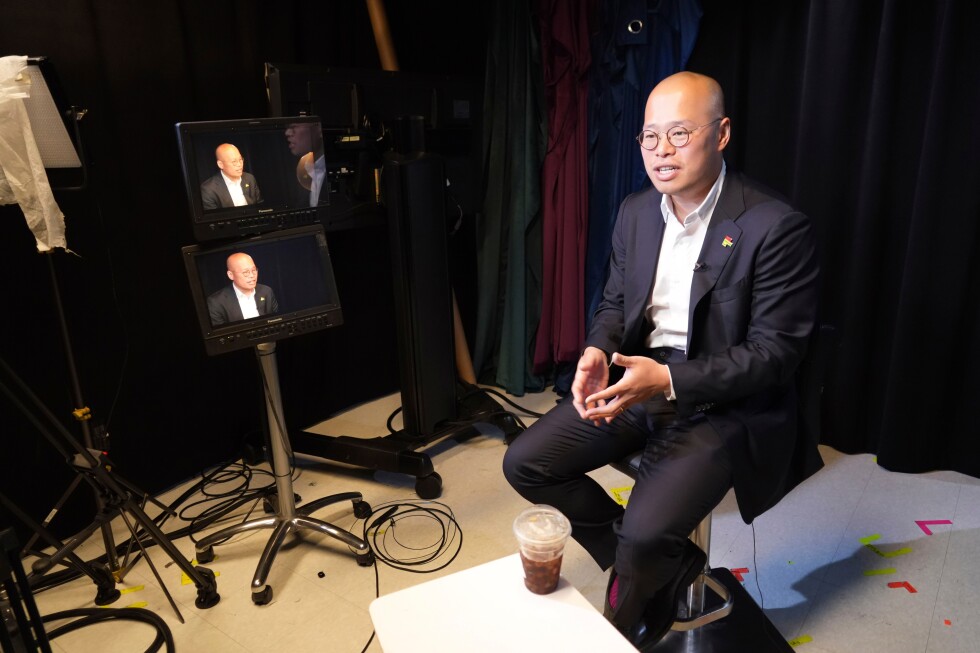
In an exclusive interview with the Associated Press, Lai’s 31-year-old son Sebastien Lai, who is based in London, laid out the family’s last-ditch hopes for diplomatic intervention. Sebastien, who has maintained contact with his father through letters during his five years in custody, warned that his father’s pre-existing health conditions — including heart palpitations and diabetes — put his life at grave risk if he remains behind bars. “My father will die in prison if he’s not freed,” Sebastien said, adding that an in-custody death would create a lose-lose outcome for all parties, turning Lai into a martyr and deepening international distrust of Beijing. If released, Sebastien added, his father only desires to live out the rest of his years in quiet seclusion.
Trump has already signaled he plans to raise Lai’s case during the Beijing talks, alongside other core agenda items including trade relations, the ongoing Iran war and cross-strait tensions over Taiwan. Speaking to conservative radio host Hugh Hewitt, Trump noted he holds “a little bitterness” over Lai’s continued detention. This is not the first time the former president has raised the issue: he first brought up Lai’s case during an October 2024 meeting with Xi, and has twice instructed senior administration officials to raise the demand in bilateral talks with Chinese counterparts, according to Mark Clifford, president of the Committee for Freedom in Hong Kong Foundation, which advocates for Lai’s release.
Clifford, citing sources briefed on previous diplomatic engagements, said Chinese officials have acknowledged U.S. calls for Lai’s release without aggressive pushback in private discussions, a shift he calls a positive sign that the door for negotiation remains open. The U.S. Treasury Department declined to comment on the diplomatic outreach, while the White House has not responded to questions about how aggressively it will press for Lai’s release during the upcoming summit. More than 100 bipartisan U.S. lawmakers have already signed a public letter urging the Trump administration to prioritize Lai’s release at the Beijing talks.
Publicly, however, Beijing has maintained a firm stance that Lai’s case falls entirely under China’s internal affairs, barring any foreign interference. Chinese foreign ministry officials have labeled Lai the mastermind of the 2019 Hong Kong riots, while the Hong Kong government has rejected claims that his conviction threatens press freedom, emphasizing that Lai received a fair and open public trial. Authorities are also currently moving to seize all of Lai’s assets on national security grounds, a step Sebastien calls a continued retaliatory attack against his father. Lai, a British citizen whom Beijing insists is Chinese, has chosen not to appeal his conviction and sentence.
Analysts and activists are divided over the likelihood of a diplomatic breakthrough, amid shifting patterns in Sino-U.S. prisoner exchanges. While Washington secured the release of U.S. pastor David Lin and other detainees in a 2024 diplomatic swap, rights advocates note Beijing has grown far less willing to release high-profile political detainees under President Xi Jinping than it was under previous leaders. Human rights lawyer Jared Genser, who represented late Nobel Peace Prize laureate Liu Xiaobo, who died in Chinese custody in 2017 despite international calls for his medical release, said Xi’s administration prioritizes framing its actions as resistance to foreign interference over protecting its international reputation. Unlike under Hu Jintao’s leadership, when China was more open to concessions to maintain smooth economic relations, Genser said, “China knows that most countries will only raise these cases privately, and that self-censorship makes it far harder to secure the release of political prisoners today.”
John Kamm, founder of the Dui Hua Foundation which advocates for political prisoners, noted that China has historically made concessions on detainee cases when it seeks specific diplomatic or economic gains — such as when it agreed to goodwill gestures ahead of hosting the Olympic Games. But Kamm argued that the Trump administration has shown little sustained focus on political prisoners in China, with Trump’s priorities for the summit firmly fixed on trade, investment and the Iran war. Still, other analysts see room for a mutually beneficial deal. Thomas Kellogg, executive director of the Georgetown Center for Asian Law, said releasing Lai could serve both sides: it would allow Beijing to signal it is ready to move past the post-2019 crackdown era in Hong Kong, while delivering a much-needed diplomatic win for the Trump administration after a string of recent political challenges. A deal on Lai would even earn Trump praise from his domestic critics, Kellogg added.
Wilson Chan, co-founder of the Pagoda Institute think tank, offered a more pessimistic outlook, arguing that the chances of a diplomatic solution are slim. Chan noted that Beijing has deliberately chosen to use Lai’s case to send a message to both domestic and international audiences, and continued international pressure on the issue only reinforces Beijing’s view that Lai remains a persistent national security threat. Without sustained, high-profile public pressure, Chan added, Beijing faces no incentive to compromise. For Sebastien Lai and his family, however, there is no alternative to pushing for diplomatic action: with every passing month, the clock ticks closer to what they fear is an inevitable, tragic outcome if intervention does not come soon.