When Iranian security agents arrived at Peyvand Naimi’s workplace in Kerman on January 8, the 30-year-old member of Iran’s persecuted Bahai religious community had no idea what horrors awaited him behind bars. Accused of involvement in the killing of three Basij militia members the previous night, Naimi’s case already falls apart on basic timeline: he was taken into custody that afternoon, hours before the attack he is alleged to have carried out.
Decades of systematic discrimination had already closed doors for Naimi: barred from university and competitive swimming teams despite his natural talent for the sport, he had long adapted to life as a target of state-sanctioned prejudice because of his faith. Today, he is one of at least 77 Bahais arrested across Iran since nationwide anti-government protests erupted in January, in what community leaders describe as the harshest wave of repression against the group since the immediate aftermath of the 1979 Islamic Revolution.
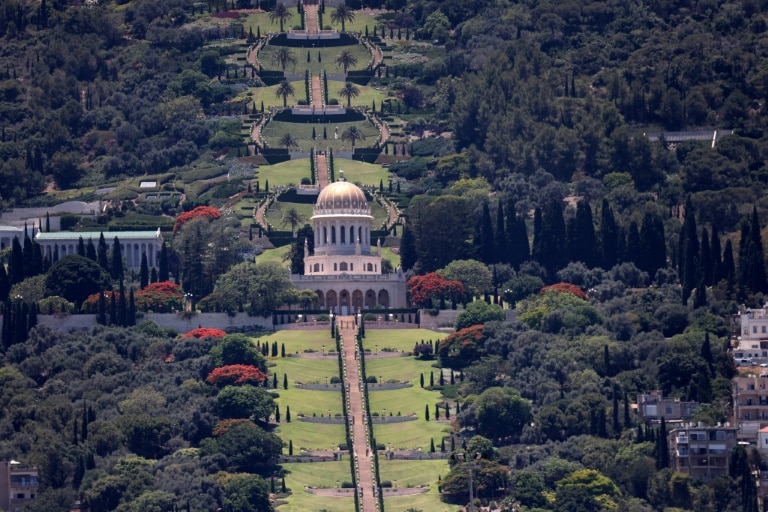
Originating in 19th-century Persia, the Bahai Faith is the largest non-Muslim religious minority in Iran, with an estimated 300,000 followers nationwide. The Islamic republic has never formally recognized the faith, branding its adherents as heretics and repeatedly leveling unsubstantiated accusations that they act as Israeli spies – a baseless claim rooted in the location of the faith’s global spiritual center in Haifa, Israel, which was established decades before the founding of the modern Israeli state. Community advocates say this scapegoating follows a predictable pattern: whenever Iran faces internal unrest or external regional tensions, authorities turn to blaming Bahais to deflect public anger.
“This is an escalation against the Bahai that we have not witnessed in decades,” Simin Fahandej, the Bahai International Community (BIC) representative to the United Nations, told AFP in an interview. Fahandej confirmed that arrests have continued steadily through the ongoing Israel-Hamas war and intensified sharply after the 12-day Iran-Israel conflict in June 2025. What makes this crackdown different from past waves of repression, she explained, is the state’s deliberate use of tortured, forced confessions broadcast on state media to spread hate speech and legitimize further persecution of the community.
Amnesty International has corroborated these accounts, confirming that a coordinated state-led campaign of incitement, disinformation, discrimination and violence has targeted Bahais since the June 2025 cross-border war, with repeated false claims that the community serves as Israeli spies and collaborators.
For Naimi and other detainees, the abuse in custody has been brutal. According to his close relative, who spoke to AFP on condition of anonymity out of fear for family safety inside Iran, Naimi was beaten repeatedly over five days, endured two mock executions with his hands and feet bound, was tied to a wall for extended periods, deprived of food, and forced to appear in a televised coerced confession. During a brief, monitored phone call to his parents, he told them, “If they execute me do not be sad, my soul will be free of the cage of my body.” Later, during a family visit, he reaffirmed his innocence: “I have done nothing wrong, I have not committed any crime and I will not confess.” As of yet, Naimi has not been formally charged or granted a trial.
Naimi’s 29-year-old cousin Borna was arrested in early March and has faced identical abuse, including at least two mock executions and electric shocks that left severe burns on his feet, BIC reports confirm.
The crackdown has swept up Bahai communities across the country, from southeastern Kerman province to the southern city of Shiraz. Roya Basiri, a Canadian resident whose brother, sister-in-law, and 25-year-old sister-in-law Mahsa Sotoudeh were all arrested in late March and early April, described the arbitrary nature of the raids. When Revolutionary Guards agents arrived at Mahsa’s family home and demanded to see an arrest warrant, Basiri told AFP, agents responded bluntly: “We are the warrant.” The agents searched the home, seized all electronic devices, then lured Mahsa back to the house by using her mother’s phone, arresting her at the door in front of her distraught parents. While Basiri’s brother has since been released on bail, Mahsa and Mandana Sotoudeh remain in detention.
In late April, three Bahai women – one of whom is pregnant – from the southeastern town of Rafsanjan were ordered to begin serving existing prison sentences on vague charges of spreading “propaganda” against the Iranian government. Another Bahai detainee, 30-year-old Venus Hosseininejad, who was arrested in January in Kerman and forced to give a televised false confession, was recently released on bail; while she still faces pending charges, BIC confirmed she is not currently at risk of execution, despite recent claims made by former U.S. president Donald Trump on social media.
Thirteen men already have been executed across Iran on charges linked to the January protests, a wave of punishment that human rights activists say is designed to instill mass fear amid rising tensions with the United States and Israel. For Iran’s Bahai community, the current crackdown represents a dangerous acceleration of a decades-long campaign of persecution, with community members once again being made to pay the price for state instability, advocates say.