Nepal has been plunged into chaos following violent anti-corruption protests that erupted last week, resulting in the deaths of over 70 people and leaving more than 1,000 injured. The unrest, initially sparked by a government-imposed social media ban, quickly escalated into a broader movement against systemic corruption, culminating in the resignation of Prime Minister KP Sharma Oli and the toppling of his government.
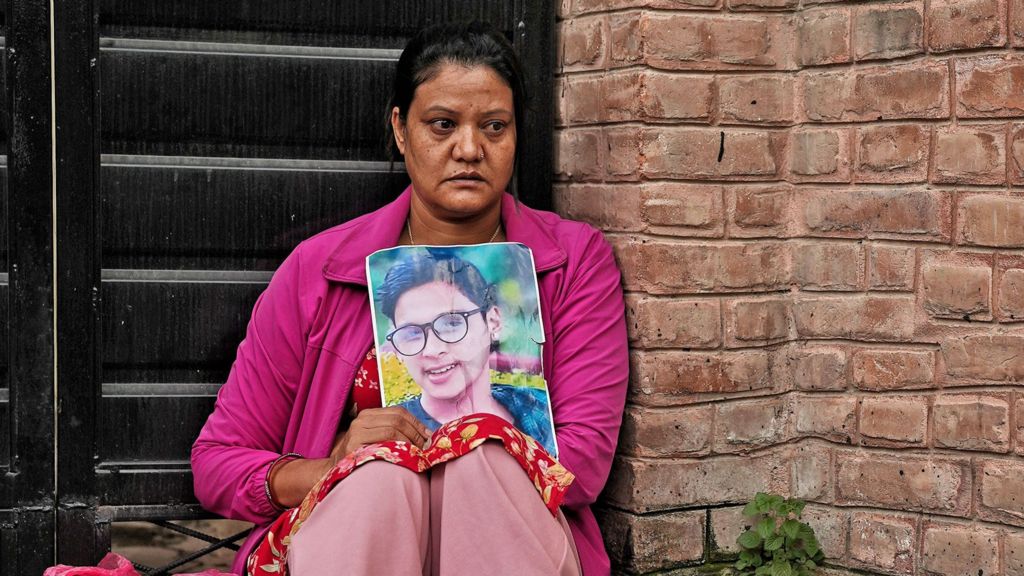
Among the victims was 21-year-old Sulov Shrestha, whose father, Narendra Shrestha, is demanding accountability for his son’s death. ‘If they can shoot my son, then I and his mother also want to die. Who will we live for now?’ he lamented outside the mortuary of Tribhuvan University Teaching Hospital in Kathmandu. Sulov was one of many young lives tragically cut short—others included aspiring judges, students, and language learners.
The protests, which began on September 8, saw thousands of demonstrators, many from Generation Z, gather near Nepal’s parliament. The government’s decision to ban platforms like Facebook, X, and YouTube, citing concerns over fake news and online fraud, was met with widespread outrage. Protesters accused the government of attempting to silence dissent, and the demonstrations quickly turned violent. Crowds set fire to government buildings, including parliament, even after the Prime Minister’s resignation.
Police have been accused of using excessive force, with reports of both rubber bullets and live ammunition being fired into crowds. Dr. Santosh Paudel of Bir Hospital noted that many patients suffered ‘sharp rifle injuries,’ contradicting official claims that only rubber bullets were used. The interim government, led by former Chief Justice Sushila Karki, now faces the daunting task of restoring public trust and investigating the violence. Karki has pledged fresh elections for March 2026, but her administration’s first test will be ensuring accountability for the deadly crackdown.
Families of the victims, like Rasik KC, whose nephew Rashik Khatiwada was shot twice in the chest, are demanding justice. ‘We want accountability,’ KC said, echoing the sentiments of many who have lost loved ones. As Nepal grapples with the aftermath of this tragedy, the international community watches closely, hoping for a peaceful resolution to the crisis.