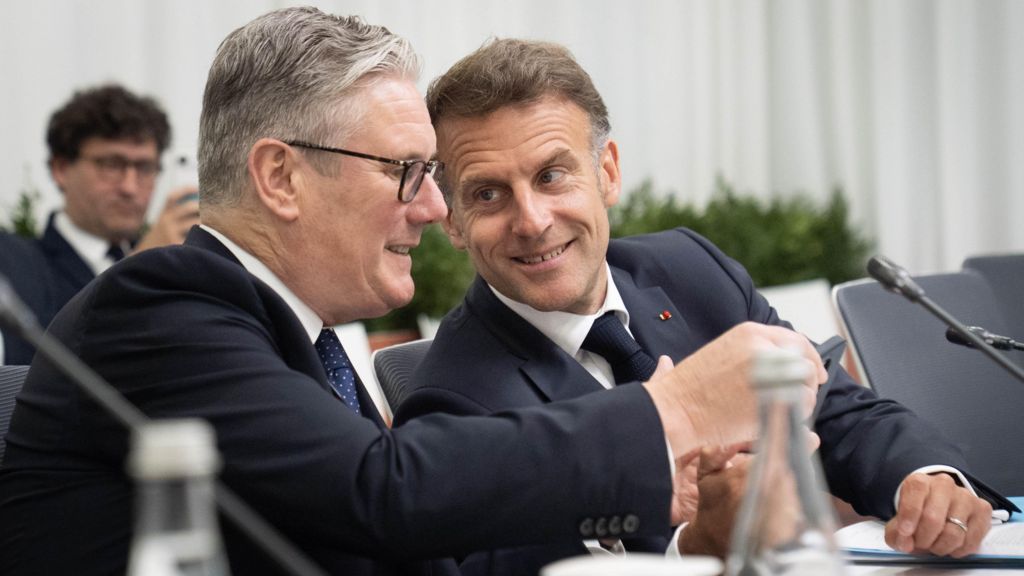
The shadow of U.S. President Donald Trump hung heavily over this week’s European Political Community (EPC) summit in Yerevan, Armenia, even as leaders stopped short of naming him directly during closed and open discussions. For attendees at the gathering, which brought together dozens of heads of state and government from across the continent, growing American disengagement from European security was the unmissable issue driving urgent talks of European strategic self-reliance.
Addressing delegates on the opening day of the summit, French President Emmanuel Macron framed Europe’s decades-long over-dependence on Washington’s security guarantees as the “elephant in the room” that leaders could no longer afford to ignore. The gathering, which is structured as a less formal alternative to rigid institutional EU summits, was convened to address three core priorities: strengthening energy security across the continent, defending democratic institutions, and sustaining military and economic support for Ukraine amid its third year of defending against Russia’s full-scale invasion.
The summit also marked a milestone for host nation Armenia, which will hold its first ever formal direct negotiation session with the European Union on Tuesday, a step that underscores the country’s accelerating westward political alignment. The move has already drawn sharp criticism from neighboring Russia, which has long viewed the South Caucasus nation as part of its traditional sphere of influence.
Recent policy moves from the Trump White House have amplified the urgency of European calls for greater defense autonomy. Trump’s recent announcement that he will withdraw 5,000 U.S. troops and long-range deterrent missiles from bases in Germany — missiles deployed by predecessor Joe Biden explicitly to counter potential Russian aggression — has deepened European concerns about Washington’s commitment to regional security. Tensions rose further after German Chancellor Friedrich Merz, who was unable to attend the Yerevan summit, publicly criticized Trump’s military campaign against Iran as strategically unmoored. Trump hit back, dismissing Merz as ineffective, and German officials have since scrambled to de-escalate the public rift.
NATO Secretary General Mark Rutte, who has long pursued a strategy of diplomatic outreach to Trump, acknowledged that alliance leaders are well aware of the U.S. president’s longstanding frustration with European defense spending levels, which he has repeatedly criticized as insufficient. “We have heard his frustrations,” Rutte told reporters on the sidelines of the summit.
Beyond frictions with Washington, European leaders also confront a cascade of overlapping global challenges that threaten regional stability. The ongoing military conflict between the U.S.-Israel bloc and Iran, and the subsequent disruption to global oil supplies through the Strait of Hormuz, has sent ongoing economic ripples across Europe that continue to strain energy markets and economic growth. Meanwhile, the war in Ukraine grinds on, with Ukrainian President Volodymyr Zelensky using his address to the summit to urge allies to maintain unwavering pressure on the Kremlin ahead of a key decision point this summer.
“This summer will be a moment when Vladimir Putin decides what to do next,” Zelensky told delegates. “We must push him toward diplomacy. Russia can’t afford new military equipment, which makes clear they are not as strong as they once projected to be.”
The summit also signaled a notable shift in post-Brexit relations between the United Kingdom and the European Union, under new UK Prime Minister Keir Starmer. Starmer, who acknowledged that European alliances “are not where we want them to be” in comments widely interpreted as a reference to shifting U.S. policy, again called on European nations to accelerate efforts to strengthen their own defense capabilities. He has also made little secret of his ambition to deepen cooperation and even policy alignment with the bloc, a sharp break from the hardline Eurosceptic approach of his recent predecessors.
Currently, the UK is in active negotiations to join an EU-led €90 billion (£78 billion) loan framework designed to provide long-term economic and military support to Ukraine. The UK has been one of Ukraine’s most steadfast allies since Russia’s 2022 invasion, but the move marks a growing shift toward coordinating that support through European institutional frameworks. Starmer defended the negotiations, noting that the agreement would deliver tangible benefits to both Kyiv and British workers. “It’s of great benefit to Ukraine, but also the jobs it’ll create in the United Kingdom,” he said. He declined to comment on media reports that the EU is demanding the UK pay roughly £1 billion ($1.3 billion) annually as part of a broader reset in bilateral relations, a demand that aligns with longstanding expert arguments that the UK must pay for access to European single market benefits.
Experts and leaders alike acknowledge that forging genuine European strategic autonomy — freeing the continent from dependence on U.S. military power and the potential political leverage that comes with it — will be a decades-long project. For now, the bloc’s core hope is that incremental progress on developing independent European military capabilities will ease Trump’s frustrations, and keep Washington at least partially aligned with European interests as the continent confronts a growing array of interconnected security and economic challenges.