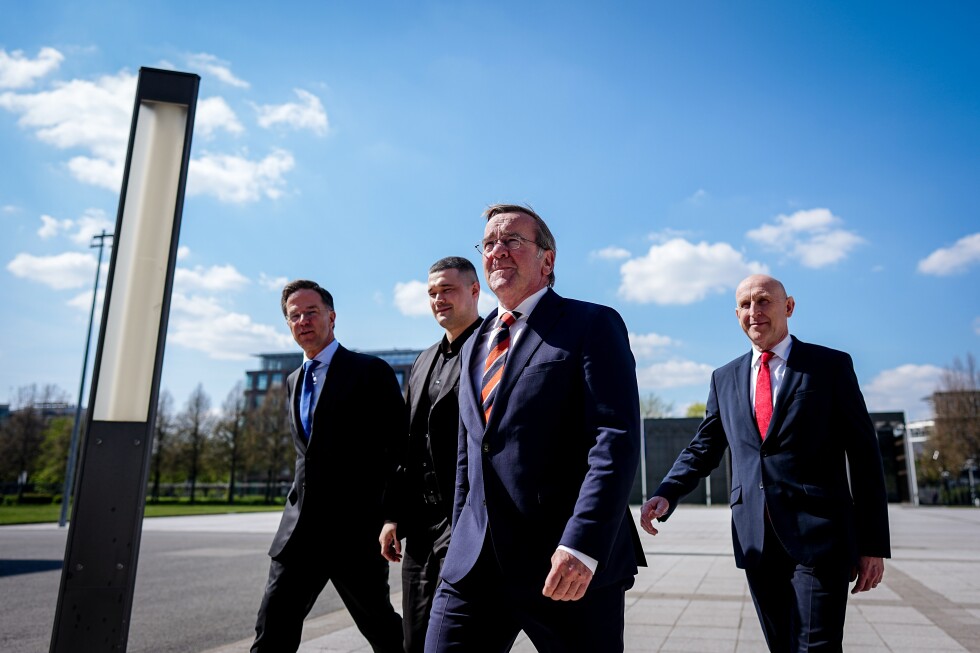
BERLIN – The Pentagon’s recent announcement that it will withdraw roughly 5,000 U.S. troops from Germany over the next 6 to 12 months has been met with measured calm from German defense leadership, even as the move signals a fresh erosion of trust between Washington and its key European allies amid a series of escalating tensions under the second Trump administration.
German Defense Minister Boris Pistorius framed the drawdown as a long-expected development, echoing years of warnings from the White House that it would reduce U.S. military commitments in Europe. In comments Saturday to Germany’s national news agency dpa, Pistorius emphasized that the decades-long U.S. military presence on German soil has long served mutual strategic interests for both nations. “The presence of American soldiers in Europe, and especially in Germany, is in our interest and in the interest of the U.S.,” Pistorius said. He added that European NATO members have already acknowledged and acted on the need to take greater ownership of regional collective defense, with Germany ramping up military spending, accelerating weapons procurement, and expanding defense infrastructure in recent years to meet shifting security demands.
The 5,000-troop pullout accounts for approximately 14% — or one-seventh — of the 36,000 U.S. service members currently stationed in Germany. While the drawdown is sizable enough to shift the trans-Atlantic security dynamic, it is not viewed as a critical cut to U.S. force posture. Pentagon officials have so far released no detailed information about which units, facilities, or operations will be affected by the withdrawal. Across the entire European theater, the U.S. normally maintains between 80,000 and 100,000 military personnel, a number that rose after Russia launched its full-scale invasion of Ukraine in February 2022. European allies have anticipated a post-escalation drawdown of this temporary reinforcement for more than a year.
Pentagon spokesperson Sean Parnell said in an official statement that the decision came after a comprehensive review of U.S. force positioning across Europe, and was made to align with current theater requirements and on-the-ground security conditions. Germany hosts some of the most critical U.S. military infrastructure outside of North America, including the joint headquarters for U.S. European Command and U.S. Africa Command, Ramstein Air Base — a key logistics and command hub for operations across the Middle East and Africa — the Landstuhl Regional Medical Center that treated thousands of casualties from the Afghanistan and Iraq wars, and deployed U.S. nuclear weapons.
NATO spokesperson Allison Hart noted Saturday in a post on X that the alliance is collaborating with U.S. officials to work through the details of the force posture adjustment. “This adjustment underscores the need for Europe to continue to invest more in defense and take on a greater share of the responsibility for our shared security,” Hart said, adding that allies have made steady progress toward the alliance’s new target of each member devoting 5% of gross domestic product to defense spending.
Despite the measured official response from Berlin and NATO, the withdrawal marks a clear new low in U.S.-German relations and ties between Washington and European allies more broadly. For years, Trump has publicly floated the idea of cutting U.S. troop numbers in Germany, and has repeatedly attacked NATO for refusing to back U.S. policy in the conflict with Iran that began with U.S.-Israeli strikes on the country in late February. The president has also openly expressed frustration that NATO allies have declined to join his anti-Iran campaign, and has launched verbal attacks on multiple top European leaders, including German Chancellor Friedrich Merz, Spanish Prime Minister Pedro Sánchez, and British Prime Minister Keir Starmer.
Just last week, Merz publicly criticized U.S. strategy in Iran, saying Washington is being “humiliated” by the Iranian leadership and has no clear policy for the region. The trans-Atlantic rift has spilled over into trade as well: Trump recently accused the European Union of failing to comply with its existing trade agreement with the U.S., and announced plans next week to raise tariffs on all EU-produced cars and trucks to 25%. The new tariffs would hit Germany particularly hard, as the country’s economy relies heavily on automotive exports to the U.S. At least one senior EU lawmaker has already labeled the planned tariff hike “unacceptable,” accusing Trump of breaking yet another major U.S. trade commitment.
NATO allies have been preparing for a U.S. troop drawdown in Europe since Trump began his second term, after repeated warnings from Washington that Europe will need to take full responsibility for its own security in the coming years — including security support for Ukraine. The reporting for this article was contributed by Sarah Burrows from London, with additional reporting from Jamey Keaten in Lyon, France.