A violent stabbing incident targeting two Jewish men in a majority-Jewish northwest London neighborhood has ignited a fierce national debate in the United Kingdom over the intersection of pro-Palestine protest rights, rising antisemitism, and political opportunism. The attack, which left a 34-year-old and a 76-year-old injured, prompted Prime Minister Keir Starmer to deliver a nationally televised address that immediately drew sharp criticism from civil liberties campaigners, opposition politicians, and pro-Palestine organizers.
Following the attack, a 45-year-old Somali-born British national named Essa Suleiman was taken into custody just hours after the stabbing. Channel 4 News later confirmed that Suleiman had been discharged from a psychiatric facility only days before the incident. On Friday, London’s Metropolitan Police formalized charges against him: two counts of attempted murder and one count of illegal public possession of a bladed weapon. Notably, no terrorism-related charges have been filed, despite widespread early speculation. Additional court documents seen by the BBC also reveal Suleiman is accused of attempting to murder a third man, Ishmail Hussein, an acquaintance of 20 years, on the same morning as the Golders Green attack. Records also show Suleiman was referred to the UK’s controversial Prevent counter-extremism programme back in 2020.
An obscure little-known online faction calling itself Harakat Ashab al-Yamin al-Islamia (Hayi) quickly issued a statement claiming responsibility for the attack. The unsubstantiated claim has not been verified by any British law enforcement body, and no evidence has emerged to connect Suleiman to the group, or to explain how a mentally ill man recently discharged from hospital could have received operational direction from the faction. Hayi has issued a string of similar uncorroborated claims for attacks across Europe over the past two months. While the Israeli government has alleged the group has ties to Iran, British investigators have not confirmed any such link, though they confirm the connection is being probed.
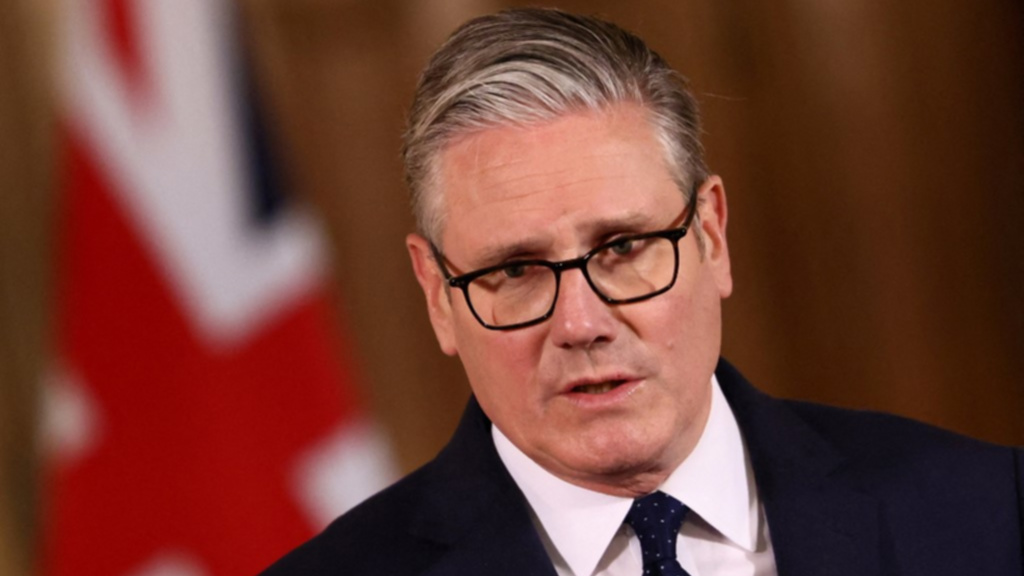
In his national address, Starmer drew direct connections between widespread pro-Palestine marches across the UK and the recent surge in antisemitic violence, arguing that any protester who participates in a march where the slogan “globalise the intifada” is used is effectively endorsing terrorism against Jewish people, and that anyone using the phrase should face prosecution. He doubled down on the claim, adding that protesters who march alongside people displaying paraglider images—an reference to the October 7, 2023, Hamas attack on Israel—without speaking out are glorifying the murder of Jewish people. Three women were convicted of a terror offense earlier this year for displaying paraglider images at an early October protest, though officials confirm such displays are extremely rare at pro-Palestine gatherings. To date, there are no recorded instances of an antisemitic attack in the UK linked to the “globalise the intifada” slogan. Even so, UK police forces moved in December to authorize arrests for anyone chanting or displaying the phrase, and three pro-Palestine protesters were charged on counts related to the slogan in January.
As of this week, the Metropolitan Police confirmed it is reviewing a proposed full ban on upcoming pro-Palestine demonstrations, including a major rally planned in London for May 16, organized by the Stop the War Coalition to mark Nakba Day—the annual commemoration of the 1948 displacement of over 750,000 Palestinians from their ancestral lands. Jonathan Hall, the UK’s independent reviewer of terrorism legislation, further escalated the conversation this week by calling for a full moratorium on all ongoing pro-Palestine marches, arguing that such events inevitably incubate antisemitic and anti-Jewish rhetoric.
Political and activist leaders have pushed back fiercely against these moves, condemning what they describe as the cynical weaponization of a violent attack to erode fundamental civil liberties and target the pro-Palestine movement. Zack Polanski, leader of the Green Party of England and Wales and the only Jewish leader of a major UK political party, accused Starmer’s government of exploiting the pain of the Jewish community for political gain. “I suffer antisemitic abuse every single day. For other politicians to use antisemitism as a political football, especially after these appalling attacks, is utterly appalling and should be beneath them,” Polanski said, adding that any response to the stabbings that cuts away at civil rights is inherently wrong.
Pro-Palestine organizers have repeatedly rejected claims that the slogan “globalise the intifada” is antisemitic or a call for violence, noting that the Arabic term “intifada” translates directly to “uprising” or “shaking off occupation,” not a targeted campaign against Jewish people. They also point out that British Jews have been among the most visible and consistent participants in pro-Palestine marches across the country. The Stop the War Coalition, which is organizing the upcoming Nakba Day rally, issued a statement unequivocally condemning the Golders Green stabbing and all forms of antisemitism, but rejected any attempt to tie the attack to peaceful pro-Palestine protest. “These marches are supported by many Jewish people who attend. They are not the ‘hate marches’ described by right-wing politicians but expressions of solidarity and support for those under attack,” the coalition said. Jeremy Corbyn’s left-wing group Your Party echoed the criticism, saying politicians are “weaponising the abhorrent stabbings to take away our civil liberties and baselessly attack the Palestine movement.”
UK officials confirm there has been a major, documented surge in antisemitic hate crimes across the country in recent months, including multiple arson attacks and dozens of antisemitic incidents investigated by the Metropolitan Police in just the past 30 days. The ongoing controversy comes as the UK government struggles to balance growing concerns over antisemitic violence with long-standing protections for freedom of speech and peaceful protest, a balance that has become increasingly fraught amid the Israel-Gaza war.