Against the backdrop of two consecutive 2025 U.S.-Israeli conflicts with Iran, battlefield performance of Tehran’s Shahed suicide drones has triggered a major shift in Turkish military drone development. With regional tensions rising sharply between Ankara and Tel Aviv — two competing powers vying for Middle Eastern dominance since 2024 — Turkish defense analysts and industry leaders have closely studied Iranian drone tactics, spurring homegrown innovation that aims to outperform Tehran’s existing designs.
Iran’s Shahed drones have already seen widespread combat use, from Russian operations in Ukraine to Iranian retaliatory strikes against U.S. regional partners and Israeli targets during 2025 conflicts. These deployments have proven the platform’s effectiveness against long-range targets, cementing kamikaze drones as a transformative force reshaping the landscape of modern warfare. In response, multiple Turkish defense contractors, including Skydagger and Turkish Aerospace Industries, launched programs to develop locally produced equivalents. Leading Turkish aerospace firm Baykar has beaten all competitors to market, rolling out three distinct purpose-built kamikaze drone models designed to operate as a coordinated layered attack force.
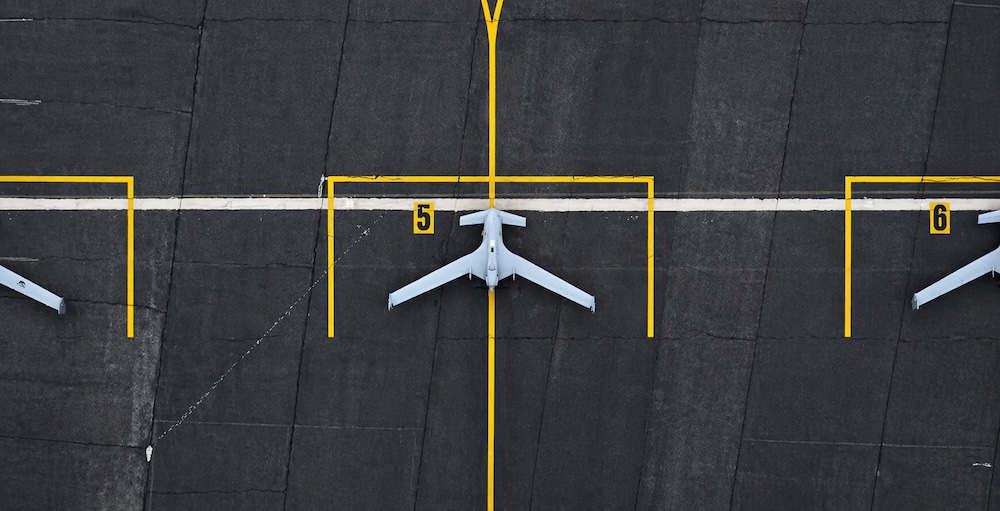
Each of Baykar’s new platforms fills a unique niche in the coordinated attack strategy, starting with the largest model, the K2. Capable of carrying a 200-kilogram munition payload, the K2 boasts a 13-hour flight endurance and a 2,000-kilometer operational range, even without reliance on Global Navigation Satellite Systems (GNSS). The drone maps terrain visually to autonomously calculate its position, uses a satellite datalink for precision targeting, and offers a rare flexible design: it can either complete a suicide attack on its target or return to base for future reuse.
The second platform, the Sivrisinek (meaning “mosquito” in Turkish), made its official public debut just last week. Comparable in payload to Iran’s Shahed-131 — which carries a similar warhead and has a 700 to 900-kilometer range — the Sivrisinek offers a 1,000-kilometer range and carries a warhead weighing just over 20 kilograms. With an extremely low per-unit cost estimated between $25,000 and $30,000, the drone is designed for mass deployment as an expendable battlefield asset. Defense industry sources confirm the Sivrisinek is an updated variant of the YIHA-3, a platform co-developed with Pakistan in 2023 that has already amassed real-world combat experience across Syria, Ukraine, Sudan, and the 2025 Pakistan-India border clashes, giving the new model invaluable battlefield-tested technical refinements.
Baykar’s newest addition, the Mizrak, unveiled just this Thursday, shares functional similarities with Iran’s widely deployed Shahed-136. Where the Shahed-136 reached a 2,000-kilometer range and 50-kilogram warhead capacity after years of iterative development, the Mizrak enters the field with a 1,000-kilometer range and 40-kilogram payload. Industry analysts note the Mizrak leverages existing technology from Roketsan, Turkey’s leading missile developer, drawing design elements from the company’s proven UMTAS air-to-surface anti-tank missile system.
All three platforms share key advanced capabilities: they are hardened against electronic warfare interference, can visually identify and lock onto targets without GNSS connectivity, and execute strikes using a combination of on-board artificial intelligence (AI) autonomy and satellite communications. Turkish defense experts argue this sets Baykar’s new fleet apart from Iran’s existing Shahed program, which suffers from key technological limitations.
“The Iranian UAV programme lacks proven capabilities in AI-based autonomous and network-centric swarm attack skills,” explained Hursit Dingil, an expert on Iranian military capabilities at the Ankara-based Centre for Area Studies. “Furthermore, the Iranian platforms have problems and limitations regarding communication ranges and satellite communication.”
Dingil noted that Turkey has spent a decade refining its domestic drone industry, building well-established expertise in the very areas where Iran lags behind. “Similarly, the Iranian UAV programme has disadvantages and limitations in terms of precision strike capabilities, advanced electro-optical imaging, and self-location and navigation capabilities,” he added, confirming Turkish defense firms have already mastered these core technologies.
Baykar’s core innovation does not lie in the individual drones themselves, but in the integrated layered combat strategy the company has designed for the fleet. Early joint flight demonstrations already showed the K2 flying lead patrol missions while Sivrisinek drones operated in coordinated swarms beneath the larger platform. Independent defense industry expert Yusuf Akbaba confirmed all three Baykar kamikaze platforms are designed to share data and coordinate attacks seamlessly, and can even be commanded remotely by Baykar’s already well-known Bayraktar TB2 armed drone.
A defense source familiar with the program outlined the step-by-step layered tactic for MEE: low-cost Sivrisinek drones would first be deployed in large numbers to saturate enemy airspace and overwhelm critical air defense systems, softening enemy defenses ahead of follow-on strikes. Next, Mizrak drones would eliminate any remaining anti-drone and air defense infrastructure. Finally, the K2, with its large payload capacity, would destroy high-value critical targets left undefended, completing the mission. All phases of the attack can be commanded by a Bayraktar TB2 or other aerial command platform operating well outside the range of enemy defenses.
Dingil argues that with this new integrated system, Turkey has emerged as a far more competitive actor in the global kamikaze drone market than Iran, noting that the existing Shahed-136 cannot match the capabilities of Turkey’s new hybrid class of autonomous networked drones. Even so, he cautioned that the platform still faces an unproven hurdle: “An important challenge for Turkey is whether the fusion of AI-based autonomous solutions with simple missile-based drones would provide a functional and efficient output in combat conditions or not.”