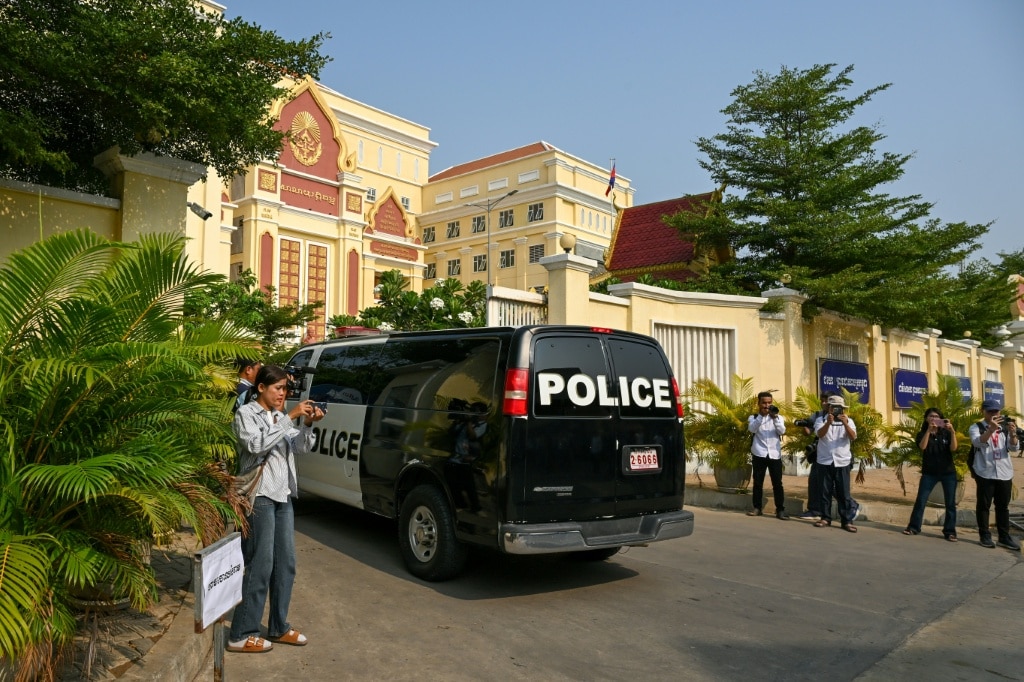
In a move that has sparked widespread international condemnation from global human rights bodies, Cambodia’s appellate court has upheld a decades-long treason conviction for prominent opposition leader Kem Sokha, drawing sharp rebuke from the United Nations’ top human rights official.
Seventy-two-year-old Kem Sokha, a co-founder of the now-banned Cambodia National Rescue Party (CNRP), was first found guilty of treason in 2023 on allegations that he plotted to overthrow the government of long-serving former prime minister Hun Sen — who remains a powerful, behind-the-scenes political figure despite handing the top leadership role to his son. The conviction carried a 27-year sentence, though Kem Sokha has been allowed to serve the term under court-supervised house arrest in Phnom Penh since the original ruling. He has continuously denied all charges against him, which date back to a 2013 speech delivered during a trip to Australia, four years before his initial 2017 arrest.
On Friday, United Nations High Commissioner for Human Rights Volker Türk confirmed he was deeply troubled by the Phnom Penh Appeals Court’s decision Thursday to reject Kem Sokha’s appeal and leave the conviction intact. The UN human rights chief also raised urgent alarms over a separate court ruling handed down Wednesday that convicted 33 additional Cambodian nationals, including opposition activists, independent human rights defenders and social media commentators.
According to the Office of the United Nations High Commissioner for Human Rights (OHCHR), the Phnom Penh First Instance Court handed down sentences ranging from 18-month suspended terms to two years of imprisonment. The charges stemmed from public comments the 33 individuals made in 2024 regarding the Cambodia-Laos-Vietnam Development Triangle Area, a regional cross-border infrastructure and development project.
OHCHR spokesperson Jeremy Laurence told reporters at a Geneva press briefing that the rulings in both cases directly contradict established international human rights law. He warned that the convictions risk amplifying what is already a severe chilling effect on open discourse across Cambodia, brought by broad, vaguely worded national criminal statutes that are frequently enforced in an arbitrary manner targeting civil society members, independent journalists and ordinary citizens.
“Kem Sokha and the other 33 individuals were all exercising their internationally protected rights to freedom of expression,” Laurence said. “Their trials also raise serious, well-founded concerns about widespread violations of due process and fundamental fair trial rights.”
Türk has called on Cambodian authorities to enact meaningful reforms to bring the country’s legal practices in line with international human rights standards, urging the government to protect legitimate political criticism and free expression rather than criminalizing dissenting viewpoints. He also called for safeguards to protect judicial independence, preserve open civic space and guarantee fair trial protections for all defendants.
Laurence reiterated the UN body’s core demand: Cambodian officials should immediately overturn the latest convictions and sentences, and unconditionally release Kem Sokha along with all other individuals detained arbitrarily for exercising their fundamental human rights.
Global human rights organizations have long documented patterns of the Cambodian government using politicized legal proceedings to silence opposition voices and quash legitimate political dissent. OHCHR confirmed it has repeatedly raised these systemic concerns directly with Cambodian authorities, highlighting broader patterns of repression targeting core rights including freedom of speech, freedom of expression, freedom of association and freedom of peaceful assembly across the country.