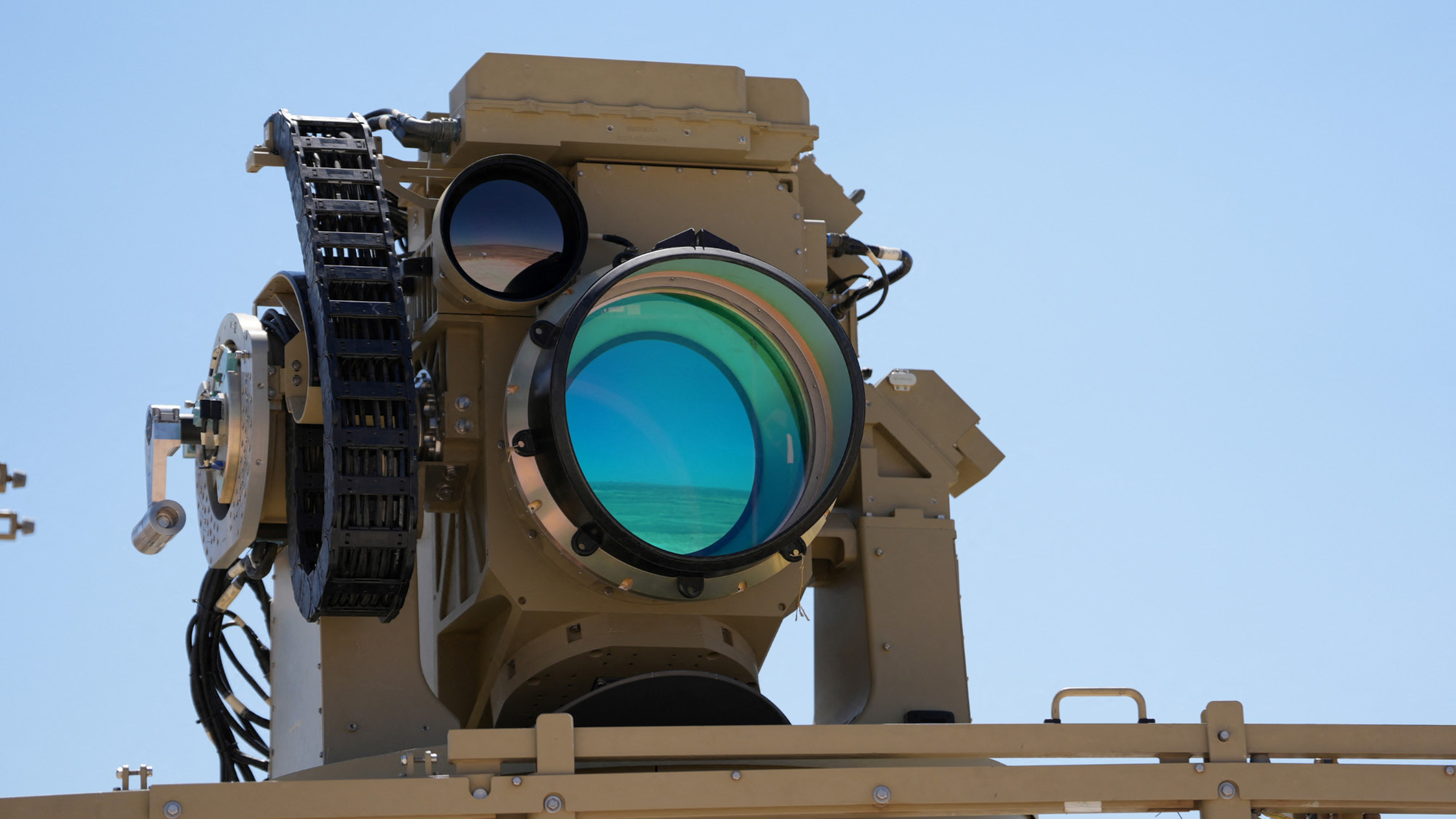
Against the backdrop of open conflict between the US-Israeli bloc and Iran that has roiled the Persian Gulf since February, new details have emerged of deepening military cooperation between Israel and the United Arab Emirates, the Financial Times revealed in a report published Thursday. Two anonymous sources familiar with the deployment confirmed to the outlet that Israel has transferred a modified variant of its domestically developed Iron Beam laser defense system to Abu Dhabi, as the UAE braces for continued drone and missile attacks from Iranian forces.
Iron Beam, which entered operational service with the Israeli military only in December 2025, is engineered to intercept low-altitude, short-range threats including rockets and unmanned aerial vehicles — exactly the type of projectiles that have formed the bulk of Iran’s cross-region retaliatory attacks. Alongside the high-powered laser system, the FT report adds that Israel also supplied the UAE with Spectro, a compact advanced surveillance platform capable of detecting incoming unmanned aerial threats from distances of up to 20 kilometers.
This latest weapons transfer builds on a previous deployment reported last month by Axios, which revealed that Israel had already sent a complete Iron Dome air defense battery to the Gulf nation, accompanied by dozens of trained Israeli personnel to operate the system. Israeli Prime Minister Benjamin Netanyahu personally authorized the deployment of the battery, which includes both interceptor missiles and specialized support staff. One insider told the FT that the number of Israeli troops deployed on the ground in the UAE is “not small”, confirming a substantial and ongoing Israeli military presence in the country. Beyond weapons systems, the report notes that Israel has also maintained continuous real-time intelligence sharing with Emirati authorities for the full duration of the conflict, helping the UAE anticipate and respond to incoming attacks.
Iranian officials have previously stated to Middle East Eye that they view the UAE as an active participant in the US-Israeli war campaign against Tehran, a claim that aligns with the scope of military cooperation now coming to light. The two countries first normalized diplomatic relations in 2020 under the US-brokered Abraham Accords, and have steadily expanded their strategic, economic and defense ties in the years since that agreement. That partnership has grown exponentially since the United States and Israel launched a major bombing campaign against Iranian targets in February. In response, Tehran launched a wave of retaliatory strikes targeting US, Israeli and allied assets across the Middle East, with the UAE emerging as one of the most heavily targeted nations in the region.
Emirati officials confirm Iran has fired approximately 550 ballistic and cruise missiles, plus more than 2,200 drones at targets across the UAE. While the vast majority of these incoming projectiles have been intercepted, falling debris from failed attacks has caused significant damage across major population and economic centers including Abu Dhabi, Dubai, the Burj Al Arab luxury hotel, the Palm Jumeirah development, Dubai International Airport and the Fujairah oil industrial hub.
Israeli and Emirati officials have publicly acknowledged that the two countries have coordinated closely on both military and political strategy since the outbreak of hostilities. Beyond supplying defense systems, the Israeli Air Force has also conducted pre-emptive strikes against short-range missile launch sites in southern Iran to prevent projectiles from being fired at the UAE and other neighboring Gulf states. Tensions escalated further in mid-March when Iran’s critical South Pars gas field, a cornerstone of the country’s energy infrastructure, was hit by airstrikes. Tehran responded with another wave of strikes across the Gulf, targeting hotels, airports, data centers, ports and US diplomatic missions across the region.
A temporary ceasefire between the United States and Iran went into effect last month, halting large-scale offensive hostilities and reopening diplomatic negotiations. As of the latest reports, those talks have not yet yielded any major breakthrough toward a lasting peace deal, leaving the region in a fragile state of heightened alert.