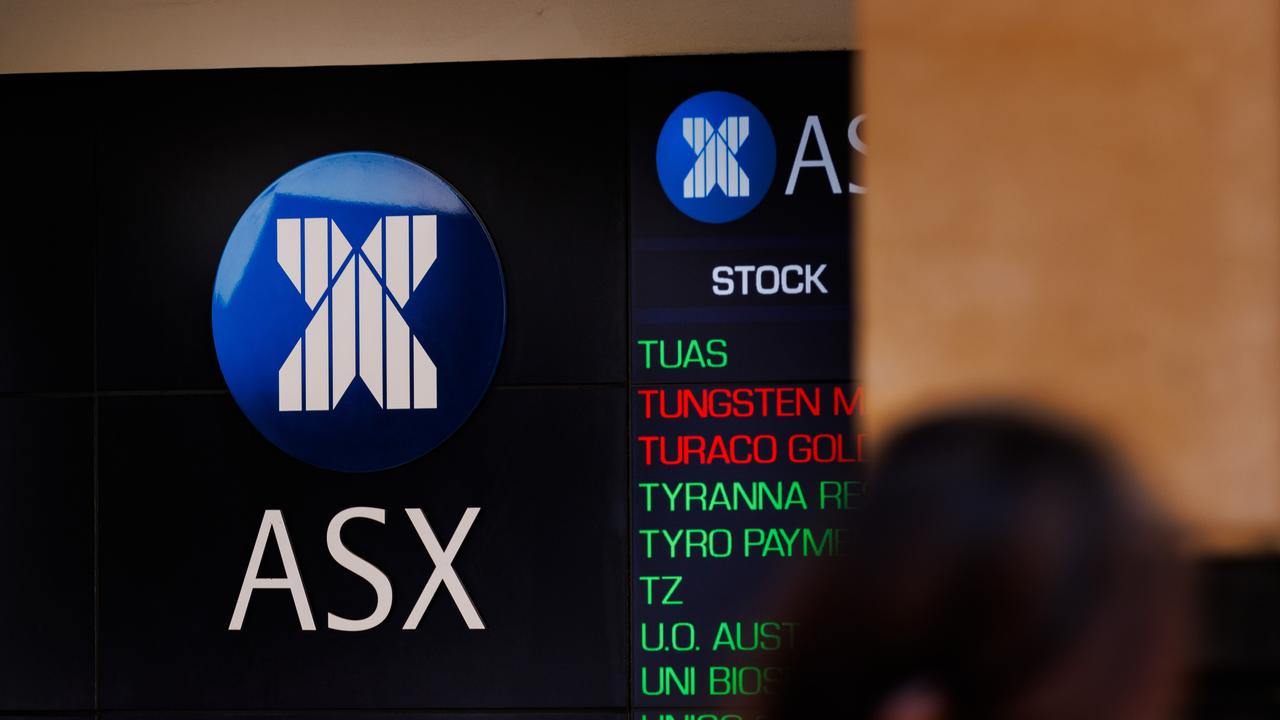
After eight consecutive days of declines — its longest losing stretch since 2018 — Australia’s benchmark ASX 200 notched a welcome rebound on Friday, driven by sharp gains across major mining stocks and a robust sales update from national supermarket chain Coles. The leading index climbed 64 points, or 0.74%, to close at 8729.80, while the wider All Ordinaries index followed suit, rising 67 points (0.75%) to settle at 8954.60.
The Australian dollar edged slightly lower over the session, dipping 0.15% to trade at 71.89 US cents. Ten of the ASX 200’s 11 industry sectors finished the day in positive territory, with the materials sector leading the charge. Global oil prices pulled back from a recent four-year high of $US126 per barrel to $US111 per barrel, easing cost pressure on resource operations and lifting investor sentiment for major miners. BHP Group rose 2.27% to $54.94, Rio Tinto jumped 2.73% to $171.97, and Fortescue Metals closed up 1.83% at $20.01.
Despite the near-term market bounce, AMP’s deputy chief economist Diana Mousina cautioned that geopolitical risks remain underpriced by markets, particularly in the global energy sector. While peace talks had previously showed tentative progress, negotiations have now stalled, leaving the region in a tense geopolitical standstill. “Markets clearly expect some sort of resolution will eventually be reached, especially as missile strikes have slowed in recent weeks,” Mousina explained. “However, we believe markets are underestimating the lingering risks, especially within the oil market.”
The consumer staples sector also turned in a strong performance, almost entirely thanks to Coles’ upbeat trading update. The supermarket giant reported group sales revenue of $10.7 billion for the 12-week period ending March 29, sending its shares surging 3.66% to $22.92. Other consumer-facing stocks also posted gains: Endeavour Group climbed 2.09% to $3.42, while A2 Milk rose 2.68% to $7.27. Coles’ main rival Woolworths bucked the trend, however, slipping 0.70% to $34.15.
Financials was the only sector to close the session in negative territory. ANZ Banking Group recorded a 9% half-year profit increase to $3.65 billion, but shares still slumped 2.84% to $35.61 after chief executive Nuno Matos warned that the ongoing geopolitical conflict would create greater economic headwinds for Australia. Matos noted that lower national growth, persistently high inflation, and ongoing interest rate hikes will create growing financial pressure for many Australian customers. “As Australia’s most international bank, we have a front-row seat to global developments,” Matos said. “Much of the potential impact of this crisis remains ahead of us, but the longer oil supplies remain constrained, the greater the chance the crisis shifts from primarily an inflation challenge to a much more serious supply and growth challenge.” Other major banks also posted small declines: Commonwealth Bank fell 0.36% to $173.04, Westpac dipped 0.13% to $38.45, and NAB slipped 0.13% to $39.83.
In other corporate news, Qantas Airways gained 0.83% to $8.48 after announcing it would extend flight capacity cuts through to 2026-2027 in response to ongoing disruption from the Middle East conflict. Sleep and respiratory treatment manufacturer ResMed dropped 3.53% to $28.73 despite reporting an 11% year-over-year revenue increase to $US1.4 billion for its latest reporting period.