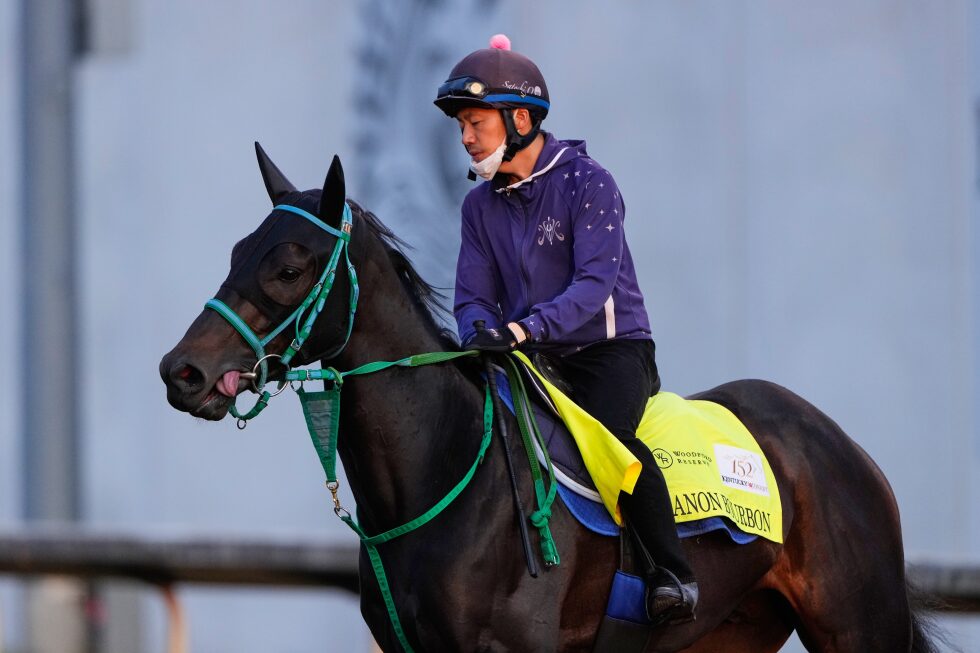
As horse racing faces growing uncertainty across the United States — marked by shrinking fan bases, widespread track closures, and the erosion of its unique competitive edge amid the expansion of legalized sports betting — a quiet revolution in the sport is unfolding thousands of miles away. Japan has emerged as a new global powerhouse of thoroughbred racing, pouring hundreds of millions of dollars into every segment of the industry from selective breeding to elite training facilities, and steadily producing top-tier competition that is closing in on the sport’s most coveted American prize: the Kentucky Derby.
For decades, Japanese horse racing centered almost exclusively on turf tracks, a legacy that still makes the Prix de l’Arc de Triomphe, the iconic Paris-based turf race, a long-held ultimate goal for the nation’s racing community. But over the past 10 years, Japan has deliberately shifted its focus to developing world-class dirt-track runners, a strategic pivot that has brought the country within touching distance of a historic Kentucky Derby win.
This year, two Japanese contenders — Danon Bourbon and home-grown Wonder Dean — carry the nation’s hopes into the starting gate at Churchill Downs, coming off a nail-biting near-miss in 2024 when Japanese horse Forever Young finished just off the top spot in the race. Japan has already notched a landmark victory with Forever Young in the Breeders’ Cup Classic, and racing industry leaders say a Kentucky Derby win is now well within reach.
“We are getting closer,” Hiroshi Ando, racing manager for the Japanese delegation, told the Associated Press outside the contenders’ barn at Churchill Downs earlier this week. “For Japan, I think we’re able to change Japanese racing history again, like we did with Forever Young in the Breeders’ Cup Classic. Our ambition is the Kentucky Derby right now, if possible.”
Japan’s rise to elite racing status did not happen overnight. Its modern success traces back to the early 1990s, when U.S. racing legend Sunday Silence — winner of the 1989 Kentucky Derby, Preakness Stakes and Breeders’ Cup Classic — garnered little breeding interest from American stables and was exported to Japan to work as a stallion. Sunday Silence went on to become Japan’s leading sire for 13 consecutive years between 1995 and 2008, and his bloodline now runs through winning thoroughbreds across every major global racing circuit.
Interest in mainstream dirt racing gained momentum in 2011, when Japan’s Victoire Pisa claimed the nation’s first Dubai World Cup title, a win that cemented confidence in Japan’s ability to produce elite dirt runners. Most recently, American Pharoah — the 2015 Triple Crown winner who ended a 37-year drought in American racing — has been stationed at a Japanese breeding stud through July, and industry figures are already eager to see how his offspring, out of top Japanese mares, will perform on the track in coming years.
“Obviously he produced a lot of good horses in Japan, too, so Japanese people love American Pharoah babies,” Ando noted. “I’m really interested to see how his babies perform because we have many good Japanese mares.”
Japan’s gradual climb to competitiveness at the Kentucky Derby is evident in the steady improvement of its entries over the decades: its first contender, Ski Captain, finished 14th in 1995; Master Fencer placed sixth in 2019, followed by another sixth-place finish from Derma Sotogake in 2023; and Forever Young came within a hair of the win with a third-place finish in 2024.
For Japanese racing fans, the Kentucky Derby’s 7 p.m. post time at Churchill Downs falls on early Sunday morning in Japan, but growing participation from Japanese horses has turned the race into a must-watch event that has boosted national fan engagement and betting interest.
“Last couple years, Japanese racing people understand the Kentucky Derby,” Ando said. “Even the public knows the Kentucky Derby now, which is great for betting, great for the industry.”
Ando, who called the Kentucky Derby’s one-of-a-kind atmosphere “addictive,” says he is eager to keep bringing Japanese contenders to the race. The consistent annual presence of Japanese horses at Churchill Downs is no coincidence: it is the outcome of a deliberate, long-term investment strategy that has reshaped the entire Japanese racing ecosystem.
Back in 1981, the Japanese Racing Association (JRA) launched the Japan Cup to grow domestic interest in elite racing and position Japan as a global competitor. Today, the event is the richest turf race in the world, boasting an $8.2 million purse that attracts top contenders from across the globe.
Tom Hashimoto, general manager of the JRA’s New York Representative Office, explained that Japan’s progress came from decades of deliberate learning from international peers, not just the United States but also leading European racing programs. “Developed not in a short period, (but) we make it. It took step by step and learn from other countries, and now we are very lucky to have so many good thoroughbreds,” Hashimoto said.
The core of Japan’s strategy, he emphasized, is sustained, holistic investment across every layer of the sport: “The important thing is, how does the money fund the horse racing industry as a whole? Not only the racing: breeding, training, training, training and racing and back to breeding. We have to invest the money to all the aspects of horse racing.”
As the 2025 Kentucky Derby approaches, all eyes in global horse racing will be on whether Japan’s decades of targeted investment finally delivers the historic win the nation’s racing community has spent years working toward.