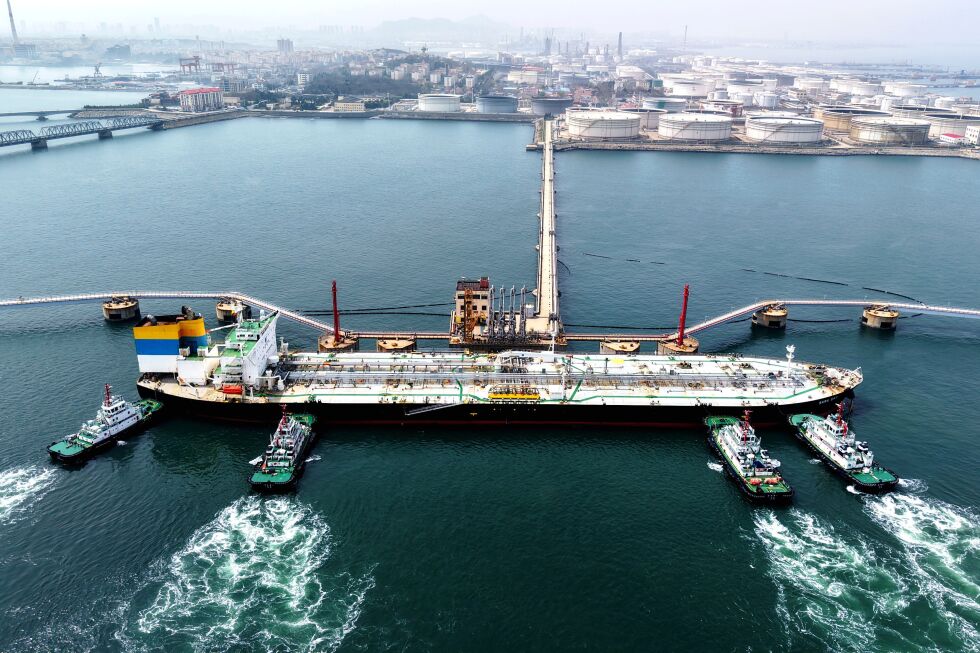
HONG KONG – For the second consecutive month in April, China’s manufacturing sector held onto expansion, defying widespread expectations that rising energy costs sparked by the Iran conflict would drag down industrial output, official data released Thursday shows.
The National Bureau of Statistics reported that the official manufacturing purchasing managers’ index (PMI), a closely watched gauge of factory sector activity, edged down marginally to 50.3 in April from March’s 50.4 reading. On the 0–100 PMI scale, any reading above 50 signals that activity is expanding rather than contracting. This minor pullback still outperformed the consensus forecast from economists, painting a more resilient picture of Chinese manufacturing than many analysts predicted.
Breaking down the sub-index components reveals a mixed performance across key metrics: the new orders sub-index slowed to 50.6, down from 51.6 in March, but the production sub-index inched up slightly to 51.4, signaling ongoing output growth amid steady demand.
Leah Fahy, senior China economist at Capital Economics, noted in a recent research note that elevated global oil prices driven by Middle East tensions have so far failed to dampen China’s industrial momentum. She attributes the recent acceleration in factory output primarily to surprisingly strong export demand, which has continued to prop up manufacturing activity even as domestic headwinds persist.
Fahy added that the global surge in oil prices has created an unexpected tailwind for China’s clean energy industry. As countries around the world accelerate their transition away from fossil fuels to offset volatile energy prices, demand for green technology has jumped. This benefits Chinese manufacturers, who hold a dominant global position in the production of solar panels, wind turbines, batteries and other clean energy equipment.
A separate private-sector PMI, compiled by S&P Global in partnership with Chinese credit analysis firm RatingDog, offered an even more optimistic outlook. The survey, which over-samples smaller, export-focused private firms that are often underrepresented in the official reading, recorded a jump in factory activity to 52.2 in April, up from 50.8 in March.
Additional factors are pointing to potential further strengthening of Chinese exports in the coming months. Earlier this year, a U.S. Supreme Court ruling struck down key parts of former President Donald Trump’s broad tariffs on Chinese goods, leading to a reduction in U.S. duties on many Chinese imports. Fahy notes that this policy shift could open the door to rising Chinese shipments to the U.S. in the second half of the year.
Planned diplomatic progress may also support trade stability. A long-scheduled visit to Beijing by Trump to meet with Chinese President Xi Jinping is scheduled for next month, which could extend the one-year trade truce that the two leaders agreed to in late 2024.
China’s broader economic performance also outperformed expectations in the first quarter of 2025, with gross domestic product expanding at an annual rate of 5%, up from the previous quarter’s growth rate and beating the consensus forecast from private-sector economists. Chinese policymakers have set a full-year growth target of 4.5% to 5% for 2025, the lowest annual target set since 1991, reflecting ongoing structural challenges in the world’s second-largest economy.
One of the most persistent headwinds remains a years-long downturn in the country’s property sector, which has continued to weigh on domestic investment and consumer confidence. Even with soft domestic demand, however, exports have remained a strong pillar of growth: China recorded a record-breaking $1.2 trillion annual trade surplus in 2024, highlighting the global strength of its manufacturing exports.