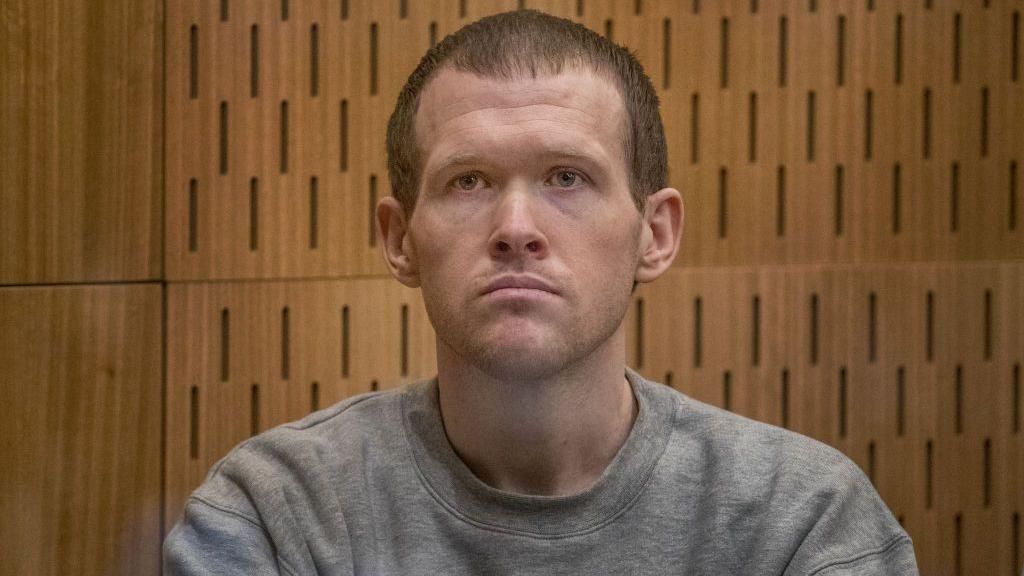
Nearly seven years after the deadliest terror attack in New Zealand’s modern history, the country’s Court of Appeal has dealt a final blow to the white supremacist perpetrator’s attempt to overturn his convictions and life-without-parole sentence.
Brenton Tarrant, a 35-year-old Australian-born extremist, is currently serving the remainder of his life behind bars with no possibility of release for the 2019 Christchurch mosque shootings that left 51 Muslim worshippers dead and another 40 injured. The attack, carried out at two separate mosques — Al Noor Mosque and Linwood Islamic Centre — was partially live-streamed by Tarrant to his followers on fringe online platforms, marking a shocking moment of white supremacist violence that rippled across the globe.
Tarrant originally pleaded guilty to all counts of murder and attempted murder in 2020, avoiding a prolonged public trial that would have forced survivors and victim families to relive the trauma of the attack. In his appeal, heard over a week-long session in February this year, Tarrant argued that his prison conditions at the time of his guilty plea amounted to “torturous and inhumane” treatment, which left him unable to make rational, legally sound decisions. He further claimed that he entered his guilty plea while in an irrational, compromised mental state, and asked the court to throw out both his convictions and his sentence.
On Thursday, a three-judge panel of the Court of Appeal released a unanimous ruling rejecting Tarrant’s appeal in its entirety. The court wrote that the core facts of Tarrant’s crimes are “beyond dispute”, and that his legal arguments were “utterly devoid of merit”. Judges found that Tarrant’s claims of compromised mental capacity and coercive prison conditions were inconsistent on their face and unsupported by witness testimony, concluding that he had never been coerced or pressured to enter a guilty plea. “He has not identified any arguable defence, or indeed any defence known to the law. We have also rejected his claim that his guilty pleas were the product of him having an irrational state of mind induced by his prison conditions,” the ruling read.
For family members of the attack’s victims, Thursday’s ruling brings a long-awaited sense of closure after months of renewed trauma triggered by the appeal process. Aya al-Umari, who lost her older brother Hussein in the shootings, told the BBC she felt “pleased and relieved” by the court’s decision, and welcomed the confirmation that justice had been upheld. “I was confident that there were no solid grounds for the appeal, and the decision today confirms that,” al-Umari said. She added that while she had hoped the original sentencing would bring an end to the legal process and allow her and other families to begin healing, the appeal forced survivors to revisit the darkest moments of their trauma. “Hearing the outcome today really gives that reassurance and comfort around the right processes being followed,” she said.
Beyond the legal proceedings, the 2019 Christchurch attack sparked sweeping policy change across New Zealand. Within one month of the shootings, the country’s parliament passed legislation by an overwhelming majority to ban military-style semi-automatic weapons and key components used to modify prohibited firearms. The government also launched a large-scale gun buy-back scheme, offering financial compensation to owners who turned in newly outlawed weapons in a bid to reduce the country’s overall firearm stock.
Records of the case show Tarrant, who was born in New South Wales, Australia, relocated to New Zealand in 2017. Prosecutors have confirmed he began planning his attack on the country’s Muslim community shortly after moving. In the hours before he carried out the shootings, Tarrant posted a 74-page manifesto online that laid out his violent white supremacist and anti-Muslim ideology, and he had long engaged with far-right extremist communities on fringe online platforms.