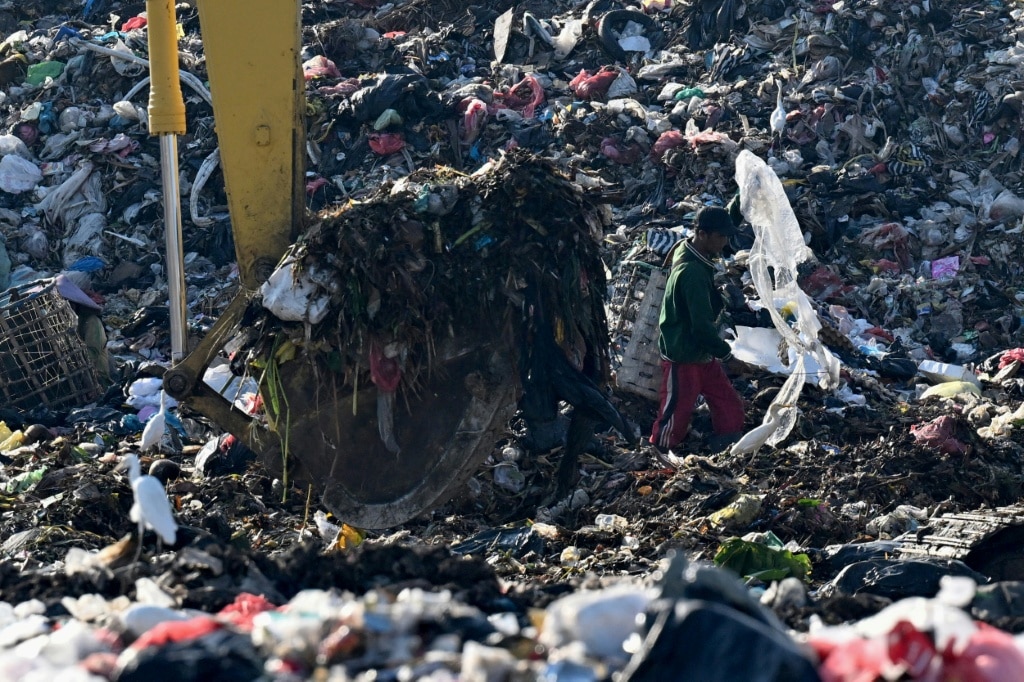
The idyllic Indonesian resort island of Bali, globally celebrated for its lush natural landscapes and golden coastlines that draw millions of visitors annually, is currently grappling with an escalating public health and economic crisis after authorities moved to enforce a decade-old ban on open dumping by closing the island’s largest landfill to incoming organic waste earlier this April. With no viable alternative waste disposal infrastructure rolled out ahead of the policy change, rotting garbage is now piling up along sidewalks, tourist hubs, and residential streets across the island, bringing with it foul odors, rodent infestations, and dangerous acrid smoke from illegal trash burning that has sparked widespread health concerns among locals and visitors alike.
For small business owners like Yuvita Anggi Prinanda, who runs a popular sidewalk flower stall in central Bali, the crisis has hit directly to the bottom line. Even the sweet fragrance of her fresh bucketed blooms cannot cut through the stench of accumulated waste that has gathered near her shop. Yuvita, who produces four large bags of organic waste daily from discarded leaves and flower trimmings, told reporters she has been forced to dip into her already thin profits to pay a private waste hauler to remove the trash. “Some customers, bothered by the persistent smell, end up leaving without making a purchase,” the 34-year-old entrepreneur explained. Her daily waste is just a tiny fraction of the roughly 3,400 tons of garbage Bali generates every single day, a volume inflated by the seven million international tourists that visited the island in 2024 – far outnumbering the island’s native population of just 4.4 million.
The policy shift that sparked the crisis is not new: Indonesia formally banned unregulated open landfills back in 2011 as part of a national waste management reform, but widespread enforcement never followed. Thirteen years on, fewer than a third of the country’s 485 original open landfills have been permanently shuttered, and only around 30% of the nation’s annual 40 million tons of waste is properly processed or recycled, according to government data. The remaining 70% is dumped illegally into rivers, oceans, or open unregulated sites. Now, the national government is moving to finally implement the full ban, targeting August for a complete phase-out of all open landfills across the country – but officials have yet to outline a clear, funded plan for alternative waste processing to take effect by that deadline.
At one of Bali’s most iconic tourist destinations, Kuta Beach, the crisis is on full public display: waist-high piles of sealed garbage bags now line the popular beachfront parking lot, adding to the island’s long-running struggle with plastic debris that regularly washes up on its shores. Australian tourist Justin Butcher, who has visited the beach for years, called the situation unacceptable. “You have dozens of rats here after dark, the smell is unbearable, and this just isn’t a good look for one of the world’s top vacation spots,” he said.
Local authorities have confirmed that anyone caught dumping or burning trash illegally now faces up to three months in prison and a fine of 50 million rupiah (nearly $3,000), but frustrated residents and waste workers say they have no other legal option to dispose of waste. On April 16, hundreds of Bali sanitation workers staged a protest outside the governor’s office, driving their waste-filled trucks to the site to demand solutions. “If we refuse to collect trash from residents, we get in trouble. If we do collect it, we have nowhere legal to take it,” explained protester I Wayan Tedi Brahmanca. In response to the growing unrest, the local government announced a temporary compromise: limited organic waste disposal will be allowed at the closed Suwung landfill until the end of July, buying officials a few months of time to finalize long-term plans.
Waste management experts warn that the decades-long overreliance on overcrowded open landfills has already created catastrophic safety risks. Nur Azizah, a waste management researcher at Gadjah Mada University, noted that the Suwung landfill alone was taking in 1,000 tons of waste per day, 70% of it organic, and has been operating far over capacity for years. “Organic waste trapped in unregulated landfills produces dangerous methane gas over time, which can cause explosions and trigger catastrophic landslides,” she explained. That risk is not hypothetical: in March, a collapse at Indonesia’s largest open landfill outside Jakarta killed seven people, burying nearby food stalls and parked trucks under tons of rotting waste.
Nur and other experts say the only sustainable long-term solution to the crisis is a mass public education campaign focused on home composting for organic waste, which makes up nearly 40% of all waste generated across Indonesia. Yuvita, the flower seller, agrees with that assessment. “People need clear guidance and support,” she said. “This is like telling someone who can’t swim to jump straight into the ocean – you can’t just impose a ban without giving people the tools to comply.” Local environment agency officials say they have run public awareness campaigns since last year and distributed free composting bins to households, but rollout has been slow and uneven across the island.
Indonesia’s national government says it plans to break ground on several new waste-to-energy processing projects in June, including one facility in Bali that will be able to process up to 1,200 tons of waste per day. But even if construction stays on schedule, these large facilities will take years to become fully operational, leaving Bali and other regions across Indonesia stuck in a waste management emergency that former environment minister Hanif Faisol Nurofiq recently acknowledged has reached crisis proportions across every major city and region in the country.