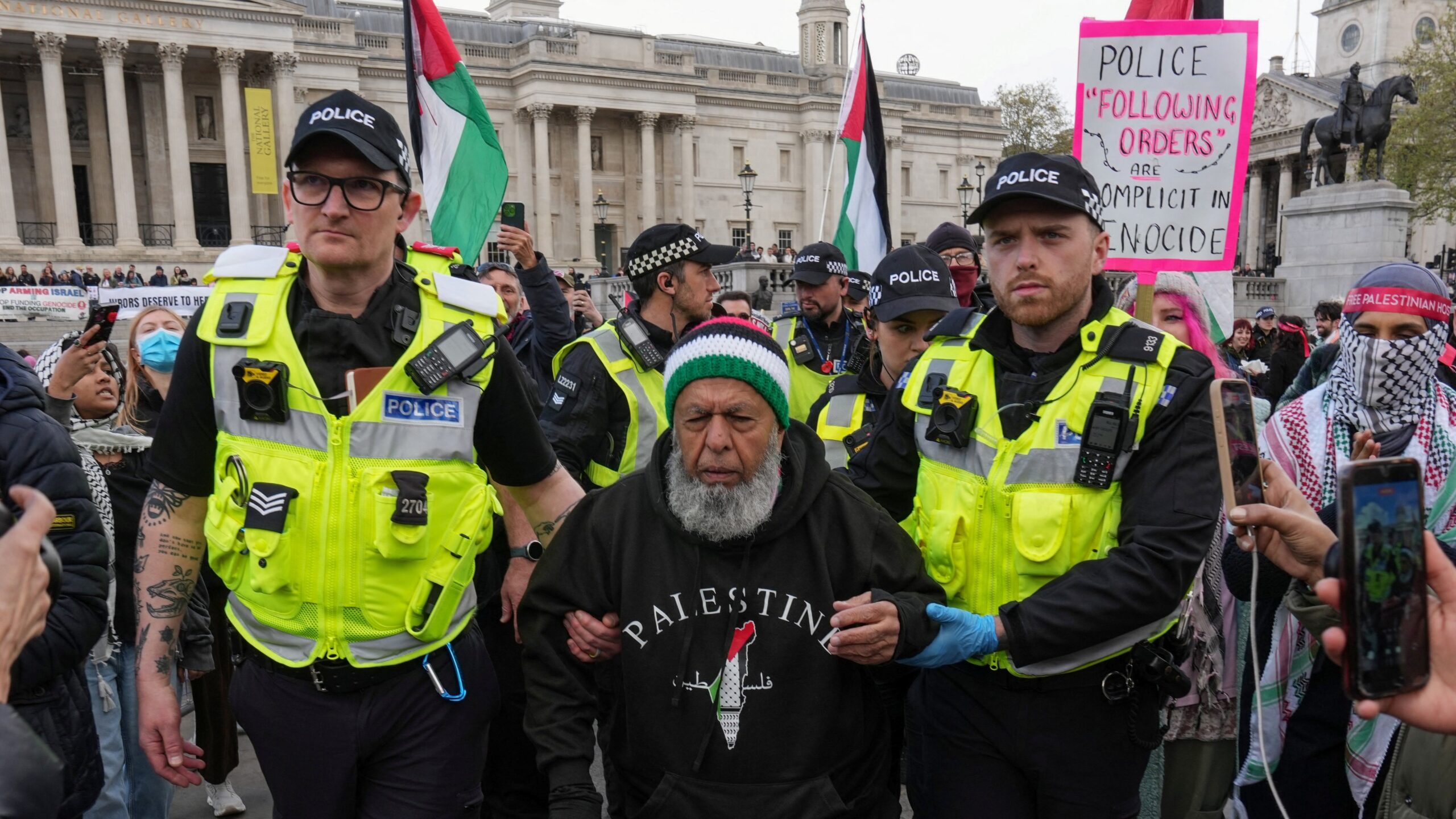
A high-stakes legal battle over the UK government’s ban on the direct-action advocacy group Palestine Action reached the Court of Appeal this week, with lawyers for the group’s co-founder arguing the proscription has inflicted disproportionate harm on Palestinian communities across Britain campaigning against Israeli military operations in Gaza.
Appearing before judges on Wednesday, Raza Husain KC, counsel for Palestine Action co-founder Huda Ammori, told the court the ban has fostered a pervasive “culture of fear” among British Palestinians and rights advocates aligned with their cause. In written submissions, Husain emphasized that the designation as a terrorist group has hit British Palestinians particularly acutely: their right to speak out and organize has been chilled and criminalized at a moment when their families and communities in Gaza face widespread destruction.
Husain referenced testimony submitted to the court from Dr. Aimee Shalan, chair of the British Palestinian Committee, to contextualize the widespread harm of the ban. Shalan documented that even before proscription, Palestinian community members involved in advocacy work regularly faced intimidation, including false accusations of being terrorists or terrorist sympathizers. The added designation has amplified this pressure dramatically, Husain explained, creating a chilling effect that pushes far more people to self-censor far beyond what any formal legal requirement would demand—even for those who face no immediate risk of prosecution.
Counsel for Palestine Action also levelled criticism at the Home Office for failing to provide the group with advance notice of its terrorist designation, a step explicitly required under the UK’s 2000 Terrorism Act. Husain noted that the overwhelming majority of Palestine Action’s protest activity falls under the category of peaceful, low-level civil disobedience: common actions include sit-ins and physical lock-ons, with only a small faction of activists having engaged in more serious property damage. He acknowledged one high-profile 2025 incident in which two activists breached the perimeter of Royal Air Force Brize Norton in southern England and sprayed military aircraft with red paint, but argued that criminal damage targeting military infrastructure has historically never been classified as terrorism under UK law. “Criminal, yes, terroristic no,” Husain told the court.
Fellow counsel Owen Greenhall KC added that UK authorities already had a range of less extreme legal measures available to address any unlawful activity by group members, including criminal charges for property damage, trespassing claims, and civil injunctions. A full terrorist proscription, he argued, was an unnecessary and disproportionate overreach.
Representatives of the Home Office pushed back against these arguments in court, with James Eadie KC, counsel for the department, contending that prior notice was not required in this specific case. Eadie argued that Palestine Action is a “disparate group” with no clear central leadership structure, creating practical barriers to identifying who should receive formal advance notification. He also noted that the case involves core concerns of national security and public safety, arguing that pre-notification would have created an unacceptable risk of activists taking pre-emptive action to evade the ban.
The appeal itself challenges a landmark February 2026 High Court ruling that sided with Ammori and struck down the Home Office’s proscription of Palestine Action as unlawful. The High Court found that the government’s ban violated the department’s own established policies and disproportionately interfered with the fundamental human rights to freedom of expression and peaceful assembly. While High Court judges rejected framing Palestine Action as an entirely non-violent group, acknowledging evidence of criminal damage and confrontational actions during protests, they ultimately concluded that a full ban would cause unacceptable harm to civil liberties—especially for British residents seeking to express solidarity with Palestinians.
Earlier in the week, Eadie argued that the initial High Court ruling ignored the UK’s democratic governance structures by blocking the government’s attempt to designate the group. The Home Office contends the lower court’s judgment was legally flawed, and that it undermines the government’s ability to respond to what it calls escalating protest activity linked to the group. Eadie noted that the proscription decision, made by former Home Secretary Yvette Cooper, received formal parliamentary approval via an affirmative resolution process, meaning it carried clear democratic legitimacy. He argued the High Court gave insufficient weight to this statutory and democratic framework that underpins the Home Secretary’s proscription powers.
The Court of Appeal is expected to deliver its final ruling in the coming weeks. The proceedings included a closed-door session scheduled for Thursday, where government lawyers will present classified evidence to judges that will not be made available to Palestine Action’s legal team. A special advocate with security clearance to view the secret material has been appointed to represent the group’s interests during the closed session, but procedural rules bar the advocate from sharing any details of the evidence or discussion with Palestine Action’s main legal team, even though they work on behalf of the group.
At the core of the case is a deeply contentious question that has divided UK public and political life: where should the legal line be drawn between militant protest action and terrorist activity, and what trade-offs should be accepted between national security protections and fundamental civil liberties for political advocacy?