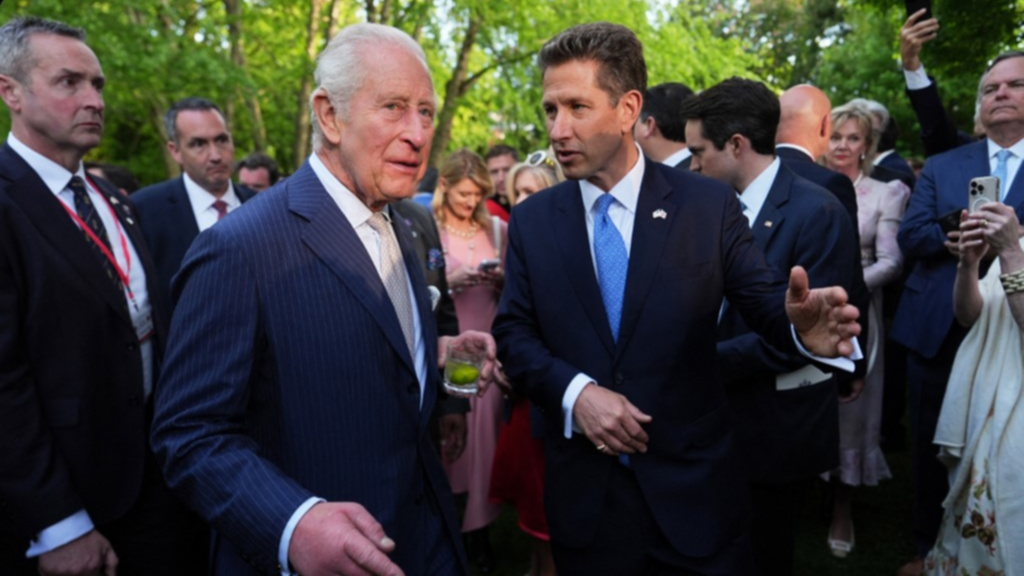
Leaked private comments from Britain’s top envoy to the United States have upended diplomatic niceties between the two historic allies, just as King Charles III’s state visit to Washington was getting underway, throwing into sharp relief existing frictions over Middle East policy and domestic political controversy in London.
Sir Christian Turner, who took up the ambassadorship earlier in 2024 following the forced exit of his predecessor Peter Mandelson over ties to convicted sex offender Jeffrey Epstein, made the unguarded remarks during a February Q&A session with a group of British sixth-form students visiting the U.S. capital. The comments were first published by the *Financial Times* on Tuesday, the second day of King Charles’ scheduled visit to the U.S.
Turner’s most explosive claim upended the long-standing diplomatic framing of UK-US relations: he argued that the iconic phrase “special relationship” – a term used for decades to describe the tight bond between London and Washington – is little more than a nostalgic, backward-looking concept weighed down by outdated historical baggage. Instead, he asserted that if any country truly holds a special relationship with the United States today, that country is Israel.
The revelation has already sparked significant embarrassment for Keir Starmer’s British government, coming at a moment when UK-US relations are already frayed over London’s initial reluctance to join the U.S.-Israeli military campaign against Iran. Despite ultimately granting Washington access to British bases for strikes on Iranian missile facilities and operations to reopen the Strait of Hormuz, Starmer has faced relentless public criticism and mockery from former President Donald Trump over the delayed approval.
Tensions escalated further last week when the Trump administration threatened punitive measures against NATO allies it accused of failing to back the Iran war, including a provocative suggestion that Trump could recognize Argentine sovereignty over the Falkland Islands – a territory long claimed and controlled by the United Kingdom.
Just this week, UK Minister of State for Europe and North America Stephen Doughty reiterated London’s break with Washington’s policy, confirming that Britain does not support the U.S. blockade of Iranian ports and insists on unimpeded, free passage for global maritime traffic without arbitrary tolls or unnecessary security risks.
Beyond foreign policy, Turner also opened a new domestic political firestorm in his comments, questioning the lack of accountability for high-profile U.S. figures tied to the Epstein scandal. He noted it was “extraordinary” that the convicted sex offender’s sprawling network of connections had not led to consequences for prominent American politicians, business leaders and public figures – including Microsoft co-founder Bill Gates, who has been linked to Epstein in public reporting. By contrast, Turner pointed out that senior British figures, including his own predecessor Mandelson, have already been forced out of office over their ties to Epstein.
Turner went so far as to suggest that Starmer himself could be forced out of office over his 2024 appointment of Mandelson as ambassador, ahead of upcoming UK local elections on May 7. He described the prime minister as “on the ropes” politically over the controversy, and acknowledged that Starmer is a “stubborn guy” while noting that senior figures in the ruling Labour Party could move to remove him after the local polls close.
In the aftermath of the leak, the UK Foreign Office moved quickly to distance the government from Turner’s remarks, emphasizing that the comments were made in a private, informal setting for visiting students and do not represent the official position of the British government. Turner did acknowledge in his comments that the UK and U.S. retain deep historical and cultural ties, particularly in the defense and security sectors, where the two countries remain deeply intertwined. He added that rather than leaning on the nostalgic framing of the special relationship, Britain should proactively work to redefine its partnership with the U.S. and move away from over-reliance on an American security umbrella.