Against a backdrop of deadlocked bilateral talks with the United States, the Islamic Republic of Iran has launched an intensified regional and global diplomatic push, shifting its core engagement priority to deepening coordination with its neighboring states and longstanding allies. The flurry of high-level diplomacy unfolded across multiple capitals and capitals over recent days, centered on addressing regional security, securing unimpeded navigation through the strategic Strait of Hormuz, and breaking the impasse in Washington-Tehran relations.
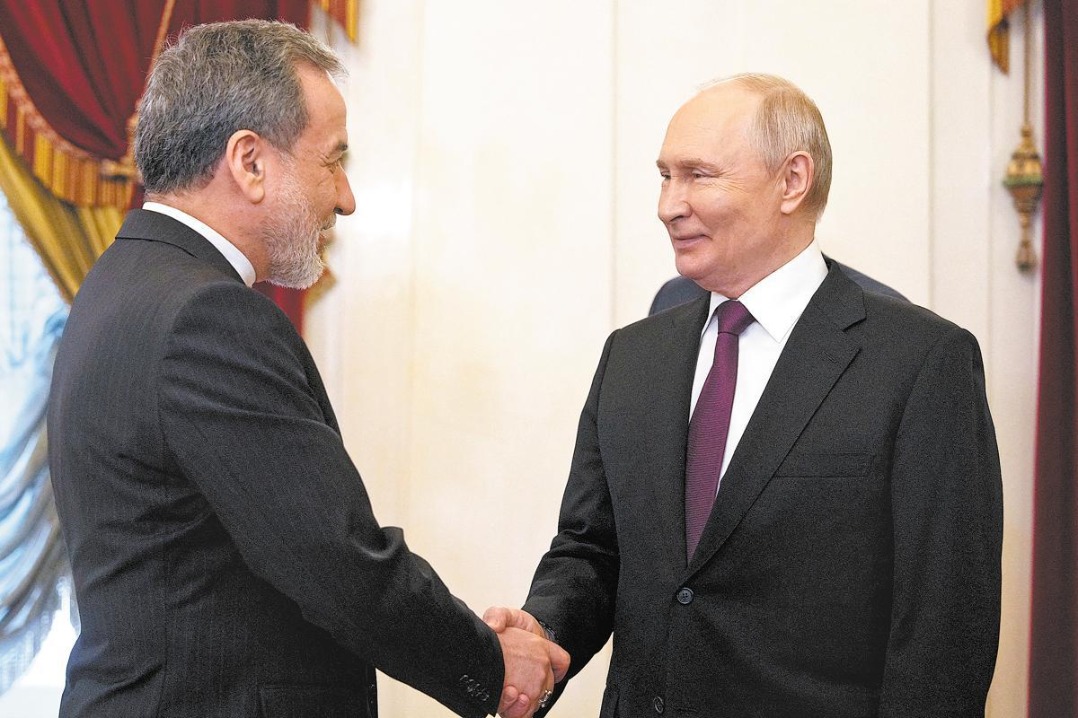
On Monday, Iranian Foreign Minister Abbas Araghchi held a face-to-face meeting with Russian President Vladimir Putin in St. Petersburg, according to Russia’s state-owned RIA Novosti news agency. During the talks, Putin expressed Moscow’s hope that the Iranian people would successfully navigate what he described as a “difficult period” and that regional peace would ultimately take hold. He reaffirmed that Russia would take all possible steps to advance the interests of both Iran and other nations across the Middle East.
Aragchi framed his Russia visit — the latest stop on a regional tour that already included stops in Pakistan and Oman — as a critical opportunity to restart in-depth consultations between Tehran and Moscow on evolving regional and global developments, while strengthening bilateral cooperation. He emphasized that Iran’s top diplomatic priority is now its immediate neighborhood, noting that one core focus of discussions is developing frameworks to guarantee safe passage through the Strait of Hormuz, a waterway that carries roughly a fifth of global oil trade, for “all our dear neighbors and the entire world.”
The foreign minister added that the meeting with Putin allowed the two sides to align their stances on recent events, stressing that ongoing strategic coordination between Iran and Russia carries major regional significance. His earlier stop in the Pakistani capital Islamabad, where he met with Prime Minister Shehbaz Sharif, was particularly important, Araghchi noted, because Islamabad serves as a mediator between Tehran and Washington.
Acknowledging that prior indirect talks between Iran and the US have yielded limited progress but failed to reach a breakthrough, Araghchi placed blame squarely on Washington, saying the failure stemmed from the United States’ excessive demands and what he called its misguided negotiating approach.
A day before the St. Petersburg meeting, Omani Foreign Minister Sayyid Badr bin Hamad Al Busaidi announced he had held a “productive discussion” focused on Strait of Hormuz issues with Araghchi. “We recognize our shared responsibility to the international community and the urgent humanitarian need to free the seafarers held for far too long. Much diplomacy is required and practical solutions to ensure lasting freedom of navigation,” Al Busaidi said in a statement.
Sunday saw Araghchi hold a flurry of diplomatic engagements beyond his Omani talks: he spoke by phone with French Foreign Minister Jean-Noel Barrot to discuss a regional ceasefire and unfolding security developments. Barrot reaffirmed France’s backing for Iran’s diplomatic path to resolving tensions, saying he hoped dialogue would restore peace across the Middle East. On the same day, Araghchi also held talks with Saudi Foreign Minister Prince Faisal bin Farhan, with the two sides reviewing regional dynamics and ongoing collective efforts to de-escalate broader regional tensions.
These stepped-up diplomatic moves come as US-based news outlet Axios reported that Tehran has submitted a new proposal to Washington aimed at reopening the Strait of Hormuz to full navigation. Citing anonymous administration officials, Axios reported that US President Donald Trump was scheduled to convene a meeting of his top national security and foreign policy advisors in the White House Situation Room on Monday to discuss the standoff with Iran and map out potential next steps.
Trump has already publicly cast doubt on the new Iranian proposal, canceling a planned trip by special envoys Jared Kushner and Steve Witkoff to Islamabad, citing what he called the excessive time and cost of the trip for an insufficient offer from Tehran. “Iran offered a lot, but not enough,” Trump stated, arguing that the responsibility for advancing talks now rests with Tehran. “If Iran wants to talk, they can come to us, or they can call us,” he said, reiterating his non-negotiable red line: “Iran cannot have a nuclear weapon, otherwise there’s no reason to meet.”
Iranian parliamentary speaker Mohammad Baqer Qalibaf pushed back against US pressure on Sunday, arguing that Washington has already exhausted most of its leverage in the ongoing economic standoff with Tehran, and that Iran still holds significant negotiating cards to advance its interests.
The Gulf Cooperation Council’s Assistant Secretary-General for Political and Negotiation Affairs, Abdel Aziz Abu Hamad Aluwaisheg, weighed in on the dispute on Monday, saying that the strategic Strait of Hormuz must not be allowed to remain a “hostage to negotiations between the US and Iran.”