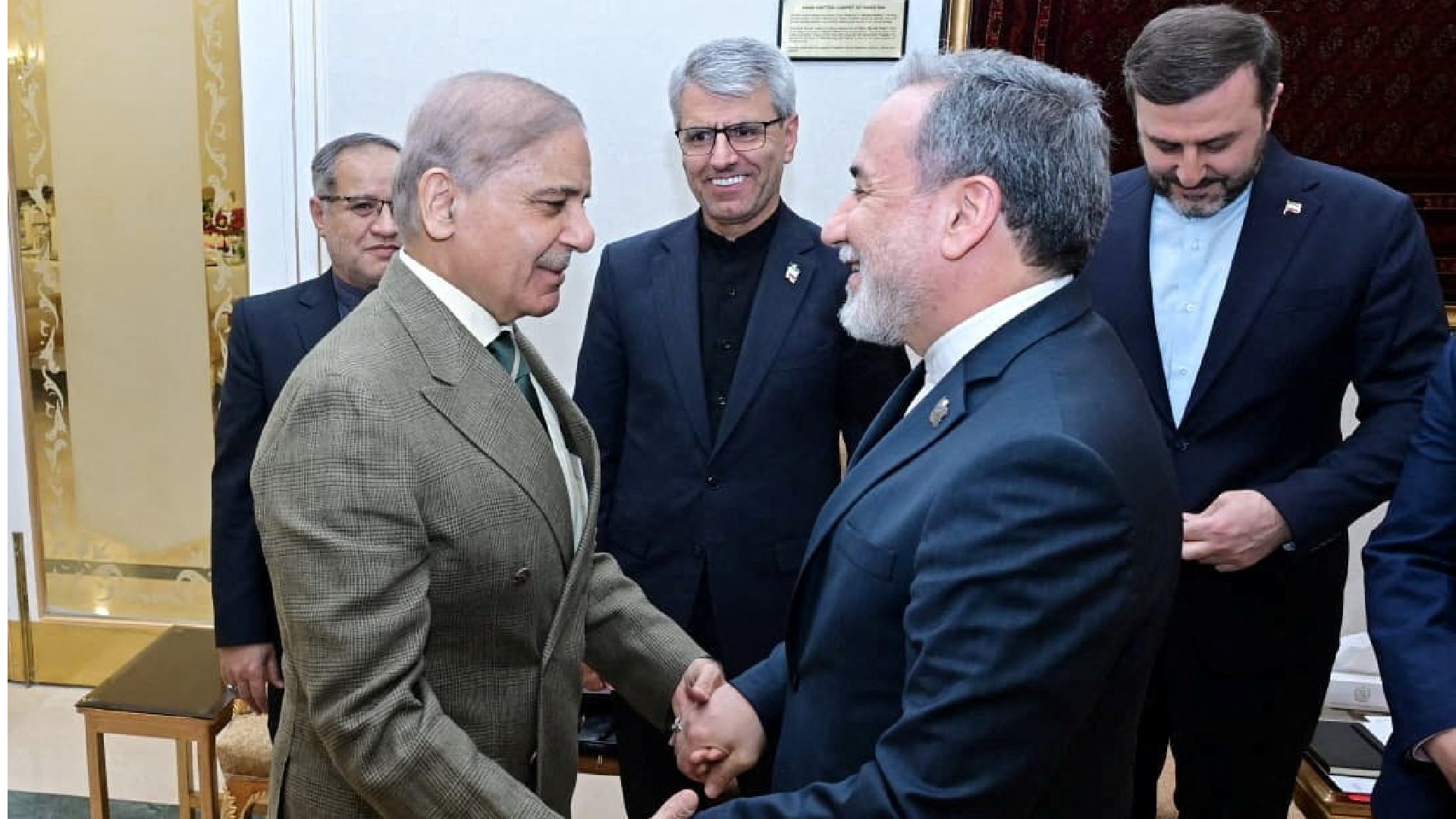
Amid a rapidly shifting regional crisis in the Middle East, overlapping diplomatic efforts and fresh security incidents have created a tangled landscape of negotiations and ongoing conflict over the weekend, with major powers and regional actors clashing over war termination and territorial control.
Iran’s top diplomatic envoy Abbas Araghci made a return trip to Islamabad on Sunday to advance peace negotiations aimed at ending the ongoing Iran war, even after former US President Donald Trump scrapped a planned trip by his own negotiating team to the Pakistani capital. Araghchi’s visit marked the second stop in a regional diplomatic tour: he first met with senior Pakistani officials including Prime Minister Shehbaz Sharif, Foreign Minister Ishaq Dar, and powerful military chief Asim Munir — a key mediator in the talks — last Saturday, before traveling to Oman for additional negotiations on Sunday. After the initial round of Pakistani talks, Iranian envoys returned to Tehran to receive updated guidance on proposals to end the conflict, Iran’s state-run Isna news agency confirmed.
In Muscat, Araghchi held closed-door talks with Sultan Haitham bin Tariq al-Said, covering navigation security in the strategically critical Strait of Hormuz and wider Gulf waters, as well as coordinated diplomatic pushes to end the war. In remarks carried by an Iranian foreign ministry statement, Araghchi argued that long-standing US military presence in the Middle East has exacerbated regional instability and deepened divisions between local actors, calling for a new regional security architecture built without external interference. Following the conclusion of Sunday’s talks in Pakistan, the foreign minister is scheduled to travel to Moscow for further consultations, according to diplomatic sources.
The Iranian diplomatic push came as Trump made a last-minute reversal of a planned trip by his own Middle East envoy Steve Witkoff and senior advisor Jared Kushner, his son-in-law, to Islamabad. Speaking to Fox News, Trump said he called off the trip because he saw no value in what he described as unproductive talks, and dismissed Tehran’s initial negotiating position as inadequate. In a surprising twist, Trump added that Tehran revised its proposal just 10 minutes after he announced the cancellation. “They gave us a paper that should have been better and — interestingly — immediately when I cancelled it, within 10 minutes, we got a new paper that was much better,” he told reporters, declining to share further details on the content of the revised proposal. When asked if the cancelled trip would lead to a resumption of full-scale hostilities, Trump downplayed the risk, saying “No, it doesn’t mean that. We haven’t thought about it yet.”
Hours after Trump announced the cancellation of the envoy trip, a security incident near the White House Correspondents’ Association Dinner held at the Washington Hilton forced an emergency evacuation of Trump and other top US leaders. A shooting outside the venue left a Secret Service agent wounded by gunfire, but the agent survived after a bulletproof vest stopped the round, Trump confirmed. In a statement to reporters after the evacuation, Trump said the incident would not change his policy in Iran. “It’s not going to deter me from winning the war in Iran,” he said, adding that he did not believe the shooting was connected to the ongoing conflict. The president later posted an image on his social platform Truth Social showing the suspected shooter, hand cuffed and lying face down, topless, on the ground.
Despite the diplomatic flurry over ending the Iran war, Iran’s Islamic Revolutionary Guard Corps (IRGC) reaffirmed it has no plans to lift its current blockade of the Strait of Hormuz, the chokepoint through which roughly one-fifth of the world’s total crude oil and liquefied natural gas shipments pass each year. “Controlling the Strait of Hormuz and maintaining the shadow of its deterrent effects over America and the White House’s supporters in the region is the definitive strategy of Islamic Iran,” the IRGC said in a post on its official Telegram channel. The US has responded with its own blockade of Iranian ports, escalating the standoff over the critical waterway.
Separately, in Lebanon, ongoing violations of a existing ceasefire by the Israeli military have left multiple civilians dead and deepened humanitarian suffering over the weekend. Lebanon’s state-run National News Agency reported that Israeli airstrikes targeted multiple villages in southern Lebanon’s Nabatieh, Bint Jbeil, and Sour districts on Sunday, killing three people. The strikes mark the latest in a string of repeated Israeli attacks since a ceasefire between Israel and Lebanese armed groups came into effect on 17 April.
Israeli forces continue to occupy a roughly 10-kilometer deep buffer zone inside southern Lebanon it calls the “yellow line,” and has barred displaced residents from returning to their homes in the area. Over the weekend, the Israeli military dropped leaflets over the village of Mansouri in the Sour district, warning civilians against entering nearly two dozen villages in the occupied zone. In a post on the social platform X, Israeli army spokesperson Avichay Adraee renewed warnings to civilians against entering areas near the Litani River, Wadi Salhania and Saluki, and published a list of dozens of villages within the yellow line where residents are officially barred from returning.
Lebanon’s health ministry reported Sunday that the total death toll from Israeli attacks on Lebanon since 2 March has risen to 2,496, with more than 7,725 people wounded. The strikes come a day after four people were killed in Israeli airstrikes in southern Lebanon, even under the current ceasefire framework.