For millions of people living with disabilities around the world, tourism has long been marked by preventable obstacles. These barriers range from highly visible infrastructure gaps — such as a broken elevator at a popular attraction — to invisible challenges that are often overlooked: an overly long walking itinerary that causes exhaustion, or a crowded, loud environment that triggers sensory overload.
As the large baby boomer generation continues to age, the global travel industry has begun to shift toward catering to older adults, who typically have both disposable income and flexible time for international sightseeing, and many of whom require some form of travel assistance. But industry advocates note that true inclusive accessibility extends far beyond just aging travelers, needing to accommodate a far broader range of visitors: from people living with permanent physical disabilities, to neurodivergent travelers on the autism spectrum, to those living with dementia.
To better serve both travelers with visible and invisible disabilities, museums, cultural institutions and tourism organizations across the globe are rolling out specialized programming and barrier-free tour options, many enabled by modern technological innovation. These customized offerings include sign-language guided tours for Deaf and hard-of-hearing visitors, tactile exhibit experiences for guests who are blind or have low vision, and structured outings designed specifically to meet the needs of neurodivergent travelers. Dedicated travel agencies focused exclusively on serving disabled travelers have also emerged in regions across the world to fill gaps in mainstream offerings.
Ashley Grady, an accessibility program specialist at the Office of Visitor Accessibility at Washington D.C.’s Smithsonian Institution, explains that offering intentional barrier-free services sends a clear message that disabled travelers are valued guests in public cultural spaces. “These services are a way of saying, ‘we’ve thought of you,’” Grady said. “We want you to come to our museums. We want you to see yourselves reflected in our staff and our collections. And we want to make these programs as accessible as possible for you, your family, your loved ones, your friends.”
Despite this progress, significant gaps in accessible tourism remain industry-wide. Ivor Ambrose, managing director of the nonprofit European Network for Accessible Tourism, points out that there is still a widespread lack of awareness about the wide spectrum of accessibility needs that different disabled travelers require. “This is actually a really big market and an opportunity, which is still not fulfilled by the operators in all these different areas of tourism,” Ambrose noted.
To help disabled travelers navigate existing options and advocate for themselves, accessibility experts share three key pieces of advice for planning an enjoyable, accessible trip.
First, prioritize detailed research and advance planning. Josh Grisdale, founder of Accessible Japan — a resource platform for disabled travelers visiting Japan — has cerebral palsy and uses a power wheelchair. When planning trips to new destinations, he cross-references information from multiple public sources: browsing travel discussions on Reddit, watching user-generated travel videos on YouTube, and using Google Street View to scout for potential barriers like stairs that would block wheelchair access. Grisdale also recommends contacting a destination’s concierge or visitor services ahead of time to confirm accessibility details, as most cultural institutions now publish their barrier-free offerings online. To address the global lack of centralized, lived-experience accessibility information, Grisdale launched *tabifolk*, a crowdsourced platform where disabled travelers can share on-the-ground knowledge about accessible destinations worldwide. “Even though I’m in a wheelchair and I’ve had a disability my whole life, there’s things that I don’t know about other disabilities,” he explained.
In Africa, where iconic travel experiences like safaris and Mount Kilimanjaro climbs are often out of reach for disabled travelers without advance planning, advance preparation is equally critical, according to Joanne Ndirangu, founder and director of the Kenyan accessible tourism agency Scout Group Agency. Ndirangu, who advocates for expanding accessible tourism across the continent, urges disabled travelers to partner with local travel experts who have first-hand knowledge of the region’s existing accessible options. Many local experts have worked directly with hotels and restaurants to install accessibility features like ramps and train staff to support neurodivergent guests, and can steer travelers away from inaccessible spots while offering equally compelling alternatives. “Let’s say you want to see giraffes somewhere,” Ndirangu gave as an example. “I can now advise you, ‘That place is not viable if you’re on a wheelchair or on crutches because of the hills and the valleys.’ So I can give you an alternative — and you get to see the giraffes.”
Second, seek out specialized accessible programming instead of defaulting to general public tours. Mass-market tours are often designed for able-bodied, neurotypical travelers, with features that create barriers — from exhibits placed too high for wheelchair users to view, to loud, crowded environments that trigger sensory distress. The Smithsonian Institution, the world’s largest museum complex, addresses this gap with its popular sensory-friendly “Morning at the Museum” program, which opens participating museums to neurodivergent travelers and their families one morning a month before general public entry. During these events, visitors can explore at their own pace or participate in structured multi-sensory activities, without overwhelming crowds or noise. “We can control the environment, we can reduce the crowds,” Grady said. “It’s a completely judgment-free environment and one that’s really meant to hopefully be that full bridge to inclusion, where they are able to come to a museum, have a great experience, and then maybe come back when we’re open to the public.”
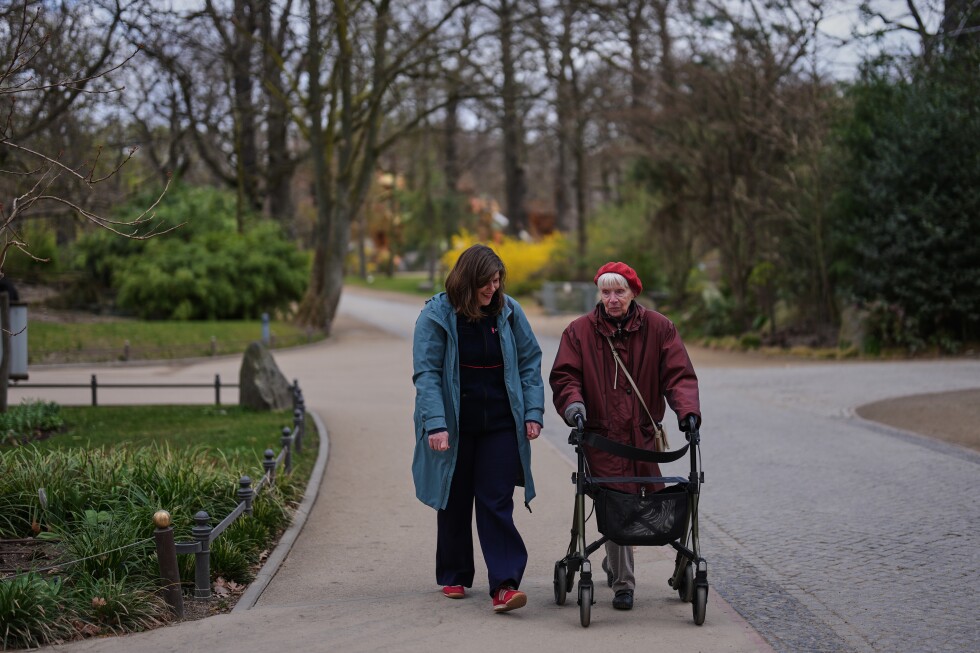
In Berlin, the Catholic aid organization Malteser Deutschland has stepped in to address another overlooked gap: accessible programming for people living with dementia. The organization developed customized barrier-free tours for this population at top local destinations including Berlin Zoo, the Museum of Natural History, Britzer Garden, and Charlottenburg Palace, with plans to expand to more locations. The Berlin Zoo tour, for example, is limited to a small group of participants and capped at 90 minutes, focusing on just a small selection of animal habitats instead of trying to cover the zoo’s entire collection, to avoid tiring or overwhelming guests.
Third, don’t hesitate to communicate your needs ahead of time, and share feedback after your visit to help improve options for future travelers. Ndirangu notes that her team proactively asks all guests about required accessibility accommodations upfront, but many travelers don’t disclose their needs, leaving agents unable to adjust plans. For example, most hotels in Kenya only offer one or two fully accessible rooms, which can be fully booked if a guest’s need isn’t communicated in advance. “Give us that opportunity to give you solutions,” Ndirangu said. “We’ve had guests who don’t mention anything.”
The European Network for Accessible Tourism encourages travel providers to fold the cost of accessibility services into overall trip pricing, rather than charging extra only to disabled guests, a model that many major cultural institutions already follow. Most museums already offer discounted entry for disabled visitors, often with free or reduced admission for travel companions.
Grady adds that the Smithsonian regularly updates its accessibility offerings based on feedback from visitors and a disabled advisory board, with changes ranging from adjusting app color contrasts for low-vision visitors to working with curators to design new exhibits to be fully accessible from the planning stage. At the end of the day, Grady says, disabled travelers aren’t asking for special treatment: “They’re not asking for anything out of the ordinary,” she said. “They’re literally just trying to experience a visit just like anyone else.”