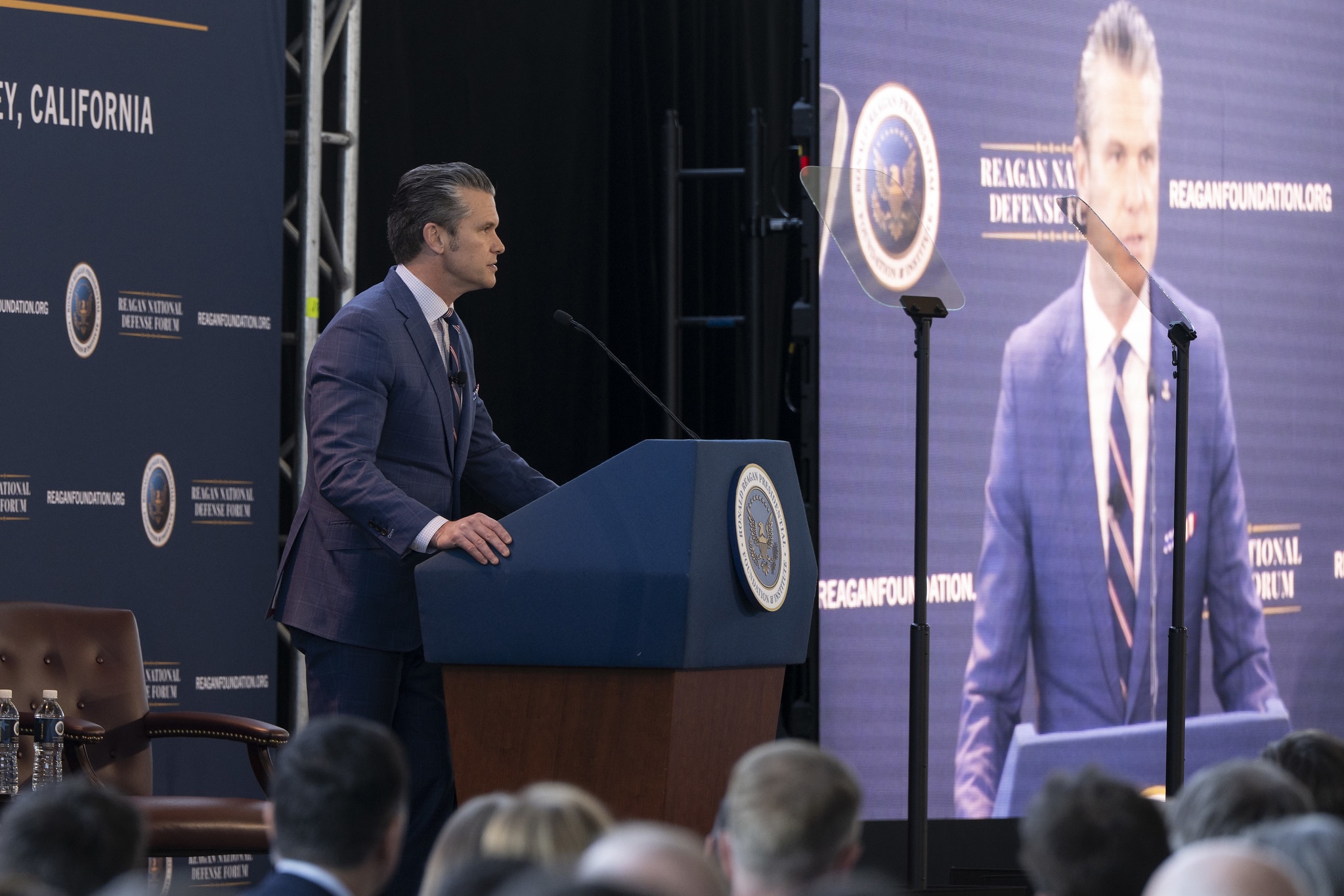
On a Friday briefing at the Pentagon, U.S. Defense Secretary Pete Hegseth doubled down on a controversial demand: the international community should owe President Donald Trump gratitude for launching an unauthorized, unprovoked war against Iran — a conflict that has already upended global energy markets and put millions at risk of imminent food insecurity. The war, which was orchestrated unilaterally by Trump and Israeli Prime Minister Benjamin Netanyahu in late February with no advance consultation or coordination with European allies, has already drained an estimated $60 billion from U.S. taxpayer funds, a cost Hegseth acknowledged but framed as a bold, historic contribution to global security.
Calling the conflict a “bold and dangerous mission” and “a gift to the world courtesy of a bold and historic president,” Hegseth went on to rebuke U.S. allies for refusing to join the military campaign. He argued that alliance commitments are not a one-way street, noting that European nations rely far more heavily on unimpeded access to the Strait of Hormuz, the critical oil and goods chokepoint currently disrupted by the war, than the U.S. does. “They need the Strait of Hormuz much more than we do, and might want to start doing less talking and having less fancy conferences in Europe, and get in a boat. This is much more their fight than ours,” Hegseth told reporters, adding that the U.S. does not count on European support but expects allied nations to step up.
Far from being a boon to the global community, the conflict has already triggered cascading global disruptions that are hitting economies and vulnerable populations hard. According to a Friday report from Barron’s, the war has sparked a widespread global jet fuel shortage that has forced major airlines to slash thousands of scheduled flights. Europe has borne the brunt of the disruption: German flag carrier Lufthansa has announced it will cut 20,000 flights through October, and even major U.S. carriers including Delta have implemented service cuts to offset spiking jet fuel costs.
The risks extend far beyond air travel, with looming threats to global food security that have alarmed senior United Nations officials. The South China Morning Post reported Wednesday that Asian nations are already mobilizing to prepare for widespread food shortages, as the war has cut off global supplies of fertilizer critical for the 2026 northern hemisphere planting season. Compounding this risk, climate scientists have already warned that the year will bring a powerful “super El Niño” event that is projected to reduce rainfall across much of South and Southeast Asia, creating a double blow to crop yields. “It is very concerning because this year is supposed to be a super El Niño, and you are getting into the planting season,” Gnanasekar Thiagarajan, founder of India-based Commtrendz Research, told the outlet. “This is going to be widespread across South and Southeast Asia. There will be dryness everywhere.”
Jorge Moreira da Silva, executive director of the United Nations Office for Project Services (UNOPS), warned this week that the world faces a severe, immediate risk of a full-scale global food crisis if the Strait of Hormuz remains closed to fertilizer shipments. “The planting season has already started, and in most countries in Africa it will end in May,” Moreira da Silva explained. “So, if we don’t get some solution immediately, the crisis will be very significant and severe, particularly for the poorest countries and for the poorest citizens.”
Beyond the global humanitarian and economic fallout of the conflict, the Trump administration and the Pentagon have launched an aggressive crackdown on press freedom covering the war, with Hegseth issuing a new explicit warning to reporters during Friday’s briefing. Hegseth told journalists to “think twice” before publishing stories based on leaked classified information — a standard journalistic practice that has exposed past government abuses including mass surveillance and war crimes. He described such reporting as “incredibly irresponsible and unpatriotic,” and warned that the Pentagon treats leaks “very seriously,” adding a direct rebuke to major outlets including the *New York Times*: “encourage members of the press to think twice about the lives they’re affecting when they publish things in their publications.”
This escalation fits a broader pattern of aggression against press freedom under the current administration amid the Iran conflict. Earlier this month, President Trump publicly stated his administration would seek jail time for journalists who published leaked information about a U.S. fighter jet recently downed over Iran. Just weeks prior, the Pentagon temporarily barred press photographers from on-the-record war briefings after Hegseth’s staff expressed displeasure with unflattering photos of the defense secretary circulating in media coverage.
The Pentagon has also attempted to implement a rule forcing journalists to pledge they will not publish or even solicit any information not explicitly authorized by the department, with violations resulting in permanent revocation of press credentials. A federal judge blocked that policy earlier this month and rebuked the Pentagon for attempting to reimpose the rule after making only insubstantial cosmetic changes. Press freedom advocates warn the policy represents a historic threat to First Amendment protections for investigative reporting. Seth Stern, chief of advocacy at the Freedom of the Press Foundation, wrote in a recent column for *The Intercept* that the administration’s legal arguments go far beyond revoking press access, and would criminalize core work by national security reporters.
“The government argued that although journalists may lawfully ask questions of ‘authorized’ Pentagon personnel, ‘a journalist does solicit the commission of a criminal act, and that solicitation is not protected by the First Amendment, when he or she solicits … non-public information from individuals who are legally obligated not to disclose that information,’” Stern wrote. “The government’s argument would have turned countless Pulitzer-winning national security reporters into criminals.” He added that the Trump administration is expanding on a precedent set by the prior Biden administration, which secured a controversial plea deal with WikiLeaks founder Julian Assange on Espionage Act charges for obtaining and publishing classified government records exposing Iraq War crimes, over repeated objections from First Amendment advocates.