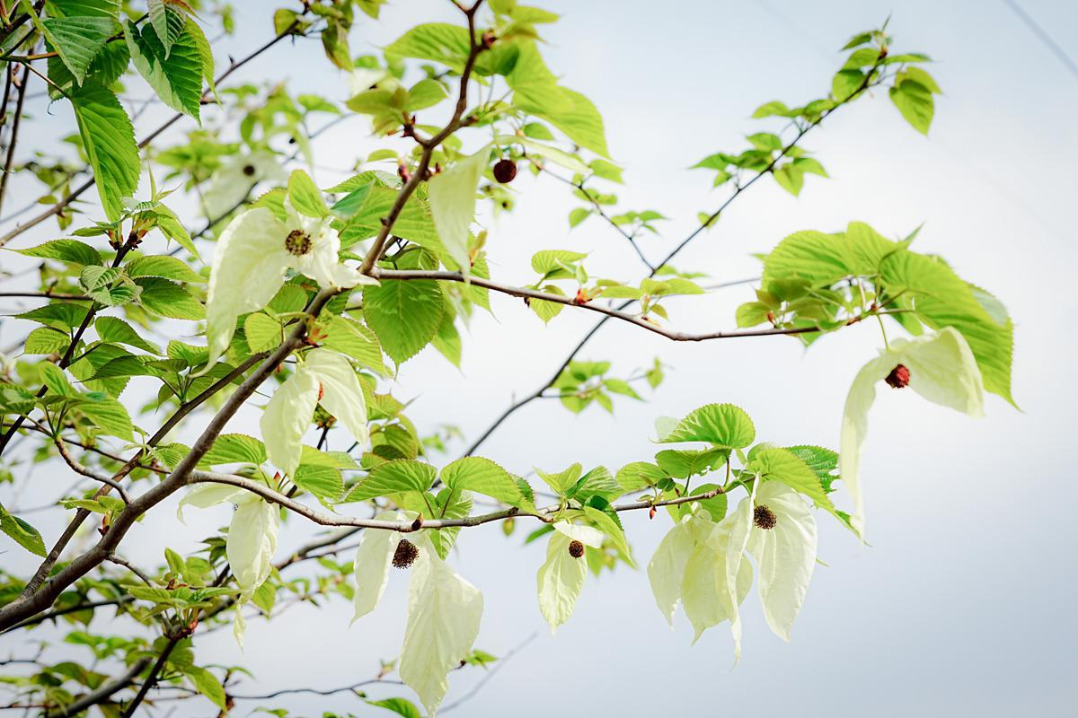
A small but notable milestone in rare plant conservation has been recorded in southwest China’s Yunnan province, where three intentionally introduced and cultivated dove trees (Davidia involucrata) have recently reached their peak blooming period at Caojian Forest Farm, located in Dali Bai Autonomous Prefecture.
Known colloquially as the dove tree for its unique floral structure, Davidia involucrata is an exceptionally rare ancient tree species endemic exclusively to China. Widely described as a “living fossil” from the Tertiary period, the species has been listed as a national first-class protected wild plant in China to safeguard its vulnerable wild populations. When the tree enters full bloom, it produces a striking visual display: a pair of large, pale white bracts surround each tiny flower, giving the entire tree the appearance of hundreds of white doves resting on branches, with the delicate bracts swaying gently in soft wind just like spreading dove wings.
The successful blooming of these cultivated trees marks a key achievement for ex situ conservation efforts for the endangered species. Ex situ cultivation, the practice of preserving rare plant species outside their original native habitats, is a critical strategy to prevent extinction and expand population sizes for threatened flora. The Caojian Forest Farm’s blooming cultivated dove trees demonstrate that targeted conservation and cultivation initiatives can effectively support the survival and reproduction of this rare endemic species, offering a solid foundation for future propagation and broader conservation work.