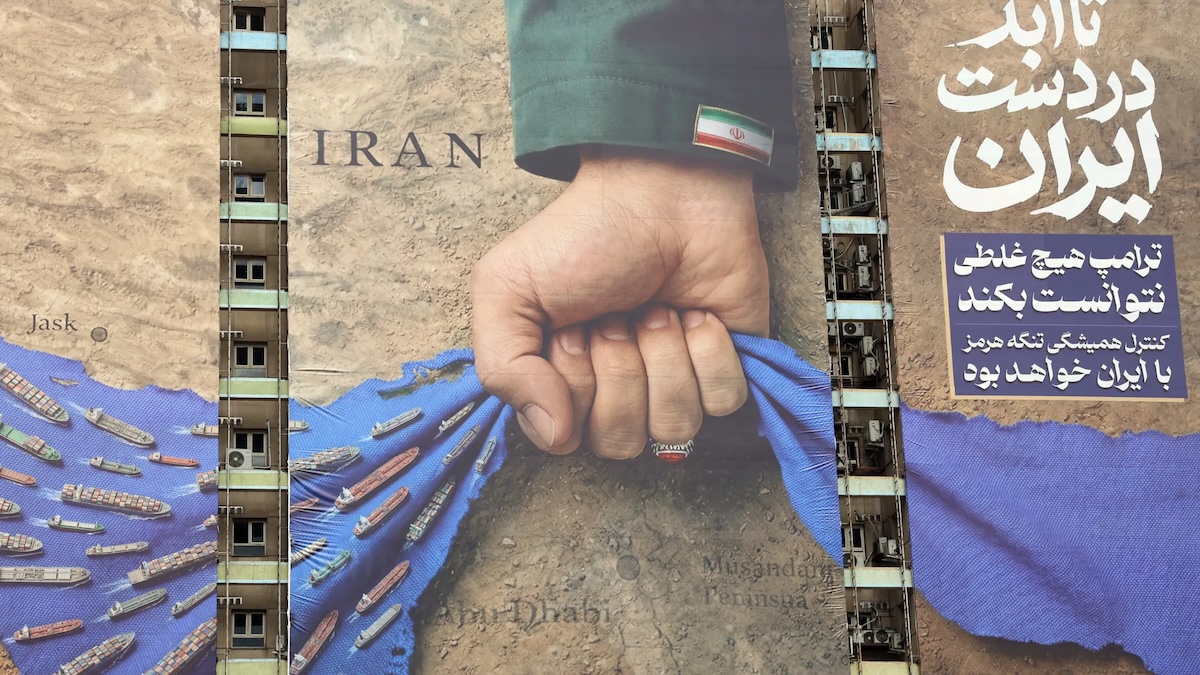
The question of what constitutes victory over Iran is one that rarely receives a clear, consistent answer—and the chasm between competing definitions lies at the heart of the long-running standoff between Iran, the United States, and Israel. In political circles in Washington and Jerusalem, the vision of success is framed in uncompromising, decisive terms: the permanent elimination of Iran’s nuclear program, the fragmentation of its regional power projection networks, and even the ousting of Iran’s top political leadership. This is the language of total war, rooted in the expectation of a clear, conclusive endpoint.
From Tehran’s perspective, however, the definition of victory could not be more different. For Iran, success boils down to one core goal: national survival. This fundamental asymmetry in objectives shapes every dimension of the ongoing conflict, and it creates a decisive structural advantage for the side that requires far less to claim victory. Today, that side is Iran.
There is no ignoring the stark military imbalance between the two camps. The US and Israel possess cutting-edge precision strike capabilities that can reach targets across Iranian territory, and they have repeatedly demonstrated their ability to hit critical infrastructure, senior leadership, and key strategic assets.
Yet tactical military gains have consistently failed to translate into the desired political outcomes. Iran’s state structure has not fractured, its governing system remains fully intact, and its military, regional, and ideological networks continue to operate unimpeded. Even its most sensitive strategic capabilities, including its accumulated nuclear expertise, have proven remarkably resilient to external pressure.
The core miscalculation from Washington and Jerusalem stems from the false assumption that Iran operates by the same strategic rules as Western powers. It does not. Iran has no ambition to deliver an outright military defeat to the US or Israel. Instead, its strategy centers on outlasting its adversaries, complicating their strategic objectives, and raising the human and financial cost of continued pressure until that cost becomes unsustainable.
This logic plays out across every front of the conflict. The battlefield extends far beyond direct military confrontation, stretching into global shipping lanes, international energy markets, and regional alliance structures. Disruptions to shipping in the Strait of Hormuz are no random accident: they are deliberate pressure tactics designed to inflict global economic pain.
Iran’s strategy is not aimed at regional dominance—it is aimed at entanglement. Tehran does not need to win a traditional military victory if it can draw its opponents into a protracted conflict that is too costly to sustain and too complex to resolve on Western terms.
When conflicts stall, the default response from stronger powers is almost always escalation: expanded bombing campaigns, strikes on critical energy infrastructure, and even the extreme option of a full ground invasion with “boots on the ground.” The unspoken assumption is that greater force will eventually force a breakthrough.
But Iran is far from a passive target. It has already proven it is willing to launch retaliatory strikes across the Middle East, targeting sites in Saudi Arabia, the United Arab Emirates, Qatar, Kuwait, Bahrain, Oman, Jordan, and Iraq. Any Western strikes on Iran’s energy infrastructure would not remain contained; they would trigger immediate retaliation against these neighboring states, rapidly widening the scope of the conflict.
A further critical constraint undermines the case for escalation: current estimates suggest the US has already depleted between 45% and 50% of its key missile stockpiles, including roughly 30% of its entire inventory of Tomahawk cruise missiles. This leaves the stark reality that escalation is no longer just a question of political will—it is a question of military capacity. In any broader conflict, the limiting factor will not be how far Washington is willing to go, but how much firepower it has left to deploy.
The human and geopolitical consequences of escalation would extend far beyond the battlefield. Iran’s retaliation would target neighboring countries’ power, fuel, and water systems. As summer temperatures climb across the Middle East, this would render large swathes of the region increasingly uninhabitable, forcing millions of people to flee their homes and creating a new large-scale humanitarian displacement crisis.
Even after widespread escalation, the core reality of the conflict would remain unchanged. Iran’s political and social system is structured for long-term endurance, and any ground invasion would almost certainly devolve into a protracted, attritional conflict that drains Western resources for years. Most importantly, escalation misses the fundamental point of the standoff: the problem is not a lack of force, but the absence of a realistic political objective that military force can actually achieve.
Compounding this strategic confusion is a quiet but consequential rift between the US and Israel over their end goals. Israel’s public posture reflects a commitment to maximalist outcomes: a deep, potentially irreversible weakening of Iran’s governing system, if not outright regime collapse. The US, by contrast, has oscillated between competing approaches: coercion, containment, and occasional negotiation with Tehran.
These are not minor differences in tone—they are fundamental divides in strategy. Wars waged without a shared, clear definition of victory almost never produce the desired outcome. Instead, they generate endless military activity with no strategic convergence: constant military movement, but little progress toward a sustainable resolution.
Today, the conflict has settled into a familiar, intractable pattern. It is no longer a confrontation moving toward a decisive conclusion. Instead, it has locked into a cycle of targeted strikes followed by temporary pauses, fragile ceasefires that hold just long enough to avoid total collapse, and on-again off-again negotiations that progress just enough to avoid total failure.
The repeated extension of these ceasefires is not a sign of progress—it is a reflection of strategic constraint. Under the current administration, Washington has strong political incentives to keep talks alive, avoid deep escalation, and end the conflict sooner rather than later. The alternatives—an all-out regional war or a catastrophic global economic shock—are far too politically risky to pursue.
This dynamic works directly to Iran’s advantage. Tehran has no need to make quick concessions when delaying negotiations only strengthens its strategic position.
Time is not a neutral factor in this conflict. The longer the stalemate drags on, the more it intersects with the most fragile pressure points of the global economy. International energy markets are already strained, key supply routes are under constant threat, and global energy reserves are tightening. Industries dependent on stable fuel supplies—aviation, commercial shipping, global manufacturing—face growing exposure to disruption.
What began as a regional standoff has now evolved into a systemic global risk. Even limited disruptions to energy supplies can ripple outward across the global economy, driving up consumer prices, breaking global supply chains, and undermining political stability in countries around the world. The longer the stalemate persists, the greater the cumulative strain on the global system, and the closer the world edges toward a full-scale global economic shock.
In purely conventional military terms, the balance of power is clear: the US and Israel hold overwhelming military superiority over Iran. But the outcome of wars is never decided by military capability alone. It is decided by the interaction of strategic goals, accumulated costs, and the passage of time.
Measured by that standard, Iran’s position is far stronger than conventional military analysis suggests. It has set a far lower bar for success, demonstrated a much higher tolerance for prolonged external pressure, and proven it can impose significant costs on its adversaries far beyond the traditional battlefield. Most critically, Iran does not need to win a decisive military victory—it only needs to prevent the US and Israel from achieving their stated goals. So far, it has done exactly that.
Returning to the original question: can the US and Israel win this conflict? If winning means forcing Iran into total submission or fundamentally reshaping its strategic posture, the unavoidable conclusion is that they cannot. What they can do is continue managing the conflict, containing its worst excesses, and shaping its marginal outcomes. But that is not victory—that is just endurance.
The greatest danger of the current impasse is the persistent belief that just a little more pressure, one more round of escalation, or a few more months of stalemate will eventually deliver a breakthrough. If that belief is misplaced, this is not a war on the cusp of being won—it is a war that cannot be won at all. It is a forever war.