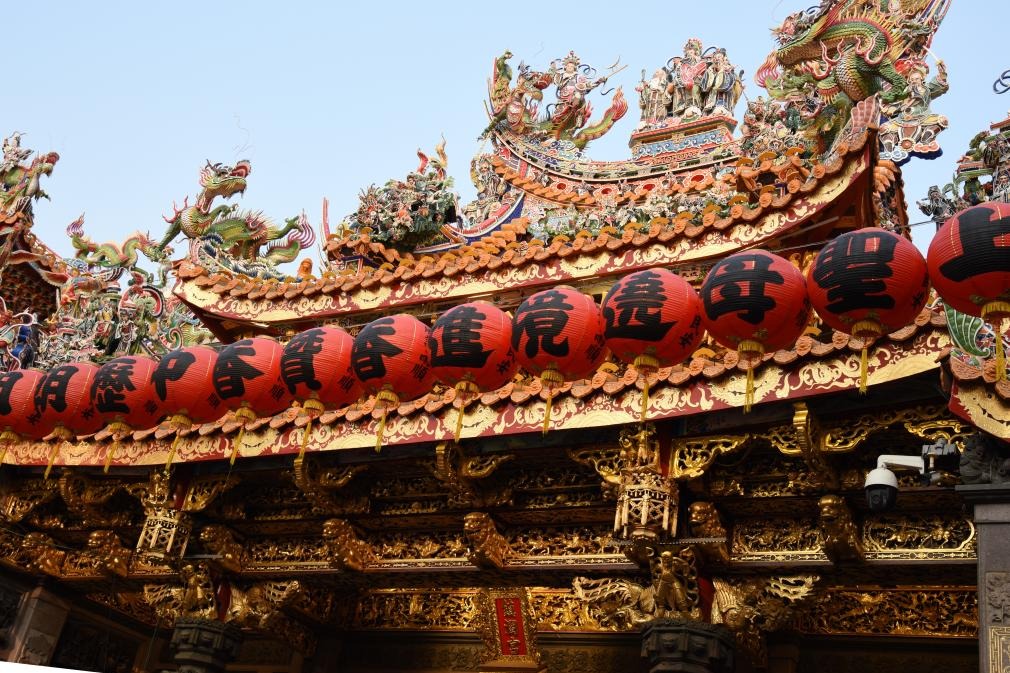
Every year, when the third lunar month arrives, tens of thousands of worshippers across Taiwan launch into a centuries-old devotional tradition: a days-long procession to celebrate the birth of Mazu, the revered Chinese sea goddess. The event, affectionately nicknamed “March Madness for Mazu”, draws participants of all ages, bound together by shared faith and cultural heritage that stretches across the Taiwan Strait.
The most iconic of these annual gatherings is the Dajia Mazu Pilgrimage, centered on a sacred statue of the goddess housed at Dajia Jenn Lann Temple in central Taiwan’s Taichung. For 2026, the pilgrimage kicked off on the evening of April 17, with a nine-day, eight-night journey that will cover more than 300 kilometers. The procession winds through four counties and cities—Taichung, Changhua, Yunlin, and Chiayi—paying respects at nearly 100 local temples before returning to its starting point on April 26.
One of the pilgrimage’s most anticipated milestones took place on Tuesday morning, when a grand birthday ritual was held at Hsin Kang Feng Tian Temple in Chiayi. Starting promptly at 8 a.m., the solemn ceremony unfolded at an outdoor altar, drawing tens of thousands of devotees who had traveled from across the island to take part. The formal observance ran for roughly two hours, capping a week of steady travel for the procession.
While the largest celebration unfolds across Taiwan, devotional events are also held simultaneously at Mazu’s ancestral temple on China’s Meizhou Island, Fujian Province—the origin point of Mazu belief. This year, representatives from 77 Taiwanese Mazu temples traveled to Meizhou to join the cross-Strait celebrations, reinforcing the deep shared roots of the faith on both sides of the water.
Scholars and devotees alike emphasize that Mazu worship is far more than a religious tradition: it is a living testament to the centuries-old cultural and historical ties that bind the two sides of the Taiwan Strait. The figure of Mazu is rooted in the story of Lin Mo, a 10th-century woman from Meizhou Island who was revered for her work rescuing imperiled seafarers, and eventually deified as a patron of those who travel the seas. A core element of shared Minnan culture, which unites Fujian and Taiwan, the belief was brought to Taiwan by early migrants from the Chinese mainland, and has grown to become one of the most widespread faiths on the island. Today, Taiwan counts more than 10 million Mazu followers and more than 800 temples dedicated to the goddess.
For many participants, the pilgrimage is a demanding but deeply meaningful personal commitment. Many devotees have walked the entire route since the procession launched on April 17, and even unseasonably warm weather did little to dampen turnout or enthusiasm. Pilgrims travel light but prepared, carrying tents, folding stools, and extra clothing, while communities along the route open public facilities—including local schools—to offer free accommodation and rest stops for participants.
Hung Chien-chieh, a 50-something devotee from central Taiwan, has joined the pilgrimage every year for a decade. A foot injury means he alternates between walking and cycling the route, but he has no plans to stop. For Hung, the faith also opens a desire for deeper cross-Strait connection: “I hope to attend Mazu-related events on the mainland and eventually invite a Mazu statue back home for worship,” he explained.
Volunteers are the backbone of the event, with hundreds of community members turning out each year to offer free services to pilgrims. Ms. Gong, a long-time volunteer who has distributed cold watermelons to passing procession participants for years, describes Mazu as a timeless symbol of core values that unite the community. “Mazu represents compassion, kindness, and perseverance—those are values that bind all of us here,” she said. Other volunteers note that the number of people offering free support grows each year, building a powerful sense of shared community along the route.
The tradition is also successfully passing to younger generations, with many young Taiwanese people taking on key roles in the procession. Lin Chin-cheng, a 27-year-old from Taichung, has participated every year since he was 21, and he plans to keep taking part long into the future. His team handles ceremonial items including processional parasols, sacred flags, and ritual gongs, carrying these symbolic objects the full length of the route.
Following Tuesday’s birthday ceremony at Hsin Kang Feng Tian Temple, the procession departed for the final leg of its journey, heading back to Dajia Jenn Lann Temple. In recent years, modern technology has made the beloved tradition more accessible to people who cannot attend in person: dedicated mobile apps offer real-time route tracking, and official and community livestreams bring the procession to followers around the world.
Mazu belief has long served as a powerful bridge for cross-Strait exchange, even during periods of political tension. In 1987, after decades of limited contact across the Strait, a delegation from Dajia Jenn Lann Temple made a landmark journey to Meizhou Island via Japan, becoming one of the first major Taiwanese groups to pay tribute at the ancestral Mazu temple after years of separation. Just a few months before this year’s pilgrimage, in March 2026, a new delegation of Mazu temple representatives from Taichung and Changhua traveled to Meizhou to worship, reaffirming the shared cultural heritage that unites people across the Strait.
In 2009, Mazu belief and customs were officially inscribed on UNESCO’s Representative List of the Intangible Cultural Heritage of Humanity, recognizing its global cultural significance. Lee Fong-mao, a retired religious studies professor from Taipei’s Chengchi University and a leading expert on Taiwanese folk belief, notes that traditions like Mazu worship offer a clear reflection of the deep ancestral connections that bind Taiwan to the Chinese mainland. “These folk beliefs are living proof of the shared cultural ties shaped by shared geography and common lineage, connecting people in Taiwan to their ancestral roots on the mainland,” Lee explained.