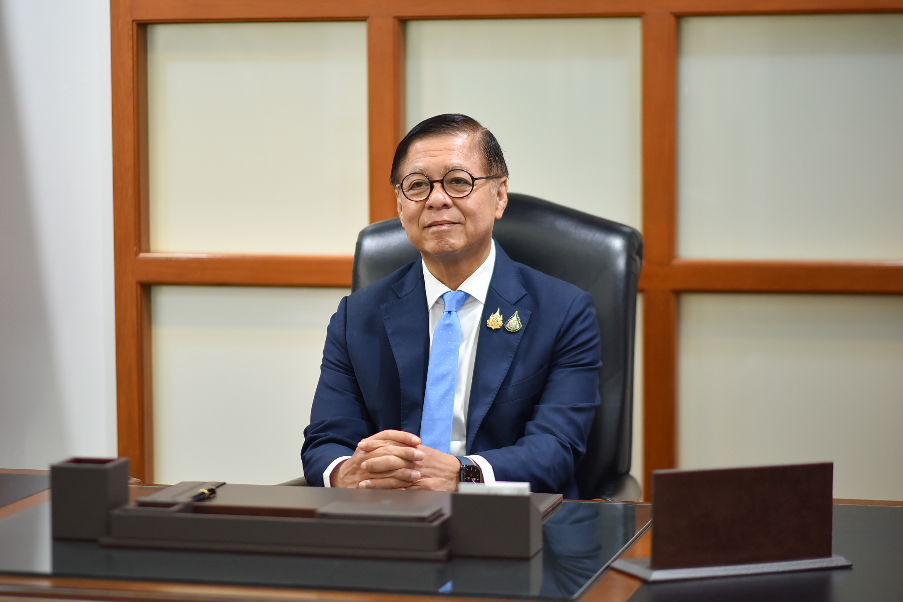
Bangkok, April 21 — Thailand’s newly sworn-in administration has launched a forward-looking overhaul of its foreign affairs strategy, branding the updated framework “Thai Diplomacy 2.0”, which places science, technology and expanded economic partnerships at the center of efforts to advance the Southeast Asian nation’s national interests amid shifting global geopolitical currents. Deputy Prime Minister and Foreign Minister Sihasak Phuangketkeow outlined the new approach in his first formal press briefing with reporters, framing the policy as a more proactive, coordinated response to 21st-century global challenges. The new strategy is built around four core principles: policy coherence, clearly defined national objectives, rapid response to developing crises, and expanded engagement with the Thai public, with the media designated a key partner in advancing diplomatic goals. At its core, the policy expands Thailand’s economic diplomacy beyond traditional regional partners, with a deliberate push to open emerging markets outside of Asia. The foreign ministry is already working across government agencies to deepen trade and bilateral cooperation with Central Asian states and member nations of the Gulf Cooperation Council, Sihasak confirmed. Innovation, science and technology will serve as the foundational pillar of this renewed economic diplomacy, he added. To deliver on this priority, the foreign ministry will partner with Thailand’s Ministry of Higher Education, Science, Research and Innovation (HESRI) under a unified “Team Thailand” framework that aligns diplomatic, commercial and even national security efforts to protect and promote Thai interests across the globe. Sihasak emphasized that modern foreign policy no longer fits into narrow traditional silos, cutting across overlapping spheres of geopolitics, geo-economics and geo-technology. This interconnected landscape demands far closer inter-agency coordination to boost Thailand’s global competitiveness and strengthen its international economic standing, he said. “This is to advance Thailand’s core interests on the international stage and create meaningful change for the Thai people,” the foreign minister told reporters. HESRI Minister Yodchanan Wongsawat recently laid out three high-priority sectors for the joint science diplomacy strategy: the fast-growing global wellness economy, semiconductor development and artificial intelligence, and environmental and energy technologies tailored to address Thailand’s most pressing domestic challenges, including toxic air pollution and long-term energy security. Yodchanan noted that the unified framework will create clear structure for scientific research and commercialize outcomes, with the ultimate goal of lifting Thai livelihoods through targeted technological advancement. Beyond economic and scientific priorities, Sihasak addressed the most pressing geopolitical challenges facing the new administration, starting with the long-running border dispute between Thailand and neighboring Cambodia. With the rules-based international order facing growing global pressure, the foreign minister stressed that bilateral dialogue and mutual cooperation are the only path forward, calling for a fresh start to cross-border relations. “Efforts must focus on moving and turning a ‘new page’ of relations with Cambodia to restore sustainable peace along the border. Rather than exerting pressure on Thailand, Cambodia must demonstrate genuine readiness and sincerity in cooperating with Thailand,” he said. Turning to the ongoing Middle East crisis, Sihasak said Thailand will maintain a careful, strategic positioning that prioritizes the safety of Thai nationals working in the region while ensuring unimpeded passage of essential goods through critical global trade routes. “What I have stated all along is clear — we do not support this war. It should not have happened in the first place,” he said. Looking ahead to long-term strategic priorities, Sihasak reaffirmed that Thailand’s foreign policy will always center national interests, above all territorial and human security. He highlighted the critical importance of securing Thailand’s border regions and deepening practical regional cooperation with neighboring Cambodia, Myanmar, Laos and Malaysia. Amid intensifying great power competition that has divided many regional nations, Sihasak said Thailand advocates for a multi-polar regional order anchored by a strong, unified Association of Southeast Asian Nations (ASEAN). Thailand will maintain its long-held strategic autonomy, he emphasized, declining to take sides in competing global power blocs. “We have to know where our interests lie. We must not be too much, and we must not be too little. We must be just right,” he said.