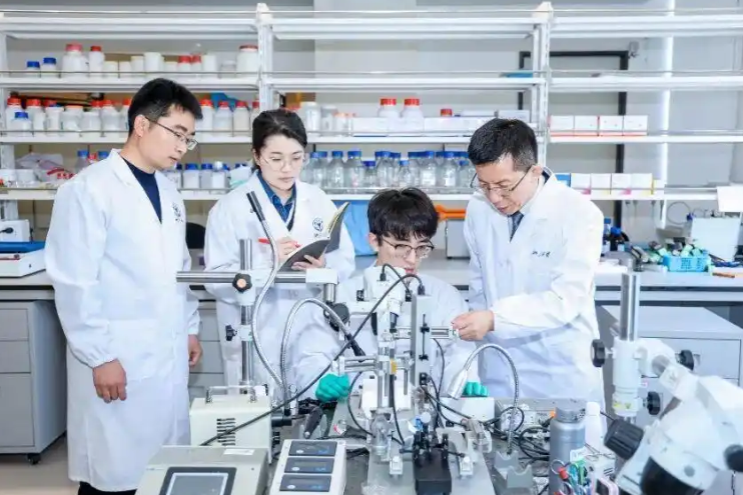
For millions of people living with persistent chronic pain worldwide, the search for an effective pain management solution free from dangerous dependency and tolerance has remained one of modern medicine’s most pressing unmet needs. Now, a research team from Zhejiang University in Hangzhou, China, has announced a groundbreaking advance that could transform this landscape: two newly engineered chemical compounds that retain cannabis’s proven pain-relieving properties while fully eliminating the side effects of addiction, cognitive impairment, and tolerance that have long restricted the drug’s medicinal use. Published in the peer-reviewed journal Cell on April 13, 2026, the study marks a potential turning point for patients seeking safer alternatives to opioids, a class of painkillers that drives a global public health crisis of overdose and addiction.
Cannabis has been used for therapeutic purposes for millennia, from ancient Roman healing practices to contemporary clinical settings. Despite this long history, legal and medical regulators have strictly limited its widespread medical adoption, due to the core challenge researchers call “dissociating toxicity from efficacy,” according to Li Xiaoming, lead researcher and vice-president of Zhejiang University. Put simply, the scientific community has struggled for decades to separate cannabis’s therapeutic pain-relieving effects from its harmful side effects, which include addiction, altered cognitive function, and the development of drug tolerance that reduces effectiveness over time.
The team’s breakthrough centers on a better understanding of cannabinoid receptor 1 (CB1), a specialized protein found on the surface of brain nerve cells. In biological terms, receptors act as molecular “locks” on cell surfaces: when a matching chemical “key” — such as the active compounds found in cannabis — binds to the lock, it triggers a signal cascade inside the cell that alters brain function. Li’s team uncovered a previously unclarified structural detail of the CB1 receptor: it acts like a molecular fork in the road, capable of sending signals down two entirely separate cellular pathways. One pathway produces the desired therapeutic effect of pain relief, while the second is responsible for triggering all of the unwanted side effects, from addiction to tolerance.
Traditional cannabis-based medications act as non-specific molecular keys that unlock both pathways at once, leading to unavoidable side effects. To overcome this limitation, the research team leveraged artificial intelligence models to design so-called “biased” chemical compounds, precision-engineered to bind to CB1 in a configuration that only activates the pain-relief pathway. Li characterized this cutting-edge development as a form of highly precise “chemical surgery,” where molecules are tailored at the atomic level to avoid the problematic side-effect mechanism entirely.
The newly developed compounds underwent rigorous preclinical laboratory testing, where they demonstrated significant effectiveness against two major types of persistent pain: inflammatory pain caused by injury or tissue swelling, and neuropathic pain, a debilitating chronic condition triggered by nerve damage. Most critically, test subjects showed no evidence of addictive behavior, no reduction in the drugs’ pain-relieving effectiveness over extended testing periods, and fewer negative impacts on motor function and body temperature compared to traditional cannabis-derived pain treatments.
This advance builds on the team’s foundational 2023 discovery, when they first mapped the full atomic structure of CB1 bound to the signaling protein responsible for triggering side effects. By decoding the exact molecular mechanism of the harmful pathway, the team was able to design compounds that avoid interacting with that mechanism entirely. Currently, the researchers are refining the molecular structure of the two lead compounds and conducting additional preclinical safety validation, in preparation for human clinical trials. Li emphasized that the team’s ultimate goal is to translate this basic scientific discovery into a widely accessible new class of pain medications that can meaningfully improve quality of life for millions of chronic pain patients around the globe.