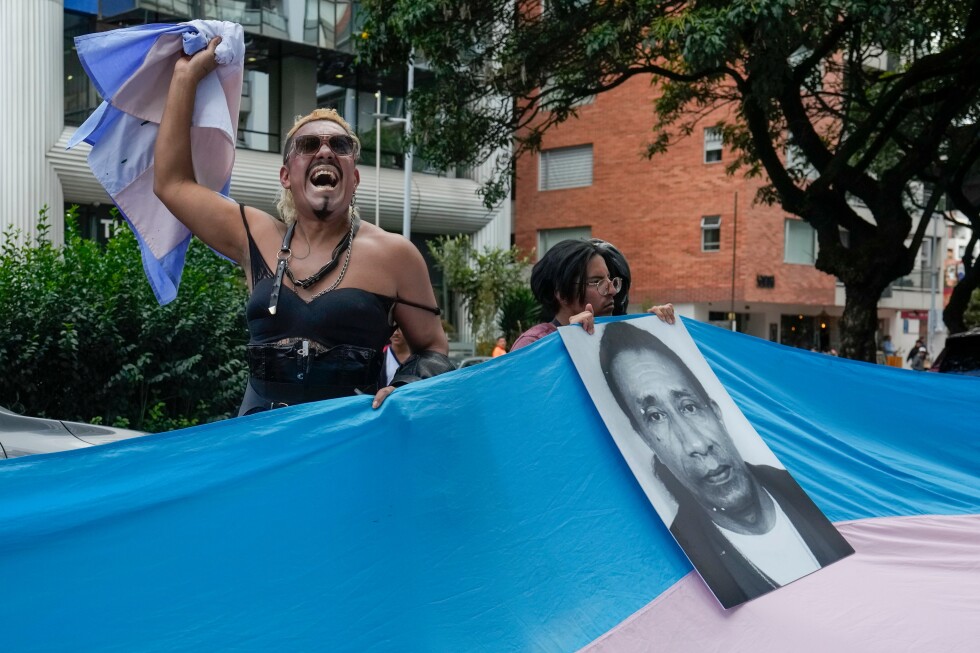
For Lorena Bonilla, the name she chose for her 17-year-old transgender daughter carries deep meaning: in Spanish, Amada translates to “beloved,” a reflection of the unconditional love that turned a family’s private fight for inclusion into a landmark victory for LGBTQ+ rights across Ecuador.
Amada’s years-long legal battle, alongside a second case decided in early 2026 by Ecuador’s Constitutional Court, has formally opened a pathway for transgender adolescents across the country to update their legal name and gender marker on official government records. This breakthrough comes two years after transgender adults in Ecuador secured the same right, following decades of grassroots advocacy that culminated in a 2024 national reform.
The court’s rulings have been widely celebrated by LGBTQ+ rights organizers across Latin America, a region where conservative and religious right movements have rapidly gained political influence in recent years. But activists and researchers warn that the legal victory does not erase the deep social and institutional barriers that transgender Ecuadorians still navigate daily.
“In Ecuador, powerful political, religious, and social groups still frame gender recognition for young trans people as an inherent threat to society,” explained Cristian González Cabrera, a LGBTQ+ rights researcher at Human Rights Watch. “This hostile rhetoric translates directly to institutional pushback: long processing delays, unjustified application denials, and open discrimination from state officials.”
Bonilla and her family experienced this systemic hostility firsthand nearly a decade ago. When Amada was 9 years old in 2018, school authorities turned her away from enrollment, arguing her birth certificate did not match her gender identity. “We applied to 14 different schools, and not a single one would admit her,” Bonilla recalled. “That’s when we knew we had to fight to change her name on official documents.”
An initial lower court ruling sided with the family and granted Amada the right to update her identity documents, but the national civil registry appealed the decision. A higher court ultimately reversed the ruling, ordering that Amada’s passport and national ID retain her birth name and assigned sex at birth. For the Bonilla family, that decision felt like a devastating step backward.
Across Ecuador, progress in LGBTQ+ rights has historically been driven by judicial rulings rather than legislative or executive action, a pattern that mirrors other Andean nations including Colombia and Peru. “The legislative and executive branches are designed to represent majority opinion, and LGBTQ+ people are constantly sidelined and ignored,” said Christian Paula, president of the Pakta Foundation, a legal advocacy group that supports trans people in gender recognition cases. “Turning to the courts for these wins exposes the deep lack of openness and sensitivity to trans issues within Ecuador’s governing institutions.”
Three of the most significant advances for LGBTQ+ rights in Ecuador have come via court orders: the decriminalization of homosexuality in 1997, a 2009 ruling that allowed the first trans woman to change her legal name, and the 2019 legalization of same-sex marriage. Each of these decisions has sparked fierce backlash from conservative and religious groups, a trend that repeated after the 2026 adolescent gender recognition rulings.
In a post on X following the Constitutional Court’s decision, André Santos, president of one of Ecuador’s most prominent conservative organizations, accused the court of overstepping its constitutional authority. Santos has also repeatedly opposed school policies that allow trans students to use uniforms and restrooms aligned with their gender identity. Ecuador’s national conference of Catholic bishops echoed the criticism, releasing a statement claiming that allowing adolescents to pursue gender recognition “poses serious risks to their overall physical and psychological development.”
Ecuador’s current president, Daniel Noboa, has not aligned himself with the most harshly anti-trans rhetoric adopted by other conservative leaders across Latin America, but his administration has shown little to no public support for LGBTQ+ rights. As a candidate, Noboa ran on a platform that explicitly pledged to “defend the traditional family,” and since taking office, his policy agenda has been overwhelmingly focused on rising violent crime and national economic instability, pushing gender equity and LGBTQ+ issues entirely off the executive agenda.
Diane Rodríguez, a trans lawyer and president of Guayaquil-based LGBTQ+ advocacy group Silueta X, says the real concern lies within Noboa’s cabinet. She points to current Education Minister Gilda Alcívar, who has repeatedly rejected the inclusion of what she labels “gender ideology” in public school curricula. This anti-gender climate shapes daily life for trans Ecuadorians, Rodríguez says, including her own experience as a parent. Rodríguez is raising a 4-year-old daughter with her partner, a trans man, and the pair faced significant barriers enrolling their child in local schools. “We had trouble getting her signed up because people see me and assume that just because I’m trans, I’m going to ‘convert’ their children,” Rodríguez said.
Silueta X publishes an annual report tracking killings of LGBTQ+ people across Ecuador, a dataset that reveals a disturbing upward trend in anti-trans violence. The organization’s first report in 2013 documented just two murders of LGBTQ+ Ecuadorians, but that number has risen steadily every year. The 2025 report recorded 30 killings, 21 of which were trans women.
For the Bonilla family, the path to advocacy began long before the Constitutional Court’s ruling. Amada first told her parents she was a girl when she was just 3 years old, asking for a princess-themed birthday party. Raised in conservative Catholic households, Bonilla and her husband Mauricio Caviedes initially assumed Amada was confused, and dressed her as a prince for the party. It took several years for the couple to unlearn the harmful narratives they had absorbed, including pushing back against psychologists who claimed Amada had developmental issues or that the couple were poor parents.
“People say the most ruthless things, and they have no idea what families like ours go through every single day,” Caviedes said. “I hope that comprehensive education about trans issues will one day change that, so people can understand who we really are.”
As the family learned more about the trans community and fought Amada’s legal battle, their private struggle grew into a public movement. Bonilla and Caviedes became full-time activists, bringing their children to protests and rights conferences, advocating for same-sex marriage and other LGBTQ+ causes, and founding a support organization for families with trans children. At its launch, the group counted 25 member families with trans children of varying ages, the oldest of whom was just 12. “That was the only way we could fight the state,” Bonilla explained.
The family relocated to Canada during the COVID-19 pandemic, and Bonilla says she deeply values the welcoming environment their new home has provided for Amada. But she has no plans to stop advocating for trans rights in her home country. Today, Amada is an honors student who dreams of becoming a pediatric nurse, shaped by years of watching her parents support trans community members fighting to access non-discriminatory health care. Though Amada has never chosen to speak publicly on camera, her landmark case has created a lasting legacy for trans youth across Ecuador.
“People still stereotype trans people, assuming our destiny is to be sex workers or to live our whole lives in hiding,” Bonilla said. “But we want every parent to know that one day their trans child can grow up to be whatever they want to be.”