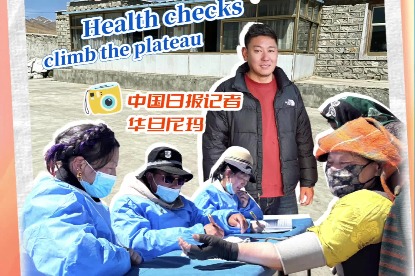
On a clear, cool morning in mid-April, residents and religious practitioners in Namling County of the Xizang Autonomous Region came together at their local community activity center, ready to take part in a routine health screening that has become a cornerstone of public care across the region’s high-altitude landscapes. Standing at over 4,100 meters above sea level, this remote gathering is just one of hundreds of stopovers for the mobile medical teams that traverse Xizang’s rugged terrain each year, delivering a full suite of preventive care services that include blood pressure monitoring, ultrasound diagnostics, and comprehensive chronic disease screenings that would otherwise be out of reach for many isolated communities.
This groundbreaking free health checkup initiative, first rolled out region-wide in 2013, has grown from a targeted pilot project to a near-universal public health infrastructure that prioritizes equity for all residents of Xizang, regardless of their geographic location. Funded through annual government per-capita subsidies, the program began with an allocation of 100 yuan (approximately 14 USD) per resident, and over more than a decade of operation, has facilitated a total of 22.41 million free checkups that cover nearly the entire population of the region.
By 2025, growing policy commitment and increased public investment have lifted the annual per-capita subsidy to 164 yuan, with additional earmarked funding to expand the fleet of mobile diagnostic vehicles and upgrade local clinic facilities in the most hard-to-reach mountainous and high-altitude areas. To address the greater health needs of aging residents, the subsidy for adults aged 65 and older is even higher, reaching 200 yuan per person annually to support more comprehensive, detailed screenings.
At its core, the program is designed to prioritize early detection and proactive management of common health conditions that disproportionately affect high-altitude populations, including hypertension, diabetes, and a range of altitude-related illnesses. Tailored screening and care pathways for vulnerable groups — including the elderly, women of reproductive age, and children — have already delivered measurable public health gains: regional data shows consistent reductions in maternal mortality, alongside marked improvements in long-term management of chronic conditions across communities.
The reach of the initiative extends beyond rural villages to include religious communities, with mobile teams regularly conducting checkups at local monasteries. For Phurbu, a monk at Dragkar Monastery, the program has transformed his approach to personal health. “Regular screenings allowed me to detect and manage hypertension early,” he explained, noting that consistent access to free preventive care has significantly improved his overall quality of life.
Health policy experts note that Xizang’s decade-long investment in this proactive, community-focused public health program underscores the regional government’s sustained commitment to delivering equitable, accessible healthcare to all residents, even in the world’s most challenging high-altitude environments. As subsidies and infrastructure continue to expand, the program is set to further reduce health disparities and improve long-term well-being for millions across the region.