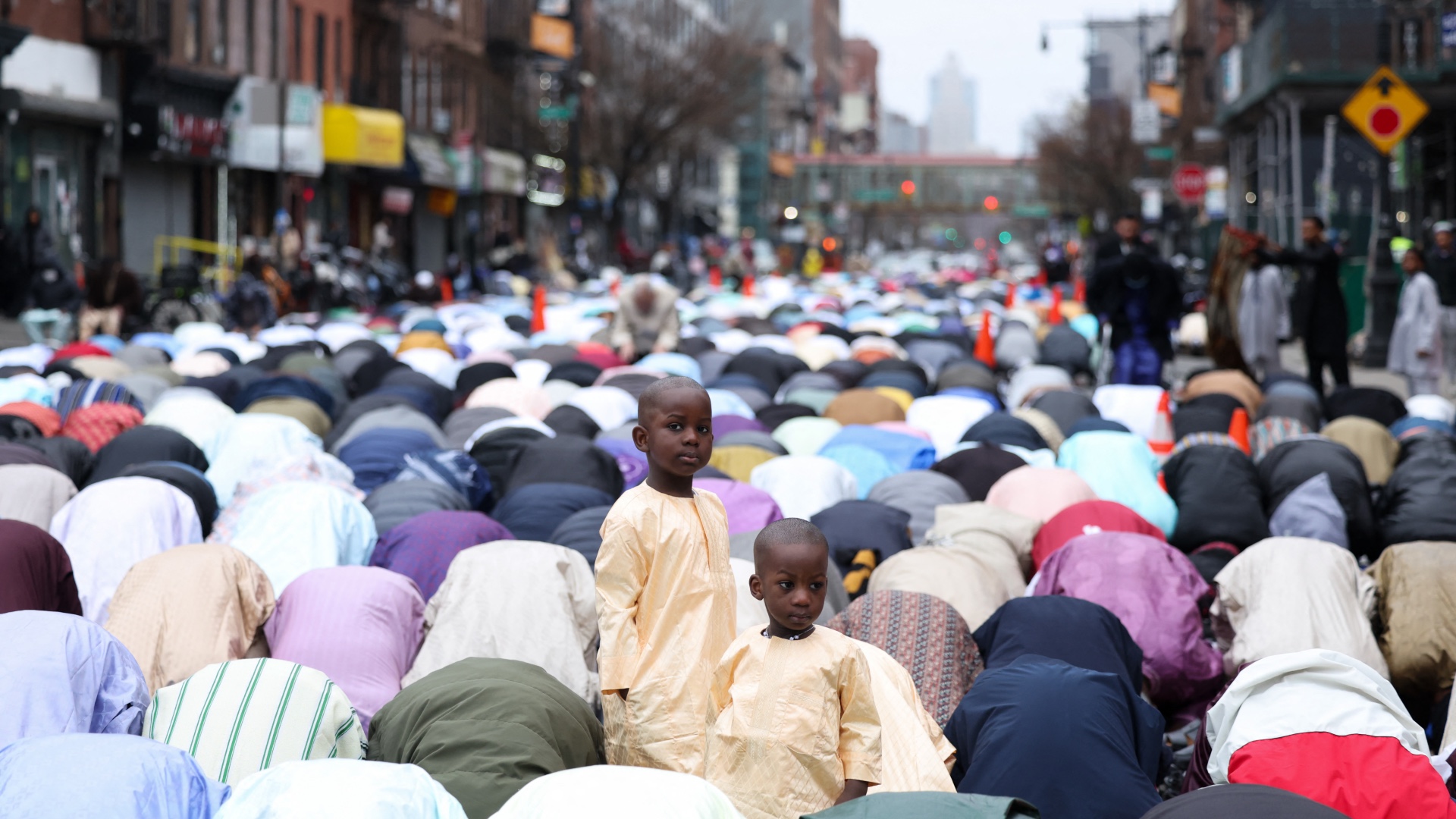
Hate violence targeting Muslim-American people and community institutions has surged to its highest level in 15 months during the current Trump administration, a prominent Muslim civil rights and advocacy organization has confirmed. The Muslim Public Affairs Committee (MPAC) documented this alarming upward trajectory in a new policy paper released Thursday, revealing an eleven-fold jump in targeted hate incidents in just the first three months of the year alone.
According to MPAC’s analysis, at least nine of these recorded attacks took place in March alone. The incidents span a wide spectrum of violence and intimidation, ranging from property vandalism and bomb threats targeting houses of worship to sexual assault directed at Muslim women wearing traditional religious attire.
Khuram Zaman, founding director of MPAC’s Center for Security, Technology and Policy, tied the sharp spike in attacks to the U.S.-led military campaign against Iran that launched at the end of February. Speaking to independent outlet Middle East Eye, Zaman noted that this military escalation created a clear dividing line between lower baseline levels of anti-Muslim hate seen earlier in the year and the sharp rise seen after the conflict began.
“What has been most striking is how mainstream extreme anti-Muslim rhetoric has become in public discourse since the war started,” Zaman explained. “Comments calling for burning mosques or planting improvised explosive devices at Islamic centers would once have been relegated to the darkest corners of the internet. Now, that violent language is increasingly normalized and accepted on mainstream social media platforms.”
Zaman’s assessment is backed by separate research from the Center for the Study of Organized Hate (CSOH), which tracked a sharp and immediate surge in explicitly anti-Muslim content on X, the social platform owned by Elon Musk, in the hours immediately after the Iran campaign began. Between January 1 and March 5, CSOH documented a wave of posts that dehumanize Muslim people, push for their exclusion from public life, and incite direct violence. Content analyzed ranged from individual hate-filled rants to formal calls for extremist legislation, including a proposed “Muslim Exclusion Act” and demands for the mass deportation of all Muslim people from the U.S.
MPAC’s policy paper emphasizes that this violent rhetoric is not limited to anonymous social media users: it is increasingly being voiced by sitting Republican members of Congress, a trend that has further normalized anti-Muslim bigotry across the country. Florida Representative Randy Fine has emerged as one of the most high-profile voices of this movement, having called for the deportation of New York City’s Muslim mayor Zohran Mamdani and publicly stated, “If they force us to choose, the choice between dogs and Muslims is not a difficult one.” While Fine has faced criticism from Democratic lawmakers, he has faced no repercussions from his own party or from President Trump.
Tennessee Representative Andy Ogles has similarly stated openly that he believes “Muslims don’t belong in American society.” Both Fine and Ogles are members of the newly launched “Sharia-Free America” congressional caucus, which now counts more than 60 Republican members. That makes the caucus larger than the Congressional Hispanic Caucus and the House Freedom Caucus, and comparable in size to the Congressional Black Caucus. Zaman stressed that caucus members have explicitly called for the denaturalization and deportation of Muslim American citizens, a policy he described as ethnic cleansing.
While anti-Muslim sentiment in the U.S. has persisted at varying levels since the aftermath of the September 11 attacks, MPAC’s report warns that the current shift toward mainstream acceptance of open bigotry represents a dangerous new phase. The organization’s analysis confirms a long-documented trend: periods of heightened U.S. military engagement in the Middle East consistently correspond to rises in domestic anti-Muslim hate, fueled by skewed media coverage and political rhetoric designed to mobilize public support for military action.
The report pushes back against the common political claim that restricting the rights of Muslim Americans strengthens national security, noting that no evidence supports this assertion. Instead, the group warns, the erosion of Muslim Americans’ civil rights undermines the social cohesion and community trust that effective domestic security depends on.
At its core, MPAC’s primary policy demand is a permanent end to the U.S.-Israeli military campaign in Iran. The report warns that prolonged conflict will likely lead to a revival and expansion of the intrusive domestic security policies that defined the post-9/11 era, including targeted mass surveillance of Muslim American communities and expanded investigative authority for the FBI. Historically, such policies have led to widespread erosion of civil liberties, from expanded watchlists to intrusive monitoring of religious and community spaces, ultimately weakening U.S. civil society as a whole.
The impact of rising anti-Muslim hate extends beyond Muslim communities, the report adds. So-called “adjacent communities” — people of color who are often misidentified as Muslim, including Sikh, Hindu, Armenian, and Christian Arab Americans — have also seen a rise in hate attacks as bigotry becomes more normalized.
MPAC is calling on the Trump administration and all U.S. public institutions to take urgent action: to swiftly condemn all anti-Muslim hateful rhetoric and violence, hold perpetrators of hate crimes accountable, and proactively engage with affected communities to address their safety needs.
Zaman added that meaningful progress will not be possible until major social media companies take decisive action to remove content inciting violence and restrict accounts that spread anti-Muslim misinformation. “When targets of hate are Muslim people, our mosques and our communities, there is simply no sense of urgency from the platforms or from political leaders to address the threat,” he said.