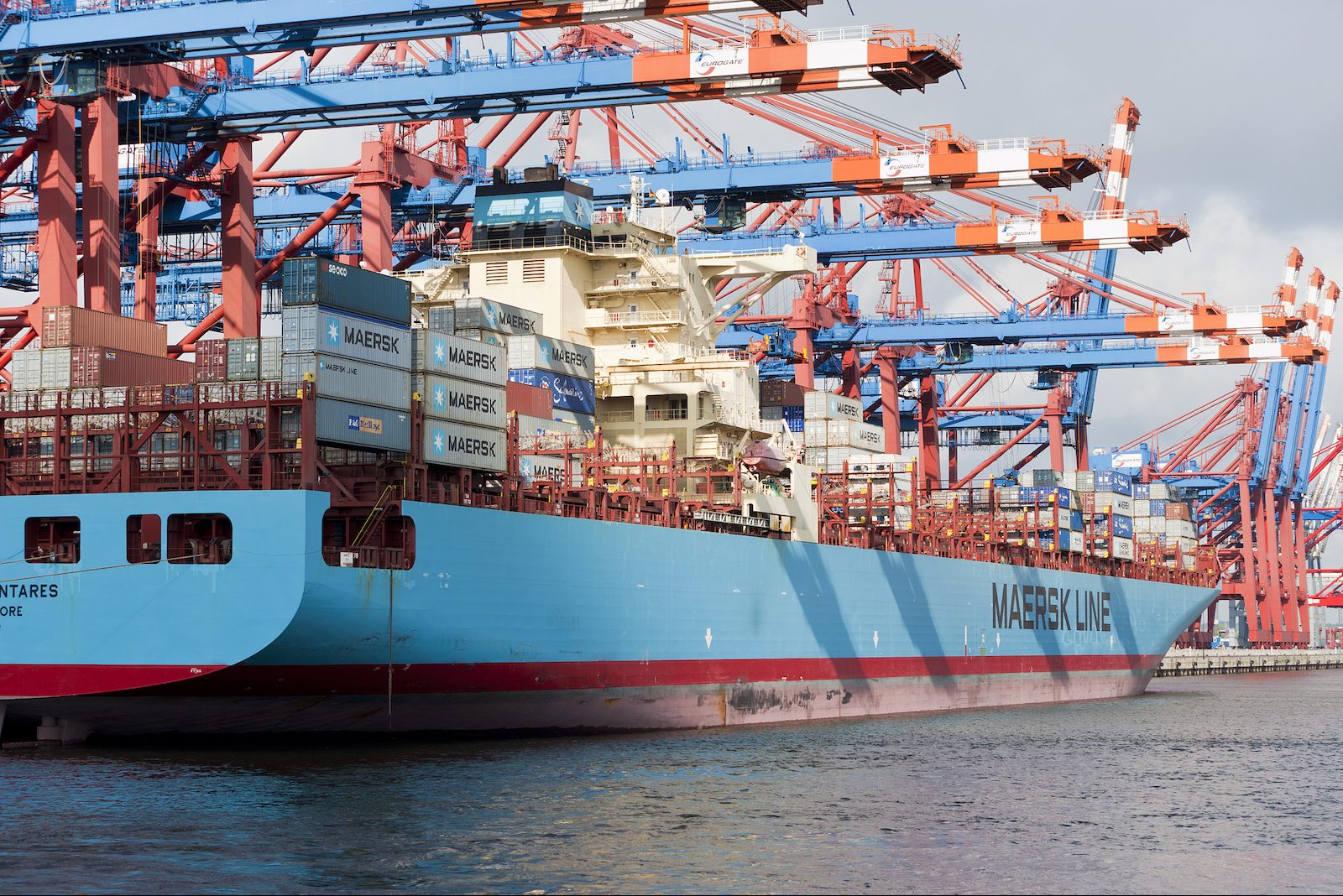
In early April 2026, new trade data from China laid bare the growing economic fallout of the ongoing Iran conflict, adding severe new headwinds to an economy already grappling with deep-seated structural challenges. The figures showed just a 2.5% year-on-year expansion in Chinese exports during March, a sharp drop from the 21.8% combined surge recorded in the first two months of the year. Economists broadly agree this slowdown is the first clear signal that the Iran war’s disruption to global energy markets and demand is now hitting Asia’s largest economy directly.
The International Monetary Fund (IMF) has already trimmed its 2026 growth projection for China to 4.4%, and warned that a prolonged conflict could push 2027 growth down to 4.0% — a forecast many independent analysts view as overly optimistic. For context, Beijing has set an official 2026 growth target of 4.5% to 5%, a goal that has become increasingly difficult to hit as new shocks accumulate.
While multiple analysts note China holds unique advantages to buffer the impact of the conflict compared to other major global economies, the underlying risks remain severe. China’s close diplomatic and economic ties to both Iran and Russia have allowed it to secure crude oil at below-market rates, and the country’s persistent deflationary pressures have left it with far more monetary and fiscal policy space than most Western economies facing high inflation and stretched public balance sheets.
Gustavo Medeiros, an emerging markets analyst at global asset manager Ashmore, explained that unlike major economies grappling with high inflation and elevated debt, China’s deflationary trend has kept its bond markets less exposed to global volatility. Lower long-term yields have also translated to far smaller financial conditions tightening in China than in peer economies, he added. Some analysts also point to a potential silver lining: the energy supply shocks driven by the Iran war could create long-term tailwinds for China’s fast-growing renewable energy sector, while sustained global demand for Chinese semiconductors and green tech could keep export performance from collapsing entirely.
But these advantages are outweighed by pre-existing vulnerabilities that have been simmering for years, even before the outbreak of hostilities in late February 2026. China’s multi-year property sector crisis, widely described as the most severe in a century, continues to erode domestic consumer confidence. Strained local government balance sheets, weighed down by trillions of dollars in outstanding debt, have limited the ability of municipalities to expand robust social safety nets, encouraging households to hoard savings rather than increase consumption. Pre-war China already faced slowing productivity, a declining working-age population, and flagging returns on infrastructure investment, all of which have put downward pressure on long-term growth.
The Iran conflict amplifies these challenges dramatically. As sustained disruptions to tanker traffic through the Strait of Hormuz drive up global prices for energy, fertilizers and core commodities, these higher costs are passed directly to Chinese manufacturers. Unlike previous economic downturns, the 2026 scenario brings a toxic combination of rising input costs and collapsing global demand, which squeezes corporate profit margins and undermines China’s export competitiveness at the worst possible moment.
The IMF has warned that a prolonged war in the Middle East could tip the entire global economy into recession, and independent analysts share this downbeat assessment. Ben May, lead analyst at Oxford Economics, noted that the IMF’s growth projections are based on a more favorable oil price forecast than his firm’s baseline, and that downside risks remain extremely large. “The higher energy prices rise and the longer they remain elevated, the greater the likelihood of severe non-linear spillover effects,” May explained. In a severe scenario where Brent crude averages well above $100 per barrel in 2026, the global economy will almost certainly fall into recession, he added.
Zazral Purewsuren, an analyst at Fitch Ratings, confirmed that the energy shock is already showing up in global inflation data. Major developed economies recorded an average 0.8% month-on-month rise in consumer prices in March 2026, the steepest monthly increase since 2022, while annual inflation ticked up 0.3 percentage points across global markets. The full impact of the energy shock has not yet filtered through to end consumers, she noted, leading to broad-based increases in government bond yields as markets price in more aggressive monetary tightening. This trend has already played out in Singapore, which became the first Asian central bank to raise interest rates in direct response to the Iran war-driven inflation shock — a move widely seen as a bellwether for broader regional policy shifts that will only add to China’s growth pressures.
China’s March trade data already reflects these strains: the country’s total trade surplus shrank 3% year-on-year to $264.3 billion, following a record high surplus in January and February. Zhiwei Zhang, CEO of Pinpoint Asset Management, noted that China cannot fully pass higher energy costs onto foreign buyers, which will continue to compress trade surpluses in coming quarters. Even China’s top customs official, vice minister Wang Jun, acknowledged that extreme volatility in global oil prices has created an extremely complex, hard-to-predict trade environment.
Beyond the immediate cyclical shock, the Iran conflict threatens to derail the long-term structural reforms that China’s economy desperately needs to return to sustained growth. For years, Beijing’s focus on hitting annual GDP growth targets has incentivized local governments to rely on large, debt-fueled infrastructure stimulus to juice short-term growth, rather than implementing painful long-term reforms to fix property sector debt, restructure local government finances, expand social safety nets, reduce youth unemployment, and level the playing field for private businesses. President Xi Jinping and Premier Li Qiang have made some progress on deleveraging in recent years, and the Made in China 2025 industrial strategy has delivered notable wins in sectors from electric vehicles to artificial intelligence, with BYD and AI firm DeepSeek standing out as major global success stories. But the financial system continues to hold back the country’s tech ambitions, thanks to slow-moving regulatory and structural reforms.
As new external headwinds intensify, Beijing is far more likely to prioritize short-term growth stabilization over the long-term retooling the economy needs. In the worst case, the Iran conflict will push reform onto the back burner at exactly the moment when delaying change carries the highest cost, potentially opening the door to a prolonged period of slower growth that economists describe as a missed opportunity China can ill afford.