Eight decades after the collapse of Nazi Germany, a newly launched online search tool is opening unprecedented access to millions of historical Nazi Party membership records, allowing ordinary people to uncover long-buried truths about their family’s past connections to the Hitler regime.
Developed by leading German newspaper *Die Zeit* in partnership with German and U.S. archival institutions, the platform lets users search the full collection of the NSDAP-Mitgliederkartei — a comprehensive set of roughly 10.2 million Nazi Party membership cards compiled between 1925 and 1945. For many descendants of Nazi-era Germans and Austrians, the tool is turning long-held family myths and unconfirmed suspicions into concrete, often shocking facts.
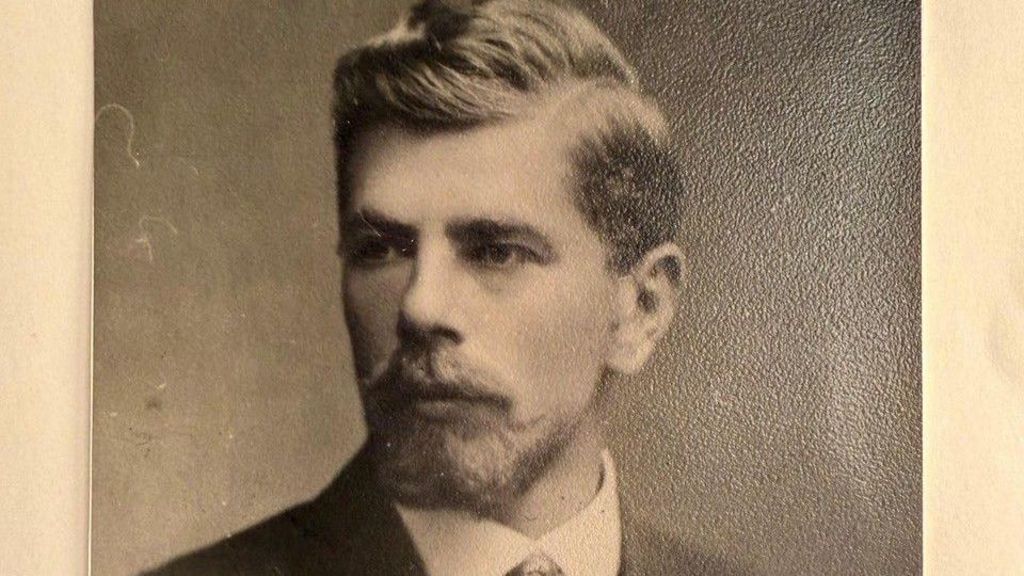
One of the early users, Austrian former news editor Christian Rainer, told reporters he located his grandfather’s entry within seconds of launching his first search. His grandfather joined the Nazi Party just five days after the Anschluss, Hitler’s 1938 annexation of Austria into the Third Reich — a timeline that caught Rainer off guard, even though he had long suspected his grandfather held Nazi sympathies. Rainer, who never met his grandfather, who died shortly before he was born in 1961, expressed particular surprise that his grandfather, an academic who should have been aware of the Nazi regime’s violent ideology, moved so quickly to formalize his membership. Rainer added that the search also brought him relief: it cleared other members of his family, including his father, who was drafted into the Wehrmacht in 1941 and repeatedly wounded in combat, of any suspected Nazi Party affiliation.
The story of how these membership records survived to be digitized is itself remarkable. As Allied forces closed in on Munich in the final days of World War II, Nazi leadership ordered the entire card collection destroyed by pulping. The records were saved by Hanns Huber, director of a local paper mill, who disobeyed the order and turned the documents over to U.S. occupying forces after Germany’s surrender. The cards played a critical role in post-war de-Nazification efforts, helping Allied officials identify former Nazi members and bar them from positions of power in West Germany’s new democratic government.
For nearly 50 years, the records were held by U.S. authorities at the Berlin Document Center. In 1994, the full collection was transferred to Germany’s Federal Archives, with microfilm copies sent to the U.S. National Archives in Washington, D.C. Until this year, accessing the records required submitting a formal written request to German archival authorities — a time-consuming process that put research out of reach for most casual users, particularly private individuals investigating their own family histories. That barrier was removed earlier this year, when the U.S. National Archives made its full set of digitized microfilm records available online. *Die Zeit* acquired the dataset, optimized it for public search, and launched the free public platform in early April 2025.
Public response to the tool has been far greater than organizers expected, with *Die Zeit* spokesperson Judith Busch describing user interest as “overwhelming.” In the weeks following launch, the platform has been accessed millions of times and shared across social media thousands of times as word of the resource spread. Many users have shared deeply personal reactions to their findings: one 71-year-old user commented on *Die Zeit*’s website that discovering two close relatives in the membership records dismantled generations of family denials, calling the shifted perspective “a bitter shock.”
Historians and users alike emphasize that the tool marks a major shift in how modern societies engage with the legacy of the Nazi era. For decades, public and academic research focused heavily on high-ranking Nazi officials and prominent figures who held posts in post-war German institutions. The new search engine puts the power of historical investigation into the hands of ordinary people, allowing them to confront personal and family histories that have remained hidden for generations. As Rainer put it, “Eight decades on, after the end of the World War, you can still find out truth that you haven’t known before.”