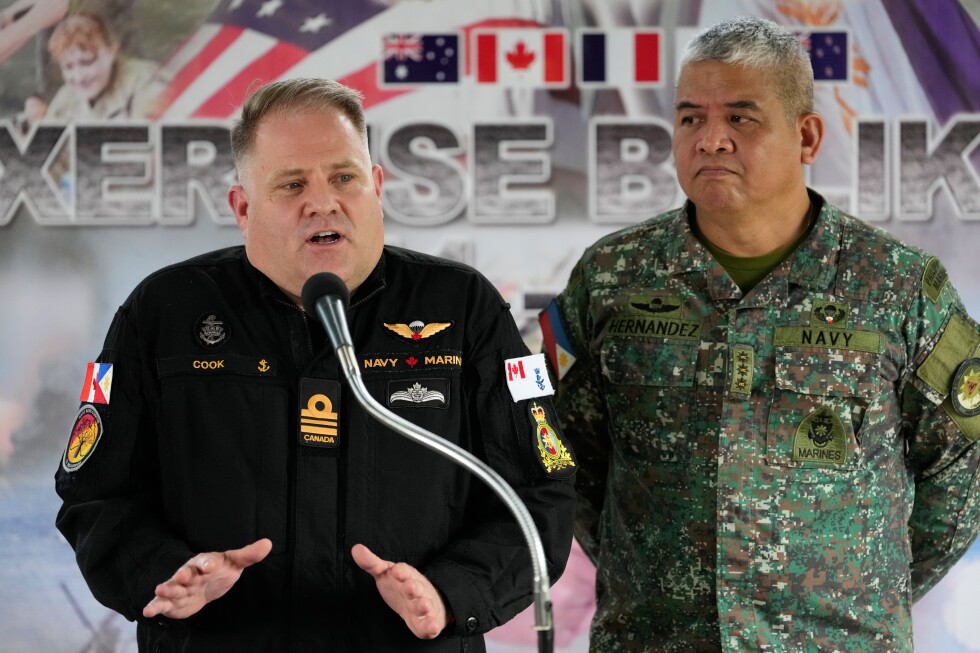
MANILA, Philippines — One of the largest annual joint military exercises between the United States and the Philippines is set to kick off this spring, bringing over 17,000 personnel from the two treaty allies together for combat training. The drills, organizers say, send a clear signal that Washington remains deeply committed to regional security in the Indo-Pacific even as it navigates ongoing security crises in the Middle East, a senior U.S. military spokesperson confirmed Tuesday.
Running from April 20 to May 8, this year’s iteration of the annual Balikatan – Tagalog for “shoulder-to-shoulder” – drills will mark a major expansion from 2024, when roughly 9,000 U.S. troops took part. Unlike previous years, the 2025 exercise will open participation to additional partner nations that have formal visiting forces agreements with Manila, including Japan, France and Canada.
A centerpiece of the drills will be a live-fire ship-sinking exercise hosted in Philippine waters off the northwest coast, directly facing the disputed South China Sea. Philippine military officials confirmed that Japanese forces will conduct the live missile launch for the drill, and Japan’s top defense official has been extended an invitation to observe the operation in person.
When asked about the strategic purpose of deploying such a large contingent amid ongoing conflict in the Middle East, U.S. forces spokesperson Colonel Robert Bunn emphasized the exercise’s core message. “Our message is our dedication and commitment to our alliance and regional security,” Bunn told reporters during a news briefing. He also noted that counter-drone defense tactics, a critical capability for modern regional security challenges, will be a key focus of the mock combat training scenarios.
The exercises come amid rising long-running tensions over territorial claims in the South China Sea, a strategically vital global shipping waterway. Beijing claims nearly the entirety of the sea as its sovereign territory, overlapping with claims from Manila, Hanoi, Kuala Lumpur, Bandar Seri Begawan and Taipei. Territorial confrontations between Chinese and Philippine forces have intensified sharply in recent years.
China has repeatedly voiced opposition to large-scale military drills led by the U.S. in the disputed region. Philippine defense officials have stressed that the drills are not intended to target any specific nation, but have openly acknowledged that the joint training with Washington and other security partners strengthens the Philippines’ ability to defend its sovereign interests in the contested waters.
The exercise aligns with the Trump administration’s recent regional security posture. During a visit to Manila last year, U.S. Defense Secretary Pete Hegseth reaffirmed to Philippine President Ferdinand Marcos Jr. that Washington would work closely with regional allies to boost deterrence against global threats, specifically naming China’s assertive actions in the South China Sea. “Friends need to stand shoulder to shoulder to deter conflict, to ensure that there is free navigation whether you call it the South China Sea or the West Philippine Sea,” Hegseth said.