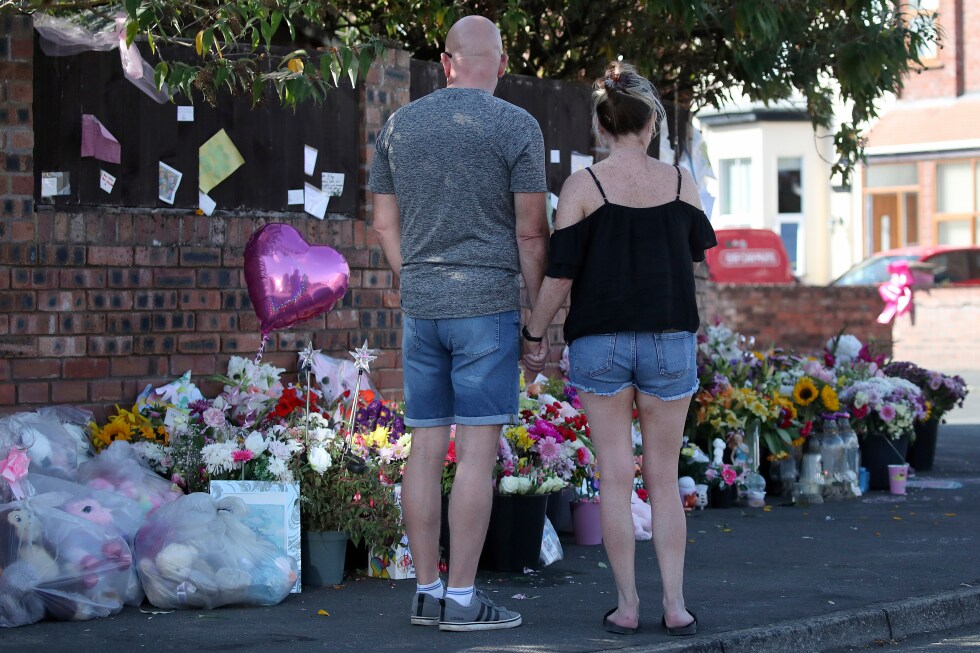
In the wake of one of the most brutal acts of violence in recent British history, a landmark public inquiry has concluded that the 2024 mass stabbing that left three young girls dead and 10 others injured at a Taylor Swift-themed dance class in Southport, northwestern England, could and should have been averted. The attack, carried out by 17-year-old Axel Rudakubana, exposed cascading, repeated missed opportunities for intervention by both public agencies and the teenager’s own parents as his violent obsessions escalated over years, retired judge Adrian Fulford, who led the nine-week probe, outlined in a 763-page final report released Monday.
Fulford’s report catalogs a years-long pattern of red flags that were never properly addressed, documenting dozens of moments when targeted action could have stopped Rudakubana before he launched his attack. He described the killings as unprecedented in the UK for their “extreme and very particular depravity,” emphasizing that the sheer volume of unaddressed warning signs directly enabled the catastrophe.
“One of the most striking conclusions from this inquiry’s extensive investigation is the sheer number of missed opportunities over many years to intervene meaningfully, which directly contributed to the failure to avert this disaster,” Fulford said. “The consequences were catastrophic.”
Rudakubana is currently serving a life sentence with a 52-year minimum term before eligibility for parole, convicted of murdering 9-year-old Alice da Silva Aguiar, 7-year-old Elsie Dot Stancombe, and 6-year-old Bebe King. Eight children and two adults were also wounded in the targeted attack on the children’s dance class.
In the days immediately after the attack, Southport was rocked by days of far-right unrest, after extremist groups circulated false claims that the attacker was a recently arrived Muslim migrant. In reality, Rudakubana was born in Wales to Rwandan Christian parents.
The inquiry’s investigation laid bare systemic failures across multiple public institutions: police, social services, education authorities, and the UK’s anti-extremism program Prevent all missed critical chances to intervene. As early as 2019, when Rudakubana was just 13, he was convicted of assaulting a fellow student with a hockey stick, and placed under youth offender supervision. Between 2019 and 2021, he was referred to Prevent three separate times for openly expressing fascination with school shootings, the 2017 London Bridge terror attack, the IRA, and political violence in the Middle East. In each instance, investigators closed his case after determining he was not at risk of radicalization into terrorism.
Over that same period, local police were called to Rudakubana’s home five times in response to concerns over his behavior. He was connected to mental health and educational support services, but gradually disengagement from social work support. He was ultimately expelled from school after being caught carrying a knife, and rarely attended any alternative education placement afterward. In Fulford’s assessment, the teenager’s care became a disjointed “merry-go-round of referrals, assessments, case-closures and ‘hand-offs’” between disconnected public agencies, with no entity taking responsibility for monitoring his escalating risk.
Fulford highlighted one particularly glaring missed opportunity in March 2022, when Rudakubana was stopped on a bus carrying a knife. When questioned by police, he openly admitted he wanted to stab someone, and confessed he had been attempting to manufacture poison. According to Fulford, this encounter should have resulted in immediate arrest and a home search, which would have uncovered his purchases of ricin-producing seeds and downloads of terrorist propaganda on his personal computer. Instead, Rudakubana was released without arrest and returned to his parents’ custody.
The report also notes that Rudakubana’s parents, who lived in fear of their son, failed to report the multiple weapons he purchased, his persistent threatening behavior, and his graphic threats of violence. While Fulford emphasized these parental failures contributed to the tragedy, he urged against public vilification of the couple, noting their home life had become overwhelming.
“Their life at home must have become little short of a nightmare given, to use the words of his own father, AR had turned into a ‘monster,’” Fulford said.
After the attack, a search of Rudakubana’s home uncovered the ricin toxin hidden under his bed and a downloaded copy of an al-Qaida training manual. Despite this find, counterterrorism police concluded the attack did not qualify as an act of terrorism, as Rudakubana had no clear political or religious ideological motivation for his violence.
The inquiry has put forward 67 formal recommendations to address systemic gaps and prevent similar atrocities from occurring in the future. Prime Minister Keir Starmer has pledged to implement sweeping reforms to correct the systemic failures that led to the attack. “The report today is truly harrowing and profoundly disturbing,” Starmer said. “While nothing will ever bring these three little girls back, I’m determined to make the fundamental changes needed to keep the public safe.”
Starmer has previously argued that the case highlights a shifting nature of extremist violence in the UK, suggesting that existing laws may need to be updated to better address the growing threat of extreme violence perpetrated by isolated, self-radicalized individuals operating outside formal terrorist groups.