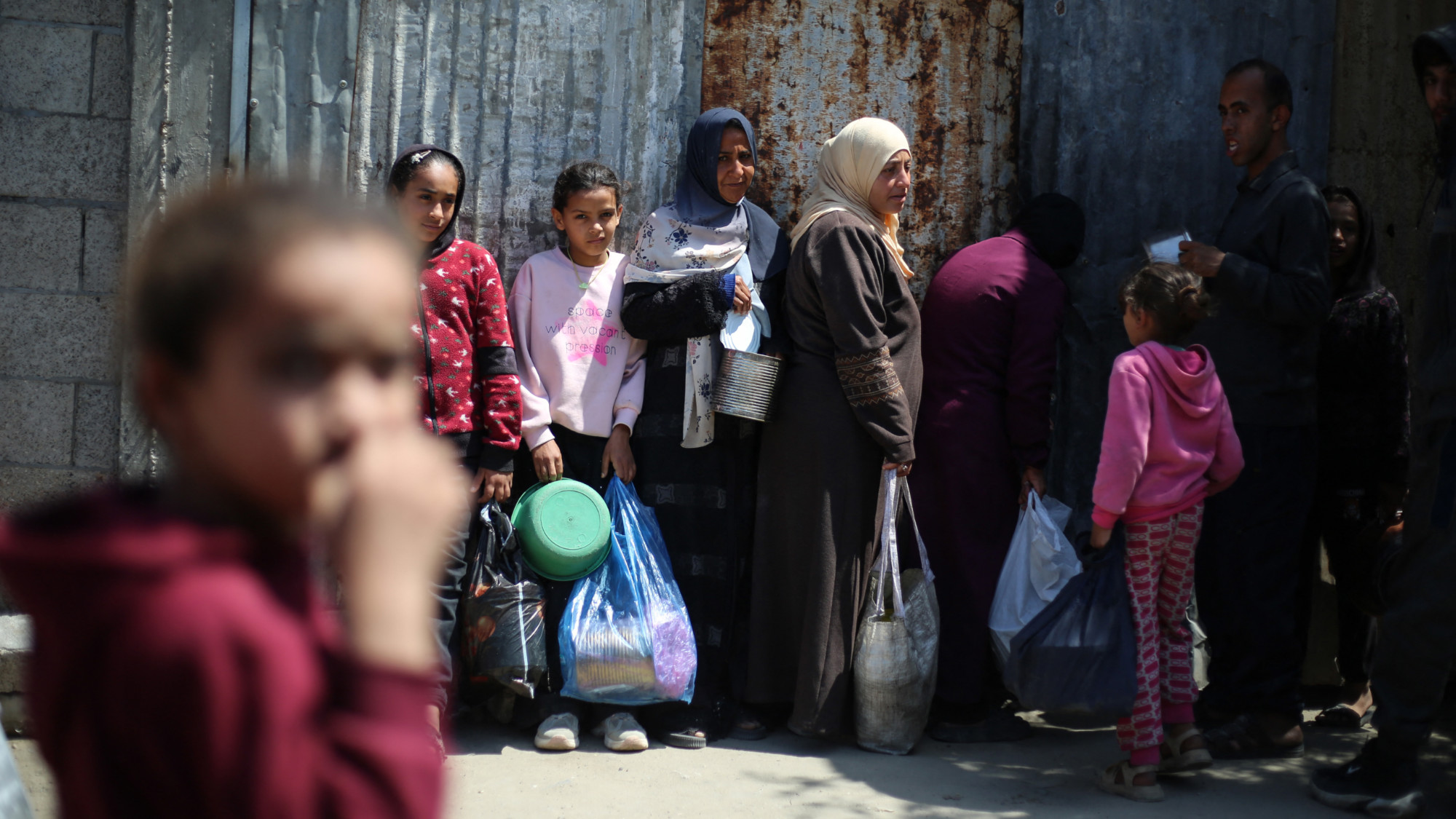
Six months after a ceasefire agreement that promised large-scale humanitarian access to the war-ravaged Gaza Strip, the enclave’s 2.2 million residents are once again grappling with crippling shortages of bread, food, fuel and other basic necessities, driven by Israel’s decision to tighten restrictions on aid and goods entry.
In recent days, Palestinians across the blockaded territory have endured hours-long queues at the handful of still-operating bakeries just to purchase subsidized bread bundles, priced at three Israeli shekels (approximately $1) per pack. Free bread distributed by international aid organizations remains extremely limited, leaving many households unable to access even this critical staple. Market shelves are increasingly bare: prices for fresh vegetables have skyrocketed, while eggs, poultry and red meat have all but disappeared from local vendors’ stalls.
Sabreen Abu Ouda, a 45-year-old Gaza City resident supporting a family of 11, told Middle East Eye that her household only receives one bundle of 10 loaves of bread twice a week. “When we get that bag of bread, it’s barely one loaf per person. That’s nowhere near enough, and we go entire days without any bread at all,” she explained. Abu Ouda added that her family has not been able to afford to purchase vegetables since the end of Ramadan in mid-March, as skyrocketing prices put fresh produce completely out of reach.
This deepening humanitarian crisis comes in direct violation of the six-month-old ceasefire deal, which included explicit provisions to enable large-scale entry of humanitarian relief into the enclave. Israel has not only cut the volume of entering goods but also imposed stricter bureaucratic regulations on humanitarian shipments, disrupting operations for major aid groups and in many cases halting deliveries entirely. The World Food Programme, one of the largest providers of food assistance in Gaza, has been forced to pause or scale back deliveries of critical supplies including flour and fresh vegetables.
The Gaza Government Media Office issued a statement Sunday condemning Israel’s actions as an escalation of what it calls “engineered starvation” of the besieged population. The office characterized the restrictions as systematic and deliberate, carried out through Israel’s complete control over all border crossings into Gaza. Official data highlights the gap between what Gaza needs and what Israel allows in: the territory requires roughly 450 tonnes of flour every day to feed its population, but only around 200 tonnes currently enter. While the ceasefire mandates 600 aid trucks enter Gaza daily, only an average of 200 trucks are allowed through, leaving shelter materials, medical supplies and food almost entirely depleted.
This new wave of scarcity has revived terrifying memories of the widespread starvation that gripped Gaza during the active conflict, when Israel imposed a total blockade, bombed hundreds of bakeries, and destroyed vast swathes of agricultural land. Famine was officially declared in multiple areas of Gaza during the conflict, with dozens of civilians confirmed dead from malnutrition-related causes. Today, that same threat looms large over the population.
Fears of an impending return to full-scale famine are widespread across the enclave. Many residents like Abu Ouda have already started hoarding what little food they can access to prepare for worse days ahead. “I managed to get a small amount of flour over the past few months, but I’m saving it for when things get even harder,” she said. “Most of the time we rely on charity kitchens, and we only eat enough to stop feeling hungry. When food is distributed to us, we often skip bread or rice just to save what little we have.”
Jamal Saeed Qaddoum, a 70-year-old Gaza resident, said living conditions have deteriorated sharply in just the past few days. “With prices going up and basic goods nowhere to be found, it’s harder and harder just to meet our daily needs, let alone stock up supplies,” he said. “What most people fear is that we are heading towards famine.”
Beyond the immediate food crisis, Gaza is also facing a crippling shortage of fuel and cooking gas, which has sent prices for firewood—one of the only alternative cooking fuels—surging. Shams al-Din Abu Oud, a 52-year-old Gaza resident, said residents have been forced to burn dangerous alternative materials including nylon, plastic and household waste to cook food, creating major public health risks that threaten respiratory health across the enclave. “The media says Israel is allowing gas to enter, but what actually comes in is just a drop in the ocean,” Abu Oud said. “It’s nowhere near enough for the entire population.”
International humanitarian and human rights groups have repeatedly condemned Israel’s refusal to comply with the ceasefire terms, noting that the already catastrophic living conditions for Palestinian civilians—worsened by mass displacement, limited access to medical care, and chronic fuel shortages—are only declining further.
Six months after the ceasefire took effect, life in Gaza remains “suffocated,” Doctors Without Borders (MSF) said in a statement released last week. “The ceasefire has failed to end the devastation in Gaza, with Israeli authorities continuing to impose conditions that undermine basic living standards,” said Claire San Filippo, MSF’s emergency manager. She added that the situation remains “catastrophic”: “People’s needs are immense, yet the Israeli authorities have continued to systematically restrict the entry of humanitarian aid.”